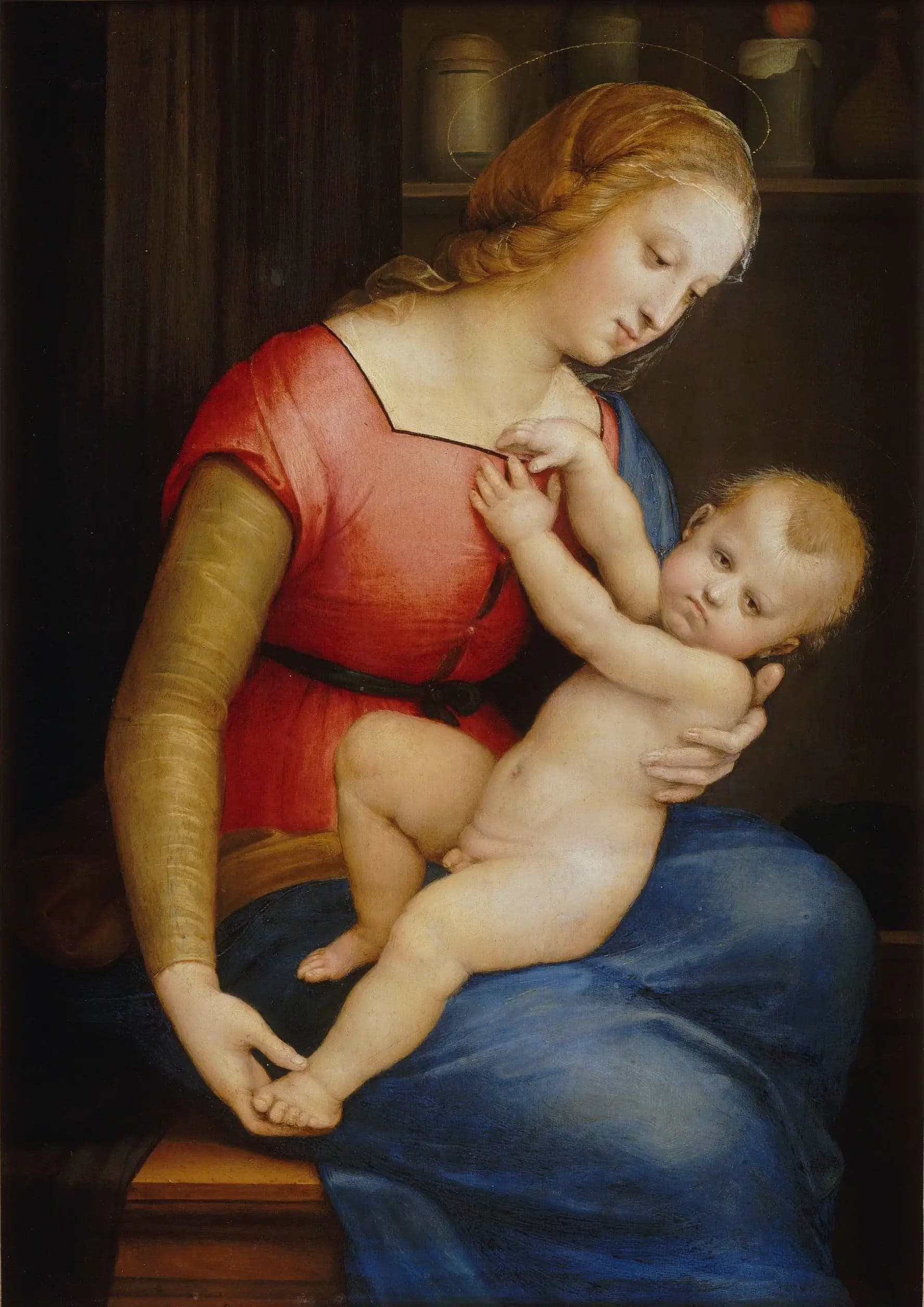
The Madonna of Orléans
- Original dimensions
- 230 x 310 cm
- Movement
- future
- Museum
- Condé Museum
- Year
- 1506
Scene depicted
In this painting , Raphael invites us to contemplate the majestic figure of the Virgin Mary surrounded by the Child Jesus, both enveloped in an aura of sweetness and peace. The scene, imbued with tenderness, illustrates not only maternal love but also the divine light that illuminates every detail of the painting . The rich drapery and lively faces evoke a sacred intimacy, omnipresent in this composition.
Historical context
Created in 1506, in the heart of the Italian Renaissance , the painting The Madonna of Orléans is currently housed in the Condé Museum, which collects treasures of the past in the beautiful city of Chantilly, France. This iconic painting is part of a bold and innovative artistic movement, in search of visual and spiritual perfection. The imposing dimensions of this canvas (230 x 310 cm) reveal the scope of Raphael's artistic message as he explores human depth and divine beauty.
Place in the artist's career
The Madonna of Orléans represents a major milestone in Raphael's career. This canvas , created as he reaches the maturity of his style, stands out for its refined technique and vivid emotions. In parallel with other paintings , such as The Madonna of La Jayère and The Sistine Madonna, one can observe the evolution of his pictorial language, moving from poignant realism to a quest for harmony and idealization.
Anecdote
“Every brushstroke is a breath of life,” said Raphael, inspired one spring morning as he watched the light dance on the faces of the women of Rome. This fleeting moment of ephemeral beauty gave birth to his masterpiece , The Madonna of Orléans, a painting that transcends time and breathes a palpable serenity.