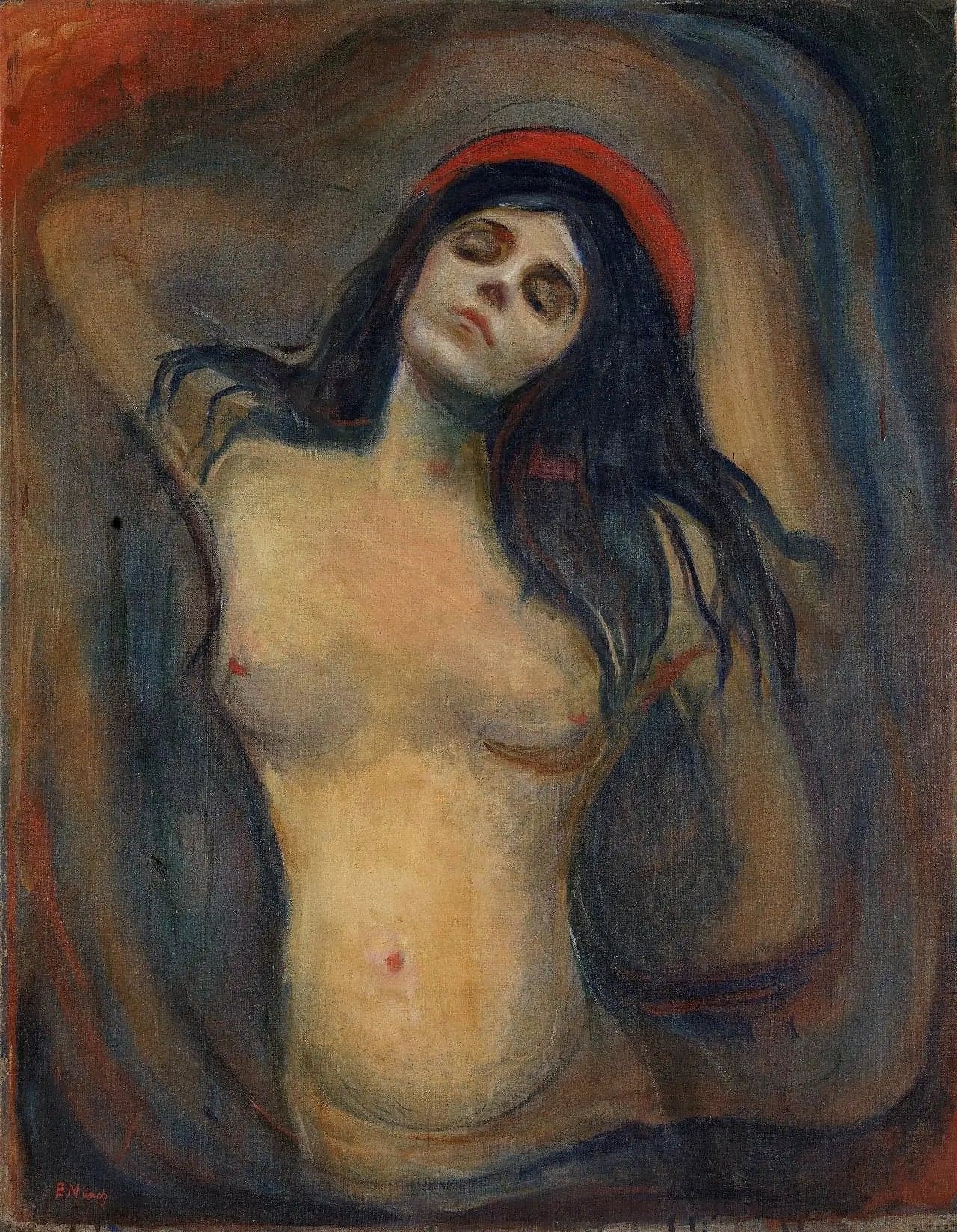
The Madonna
- Original dimensions
- 71 x 90 cm
- Museum
- Hamburg Kunsthalle
- Year
- 1894
Scene depicted
At the center of The Madonna , Munch depicts a female figure of tragic beauty, delicate and enigmatic, enveloped in a symbolic halo. This evocative figure embodies the mother, the woman, and the muse, drowned in a whirlwind of feelings. The intense gaze of the Magdalen invites contemplation, urging the viewer to dive into introspective thoughts.
Historical context
Created in 1894 and soon exalted as a key work of the expressionist movement, the painting The Madonna by Edvard Munch reveals the tumultuous spirit of the late 19th century in Europe. In the vibrant city of Hamburg, where the canvas is located today, this pictorial work reflects the issues and passions of an era in search of meaning. Within the Kunsthalle, this canvas is a poignant testimony of human emotions, filled with sensitivity and intensity.
Place in the artist's career
This canvas is part of a period of maturity for Edvard Munch , marking a turning point towards a deeper exploration of human emotions. Alongside his iconic works like The Scream and Vampire , The Madonna stands as a culmination of his stylistic boldness and emotional craftsmanship, reflecting the evolution of his unique technique.
Anecdote
“Passion, pain, and love. That is all we are,” Munch might have whispered while painting this composition . Inspired by a meeting in a dark alley, he captured the very essence of human emotions, translating on his canvas the struggle and beauty of existence. With a soft light filtering through a misty morning, the painting evokes a nostalgic impulse that strikes the soul.