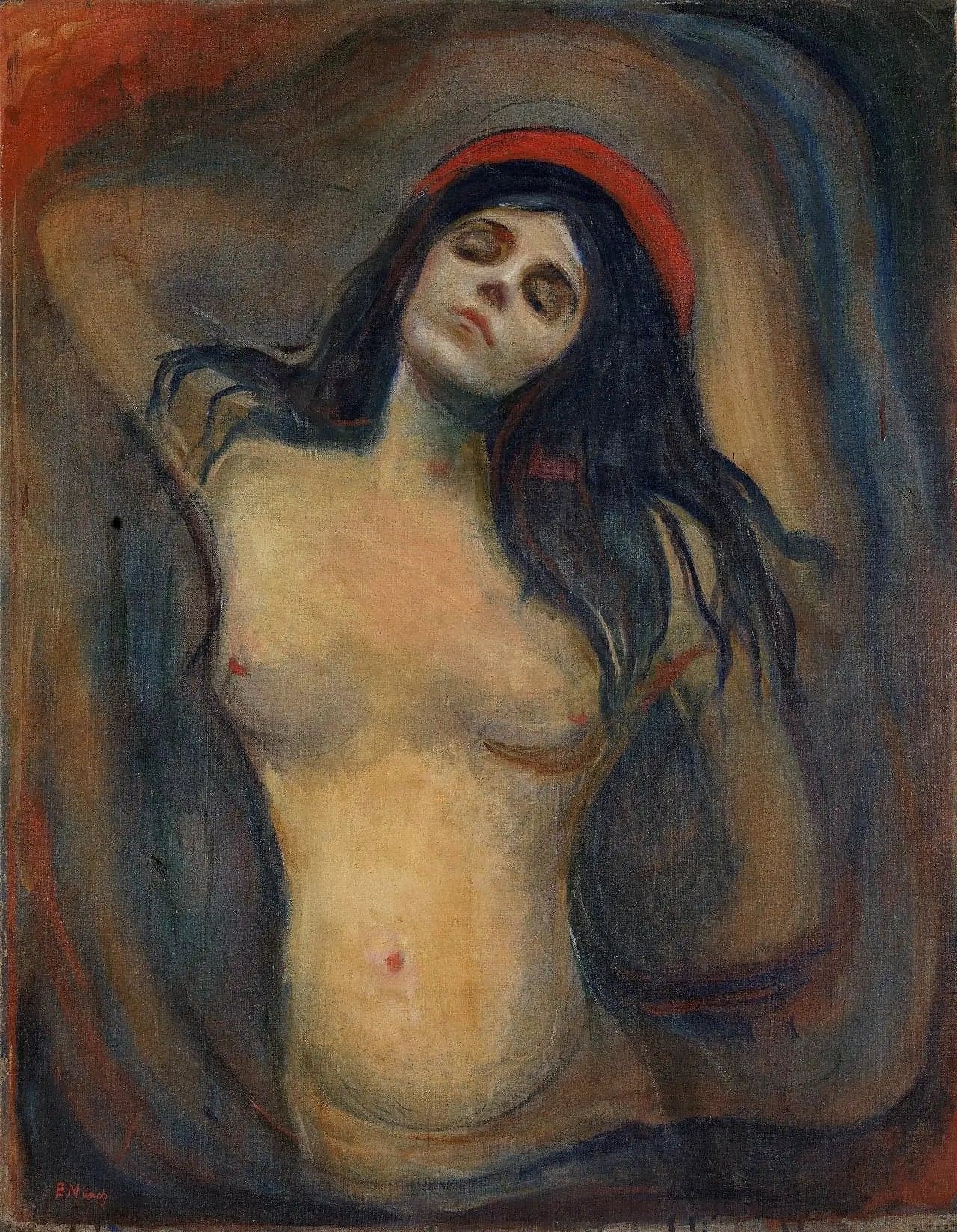
The Madonna
- Original dimensions
- 70.5 x 90.5 cm
- Movement
- expressionism
- Museum
- Norway
- Year
- 1894
Scene depicted
The painting illustrates a central figure of motherhood, merged with elements of anxiety and desire. The silhouette, irresistibly hypnotic, conveys the complexity of human feelings, while illuminating the nuances of love and suffering. A scene where intimacy becomes palpable, inviting reflection and deep emotions.
Historical context
Created in 1894, at a time when Europe was being shaped by emotional struggles, The Madonna was born from the tumultuous mind of Edvard Munch in the vibrant context of a transforming Norway. This iconic painting, now preserved in a Norwegian museum, invites us to contemplate a universe rich in emotions, true to the aesthetic of the expressionist movement. Its dimensions, almost monumental, give a striking presence to this painting of exception.
Place in the artist's career
With The Madonna , Munch shines at the peak of his expressionism , a significant turning point in his artistic journey. Alongside it, other paintings like The Scream and The Dance of Life reveal an evolution towards a bolder exploration of the turmoil of the human soul.
Anecdote
“Art must not reproduce the visible, but make visible,” said Munch, whose inspiration for The Madonna might come from a starry night, where the gentle breeze whispers ancient secrets. This poetic memory immerses the viewer in the intensity of the canvas , punctuated by a sweet melancholy.
Major exhibitions
Europeana 280