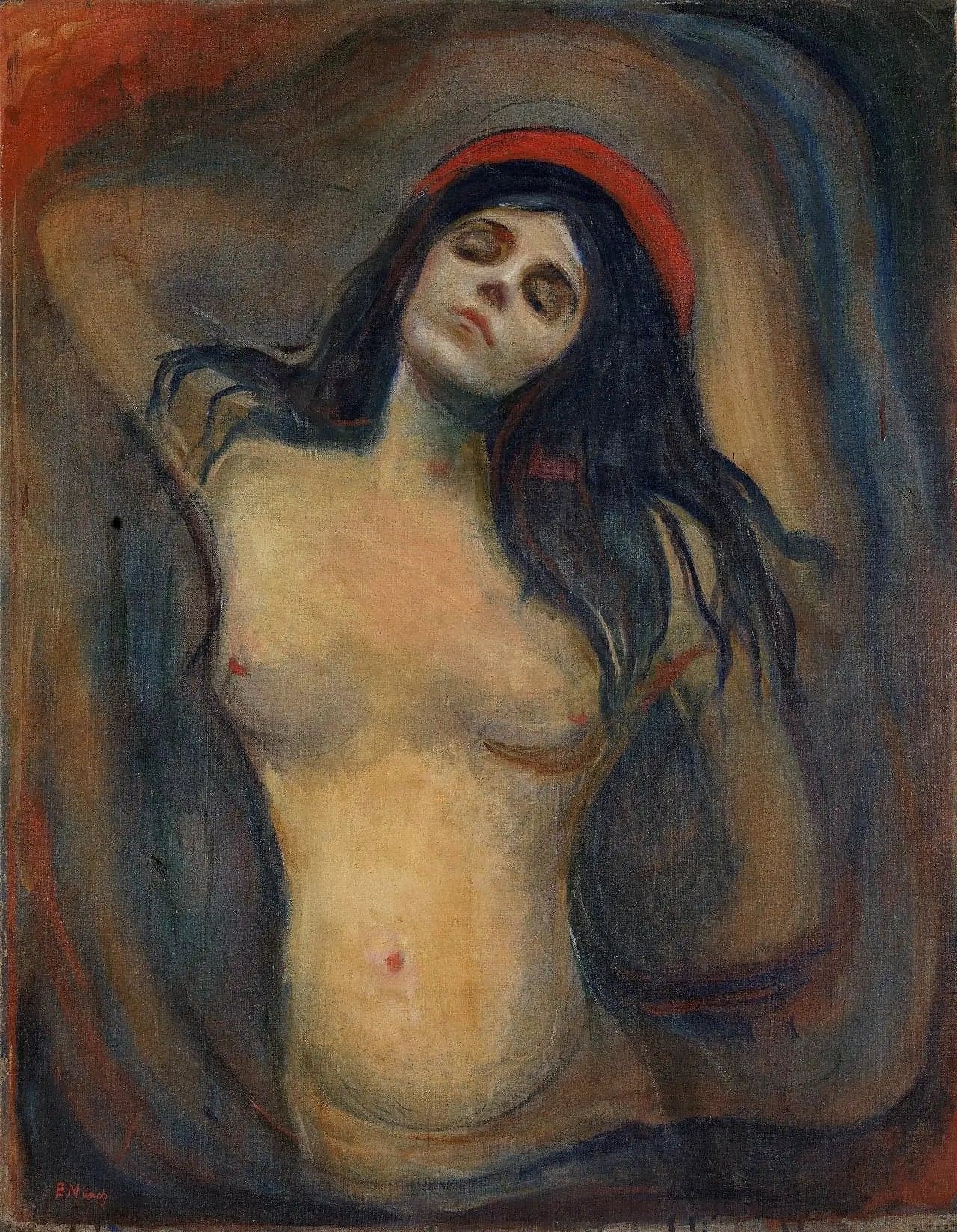
The Madonna
- Original dimensions
- 68.5 x 90 cm
- Museum
- Munch Museum
- Year
- 1894
Scene depicted
The Madonna by Edvard Munch offers a bold and emotive vision of motherhood and sensuality. The woman, with a gentle and serene face, embodies love and pain, while the composition evokes a kind of intimate suffering. The body is as if encircled by a luminous halo, creating a mystical atmosphere around this canvas .
Historical context
Created in 1894, The Madonna is an important milestone of the expressionist movement born in Oslo, Norway. At that time, Munch explored deep themes related to the human condition and femininity. His composition has now found refuge in the Munch Museum in Oslo, where it continues to fascinate art lovers. This painting imbued with striking emotions measures 68.5 by 90 cm, capturing a time of great artistic turbulence.
Place in the artist's career
This painting is situated at a decisive turning point in Munch's career, marking his transition to more sentimental and introspective works. Alongside The Scream and The Dance of Life, The Madonna represents the pinnacle of his style, marking a period where the artist immerses himself in his emotions while exploring themes of life and death.
Anecdote
“To paint is a way to free souls from their torment.” Edvard Munch might have exclaimed one April morning as he observed the daylight revealing silhouettes in the alleys of Oslo. This painting , The Madonna, undoubtedly arises from this quest for light and truth, illustrating the inner strength that every woman possesses.