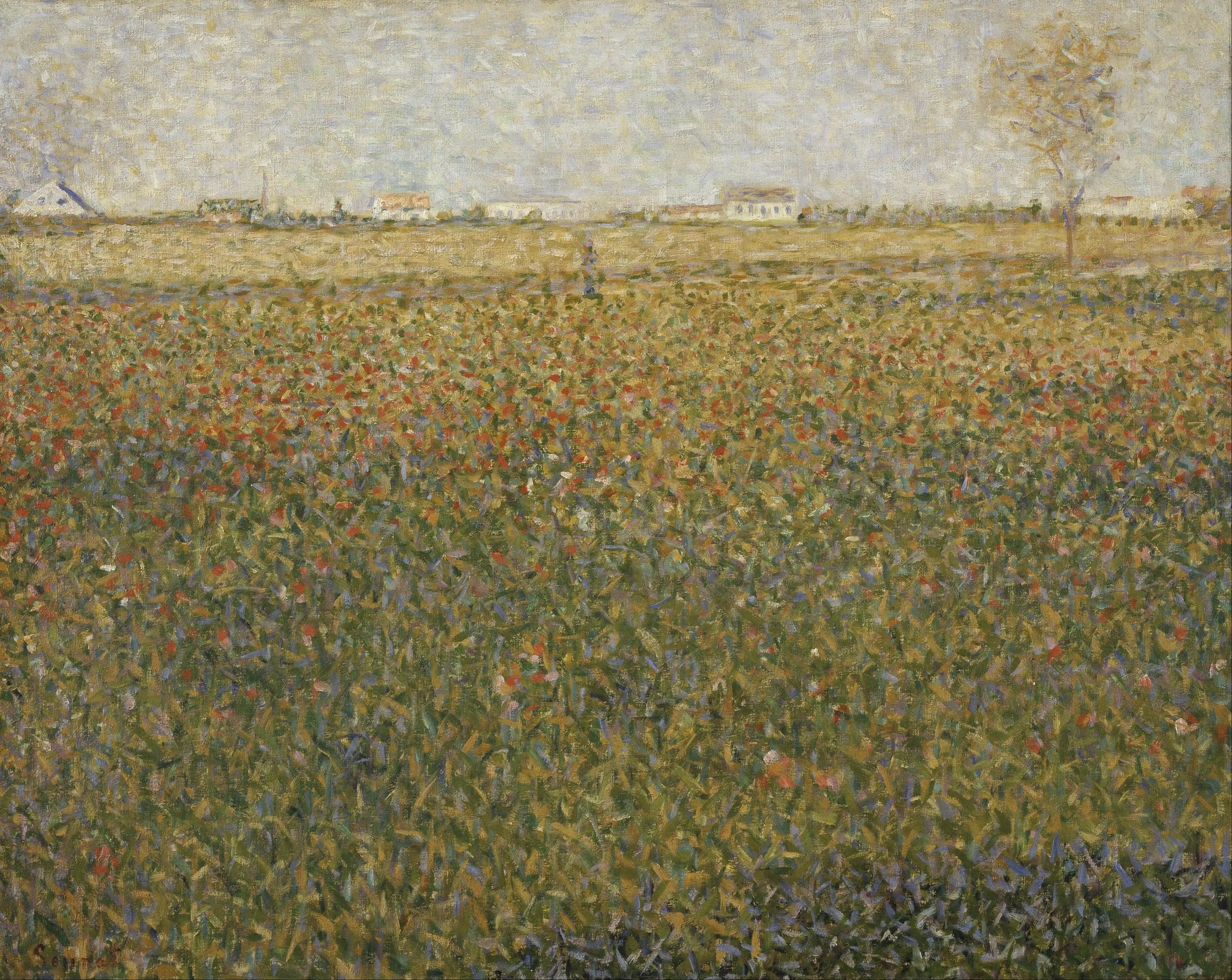
The Luzerne, Saint-Denis
- Original dimensions
- 813 x 653 cm
- Museum
- National Galleries of Scotland
- Year
- 1885
Scene depicted
The painting "La Luzerne, Saint-Denis" depicts a pastoral landscape, highlighting the tranquility of a world where nature and humanity coexist in perfect harmony. The characters, frozen in a moment of contemplation, blend into the lush surroundings, creating an atmosphere of serenity and refuge. The soft light envelops the scene, enhancing the intimacy and charm of this composition.
Historical context
Created in 1885, this painting is part of the pointillist movement, initiated by the artist himself, Georges Seurat . The canvas evokes an emblematic moment in the city of Saint-Denis, located north of Paris, where art and nature meet in a harmonious way. Currently exhibited at the National Galleries of Scotland , this canvas of large dimensions immerses us in a time when art is reinvented according to the currents of Impressionism .
Place in the artist's career
La Luzerne, Saint-Denis is a key milestone in Seurat's career. This painting can be seen as a culmination of his iconic technique, while distinguishing itself from his previous works such as "A Sunday Afternoon on the Island of La Grande Jatte" and "The Circus." It reveals the evolution of his style, between refined pointillism and a deeper exploration of colors and light.
Anecdote
"Each point of color is a promise of light." This quote from Seurat reflects his unique approach, captured during a summer walk in Saint-Denis, where he found inspiration on the banks of this peaceful river. It is here, in this natural setting, that the evocative power of La Luzerne, Saint-Denis takes on its full dimension.