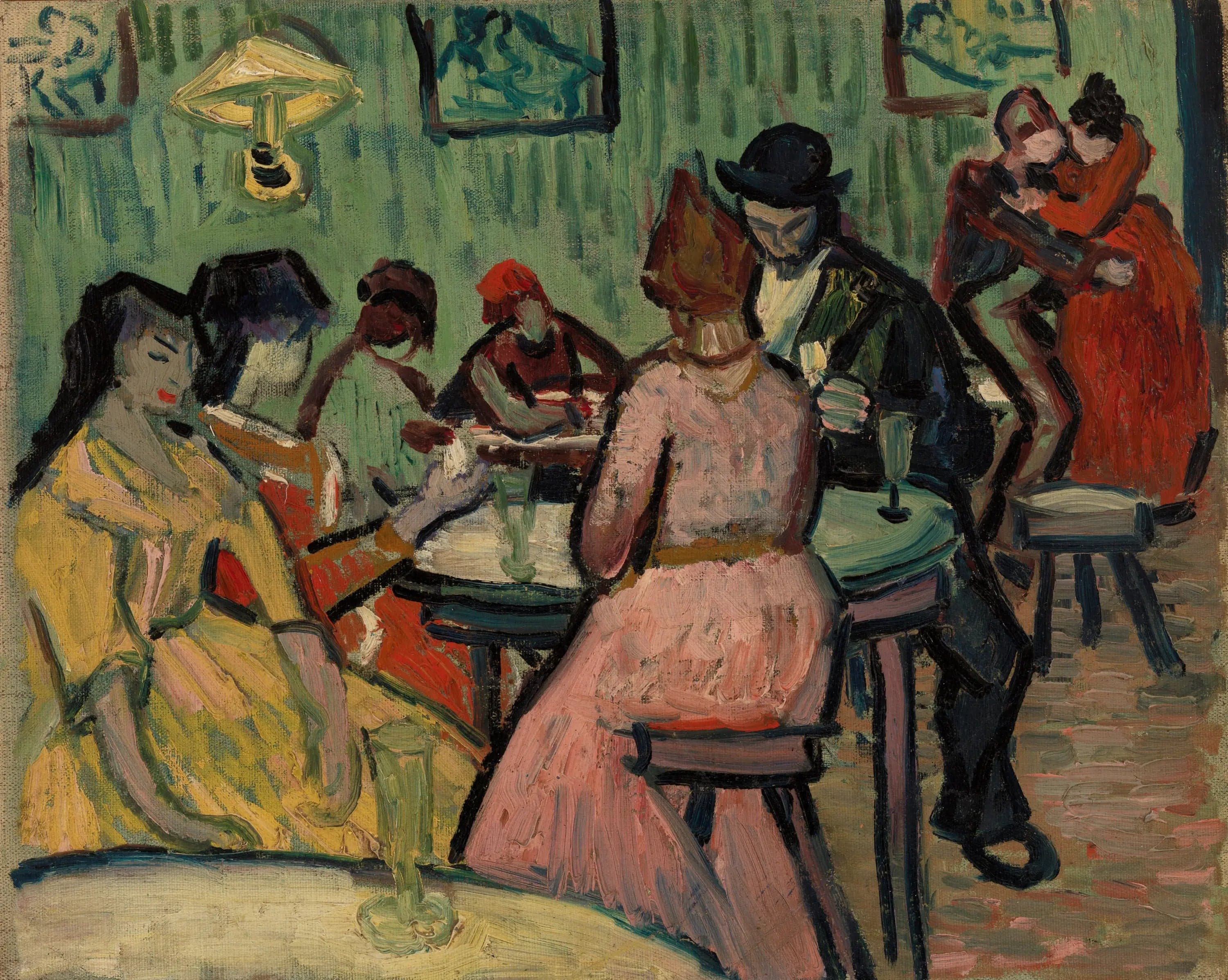
The Lupanar
Scene depicted
The canvas "Le Lupanar - Vincent van Gogh " illustrates a delicate and soulful scene of life. The pictorial work unveils a mysterious interior where light dances on vibrant colors, creating an almost palpable atmosphere where each element seems to tell a story, that of women and men in search of escape.
Historical context
Created in 1888, this painting emblematic finds its roots in Arles , a city in the south of France, cradle of a vibrant artistic moment of post-impressionism . The canvas , now preserved at the Barnes Foundation , is set in a time when Van Gogh explored light and emotions through his works. With dimensions of 41 x 33 cm, this canvas reveals a poignant vision of an intimate space.
Place in the artist's career
This painting is at the heart of Van Gogh's career, encapsulating a period of artistic transition. Alongside significant works like " The Starry Night " and " The Sunflowers ", it illustrates his technical evolution, combining precision and emotion. The Lupanar marks a turning point where the pictorial technique becomes freer and more expressive.
Anecdote
He once declared: "I paint walls, houses, interiors for the homes of men." It was a bright April morning, where the golden light of Arles filters into an alley, that the inspiration for the masterpiece of the Lupanar came to life. This painting evokes a human depth connected to slices of life, blending art and emotion.