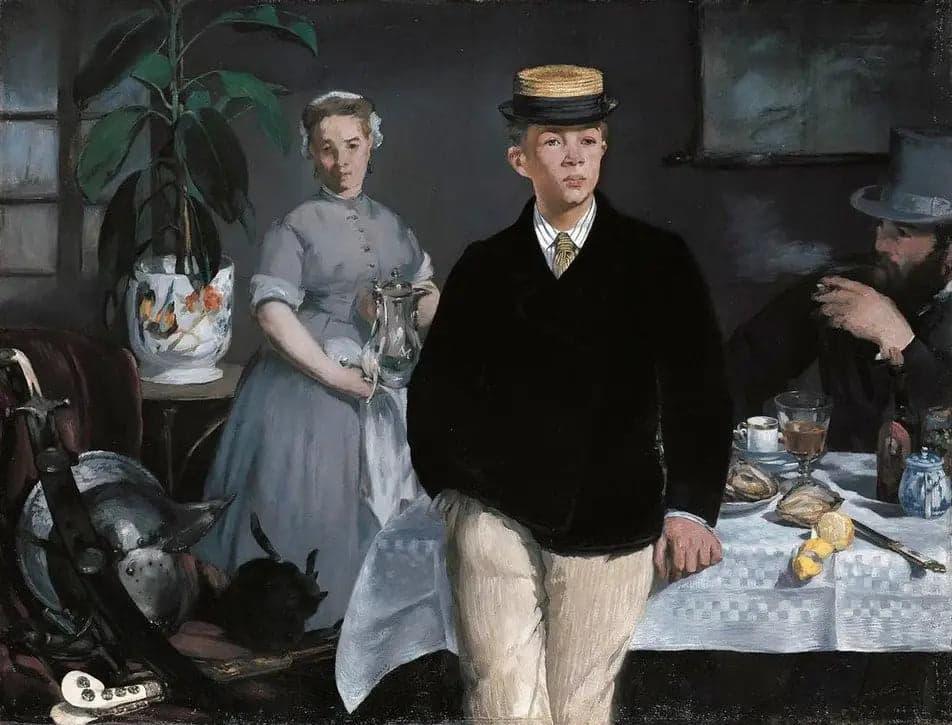
The Luncheon in the Studio
- Original dimensions
- 154 x 118.3 cm
- Movement
- impressionism
- Museum
- Neue Pinakothek
- Year
- 1868
Scene depicted
This captivating scene captures a moment of conviviality among artist friends, gathered around a lunch in the studio. The characters, immersed in animated discussions, are illuminated by natural light streaming through large windows. The painting , far from being merely a representation, evokes a warm atmosphere, imbued with complicity and creativity.
Historical context
In 1868, in the coastal city of Boulogne-sur-Mer, Édouard Manet gave birth to a true pictorial work that would revolutionize the art world. The impressionist movement, still in its infancy at the time, finds in Manet's painting a new voice. Currently housed in the Neue Pinakothek , this canvas of imposing dimensions is part of a period where traditional art clashes with new visions.
Place in the artist's career
The painting The Luncheon in the Studio marks a turning point in Édouard Manet 's career. Representing a stylistic peak, it stands alongside other iconic works like “Olympia” and “The Luncheon on the Grass,” thus showcasing the evolution of his bold style. This masterpiece bears witness to a dialogue between tradition and modernity, propelling Manet to the heart of the artistic debates of his time.
Anecdote
Manet once declared: “Light is what makes art.” It was in the heart of a sunny morning, enveloped by the sweet scent of flowers, that the idea of The Luncheon in the Studio sprouted in his mind. The vibrant glow of colors on his canvas led him to immortalize this intimate scene, an ode to creativity.
Major exhibitions
Salon of 1869