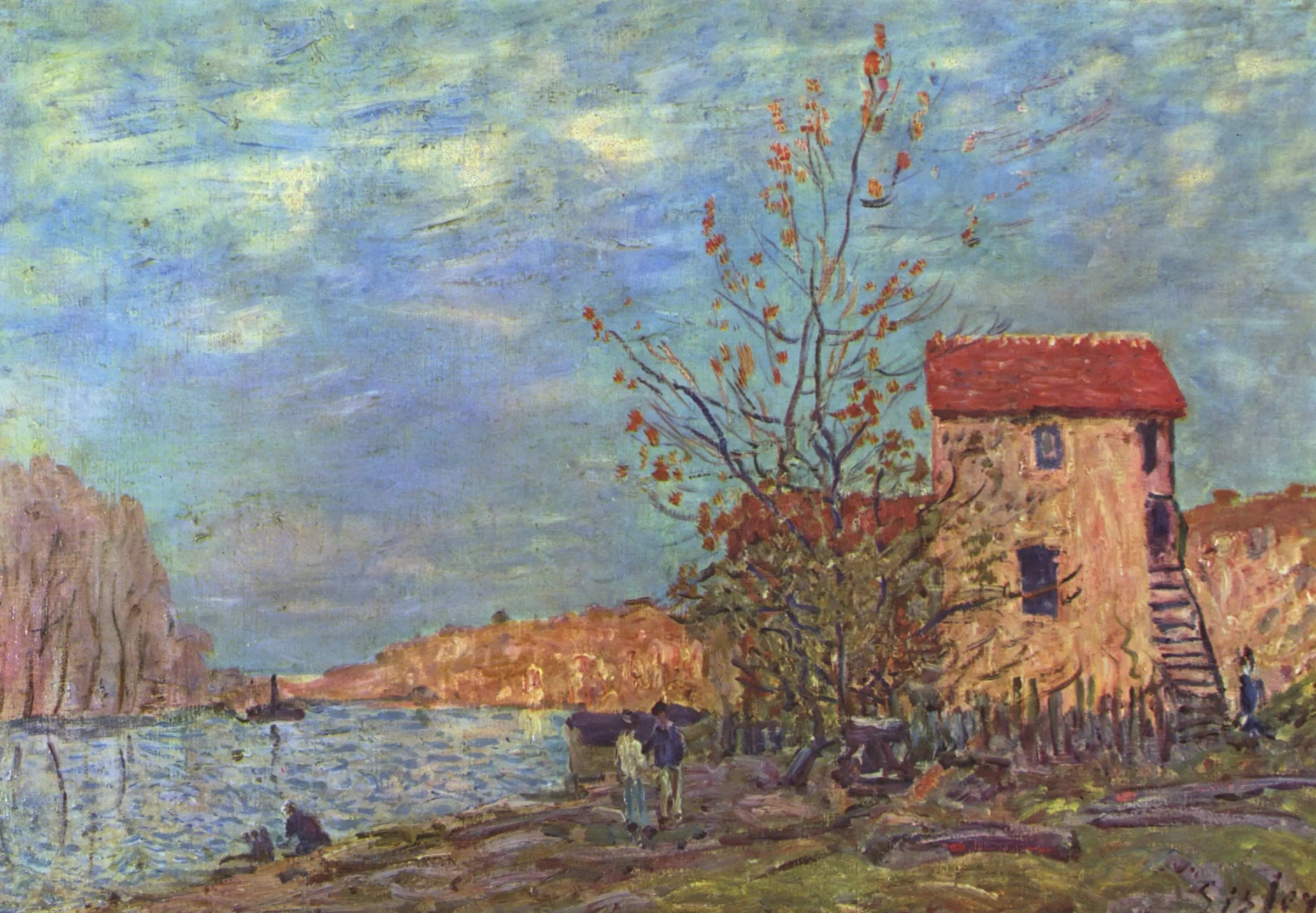
The Loing at Moret
- Original dimensions
- 65.5 x 51 cm
- Museum
- Barberini museum
- Year
- 1883
Scene depicted
This painting , a true ode to pastoral peace, shows the tranquil waters of the Loing bordered by lush trees, evoking a space of serenity and contemplation. Sisley captures a suspended moment, where the reflection of light dances on the water's surface, bringing to life a scene imbued with calm and natural beauty.
Historical context
Iconic work of the Impressionist movement, Le Loing à Moret was created in 1883, in the heart of the charming town of Moret-sur-Loing, France. This painting reflects the luminous and atmospheric fluctuations of a time when art sought to capture the fleeting beauty of nature. Today, this painting is preserved at the Barberini museum , a setting where its timeless charm continues to amaze visitors.
Place in the artist's career
Le Loing à Moret represents an important milestone in Sisley's career, marking a balance between the promising beginnings of his artistic journey and a period of deep emotional development. Compared to Le Pont de la Seine à Argenteuil and La Seine à Bougival , this painting shows an evolution towards a greater mastery of light and atmosphere.
Anecdote
Alfred Sisley , passionate about nature, marvels while painting this scene: “Each brushstroke is a moment captured, a sweet melody of light,” he would have said one morning on the banks of the Loing. This sensory connection infused a living force into his masterpiece , marrying harmony and elegance in every detail.