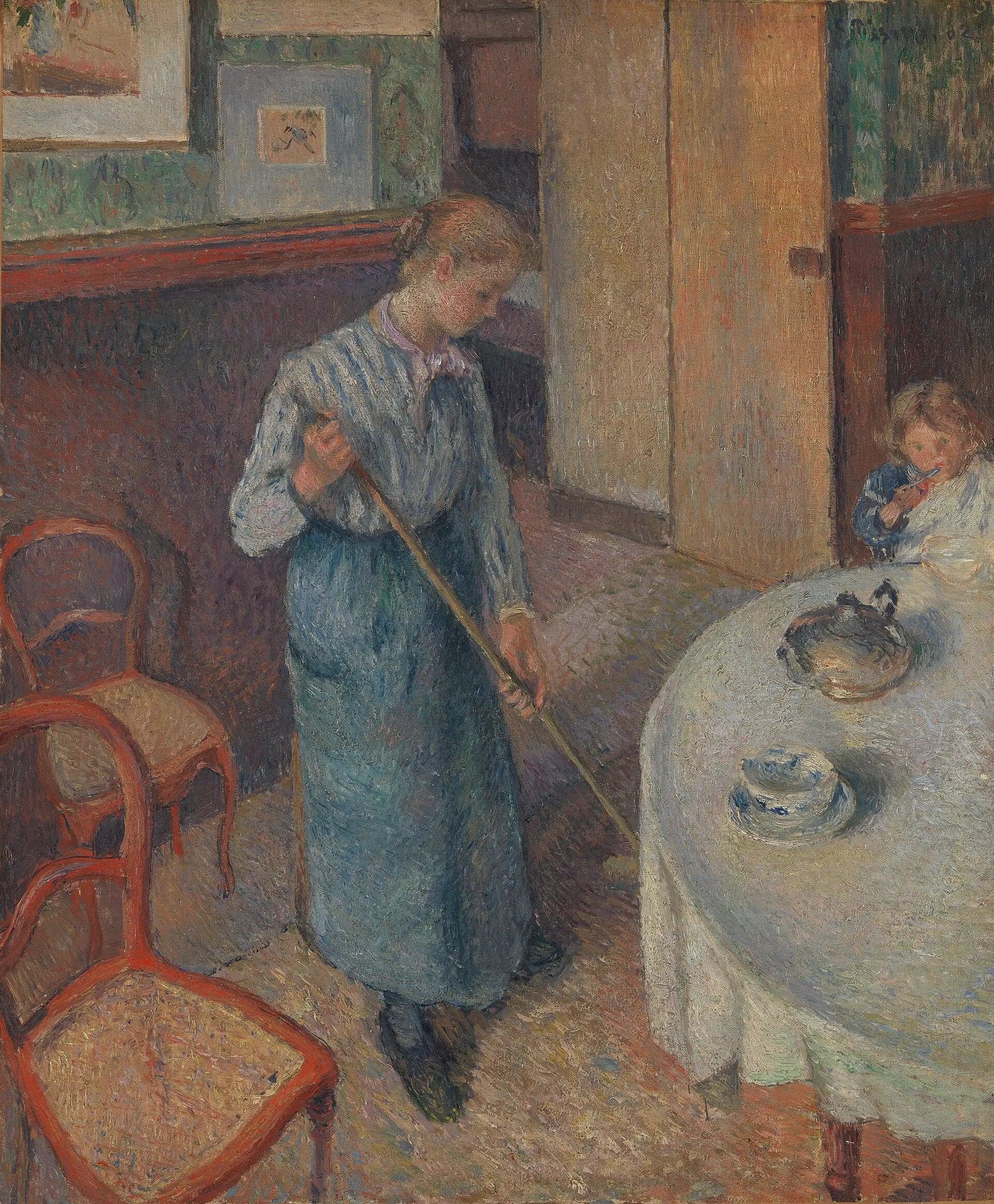
The Little Peasant
- Original dimensions
- 53 x 63.5 cm
- Museum
- Not specified
- Year
- 1882
Scene depicted
This canvas transports us into a snapshot of peasant daily life, highlighting the central figure of a young woman who, while attending to agricultural tasks, radiates tranquility and dignity. The simple gestures of her work in a bucolic environment evoke a deep connection with the land, revealing the intimacy and hidden beauty of rural lives. The composition, full of warmth and tenderness, invites us to feel the peace of a moment suspended in time.
Historical context
Created in 1882 at the heart of Impressionism , the painting by Camille Pissarro , The Little Peasant , emerges in an artistic context where light and nature are celebrated. The scene depicts a peasant woman in the calm of a countryside landscape, revealing a simple yet emotionally rich life. Although the current location of the painting is not documented, its impact lies in its ability to invite the observer to contemplate an era of authenticity and harmony with nature.
Place in the artist's career
The painting , The Little Peasant , precedes Pissarro's highest stylistic peaks, marking an essential step in his quest for authenticity. It fits perfectly into a period of maturity where the artist juxtaposes modernity and tradition, akin to his other paintings , such as The Hay Harvest and The Road of the Oise Valley , both of which testify to his technical and emotional evolution within a changing world.
Anecdote
Pissarro once stated: “Each canvas is a cry from the heart, an invitation to share my vision of the world.” This sentiment resonates particularly with The Little Peasant , which was inspired by a sunny morning when the artist observed a woman at work, lost in her thoughts. The golden light that bathed the scene reflects the brilliance of this inspiration, transforming a simple image into a poignant pictorial narrative.