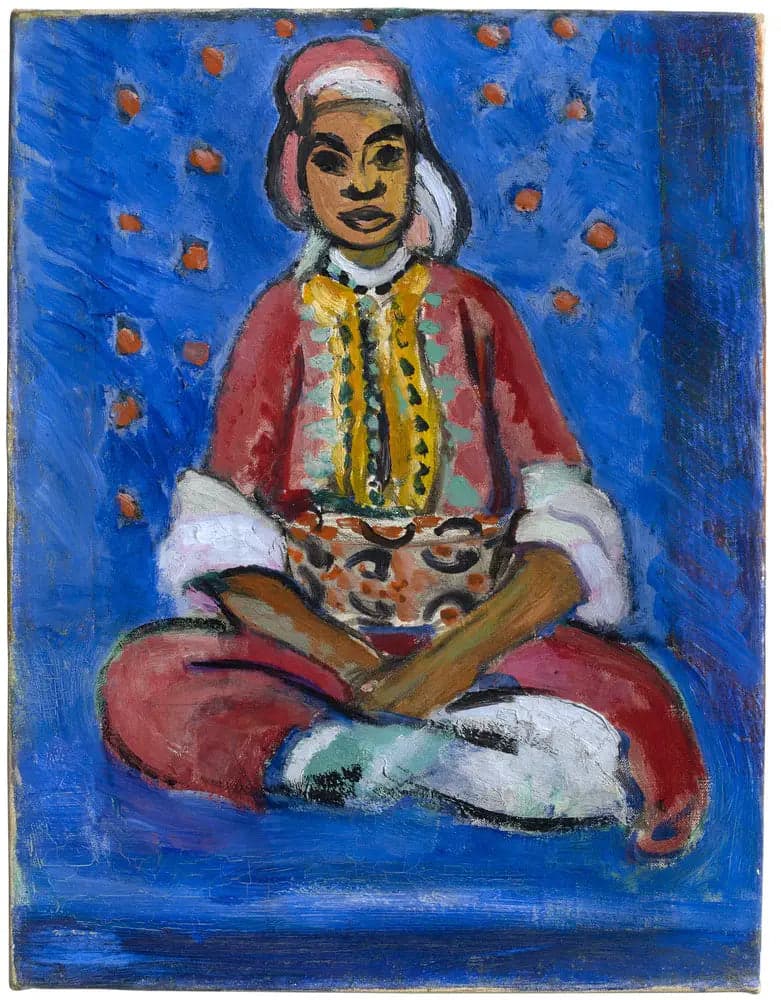
The Little Mulatto
- Original dimensions
- 27.5 x 35.5 cm
- Museum
- Grenoble Museum
- Year
- 1912
Scene depicted
In The Little Mulatto , Matisse captures a moment of grace and delicate beauty. The canvas depicts a vibrant portrait of a young woman, leading the viewer to contemplate the richness and diversity of humanity. The simplified forms and bright colors intertwine to offer a visual perception where emotion prevails over reality. The work thus becomes a reflection of the artistic sensitivity of its creator, a journey into the heart of a soul.
Historical context
Painted in Grenoble in 1912, The Little Mulatto is part of the Fauvist movement, a period when Matisse boldly explores color and form. This iconic painting, now displayed at the Grenoble Museum , reflects an era marked by profound artistic changes and a quest for personal expression. The dimensions of the painting make it a delicate piece, inviting exploration of the nuances of culture and emotions of the time.
Place in the artist's career
The Little Mulatto stands as a milestone in the career of Henri Matisse , illustrating the evolution of his style and perception. This painting, from a period of artistic maturation, can be compared to other major works like The Dance and The Joy of Life , which also demonstrate his ability to create an atmosphere brimming with emotions. Together, these canvases illustrate a journey of expression that is ever richer and bolder.
Anecdote
Henri Matisse once stated: "Color is the panel of emotion." Imagine him, one sweet morning where the sun's rays dance in his studio, inspired by the face of a young mulatto encountered around a street corner. This fleeting moment marked the genesis of this masterpiece , where light and vibrant hues unite to create a timeless pictorial work.
Major exhibitions
The Black Model from Géricault to Matisse