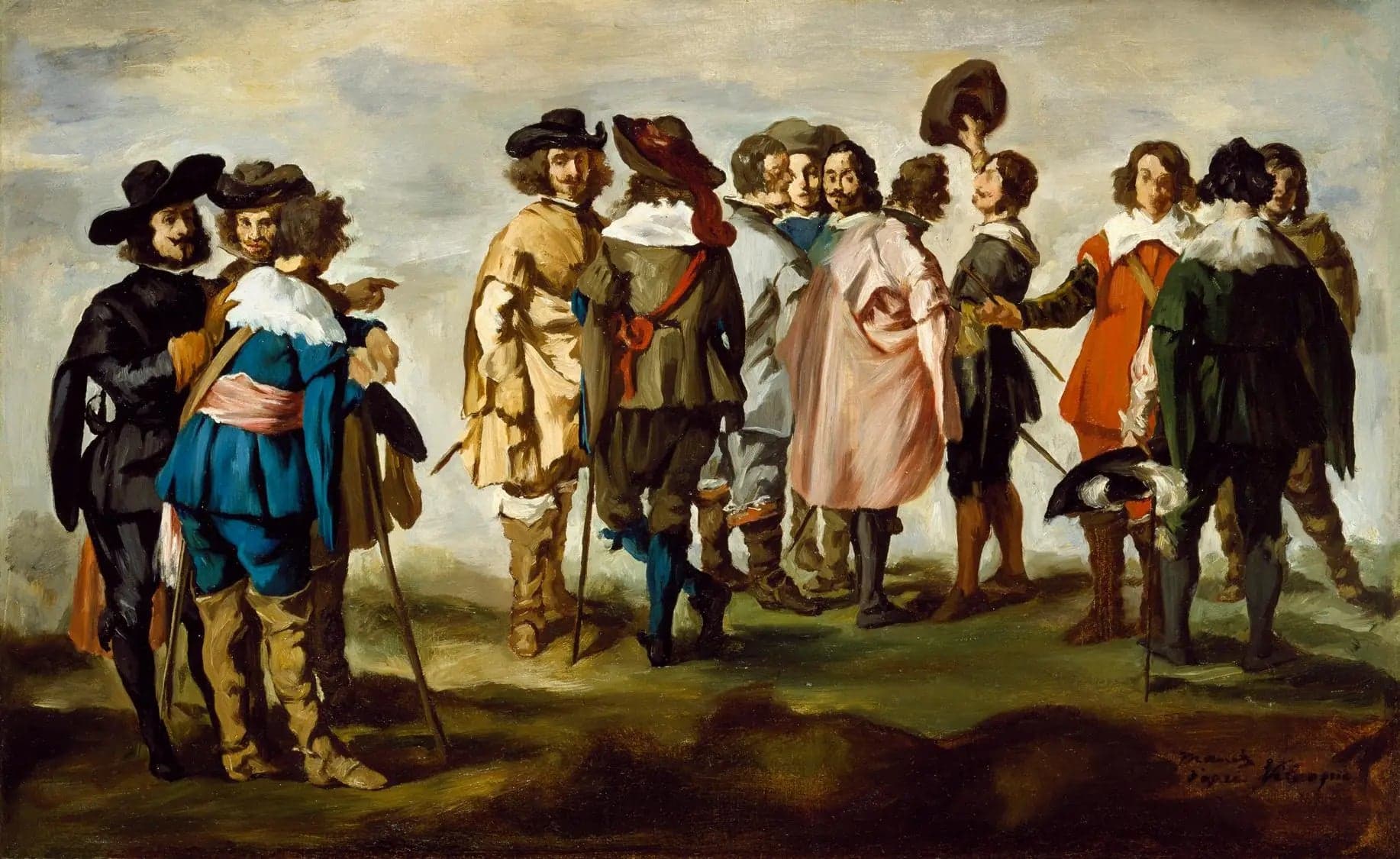
The Little Horsemen
- Original dimensions
- 75.5 x 45.5 cm
- Museum
- Chrysler Museum of Art
- Year
- 1860
Scene depicted
In this canvas , Manet captures a moment of childlike play, where little horsemen, spirited, frolic carefree. The dynamic composition resonates with joy and energy, emblematic of the free spirit of childhood. This pictorial work is much more than a simple sketch; it evokes the liveliness of a moment, thus codifying a collective memory.
Historical context
Created in 1860, in Paris, this painting is part of the Impressionist movement, which revolutionizes artistic techniques. At that time, the city is in full cultural effervescence, influenced by the transition between classicism and modernity. Today, this canvas is carefully preserved at the Chrysler Museum of Art , a true showcase of artistic heritage.
Place in the artist's career
The Little Horsemen is situated at a turning point in the career of Édouard Manet , a period where he skillfully merges realism and impressionism . Alongside it, other paintings like Olympia and The Luncheon on the Grass testify to his innovative boldness, his techniques sharpen, just like his exploration of the nuances of light and color.
Anecdote
Édouard Manet once declared: “Light is the soul of my painting .” This phrase resonates particularly when observing his masterpiece . Imagine him, on a cool spring morning, captivated by the dance of shadows and lights on the canvas, it is then that he captures the innocence and vitality of his young subjects, immortalized in The Little Horsemen.