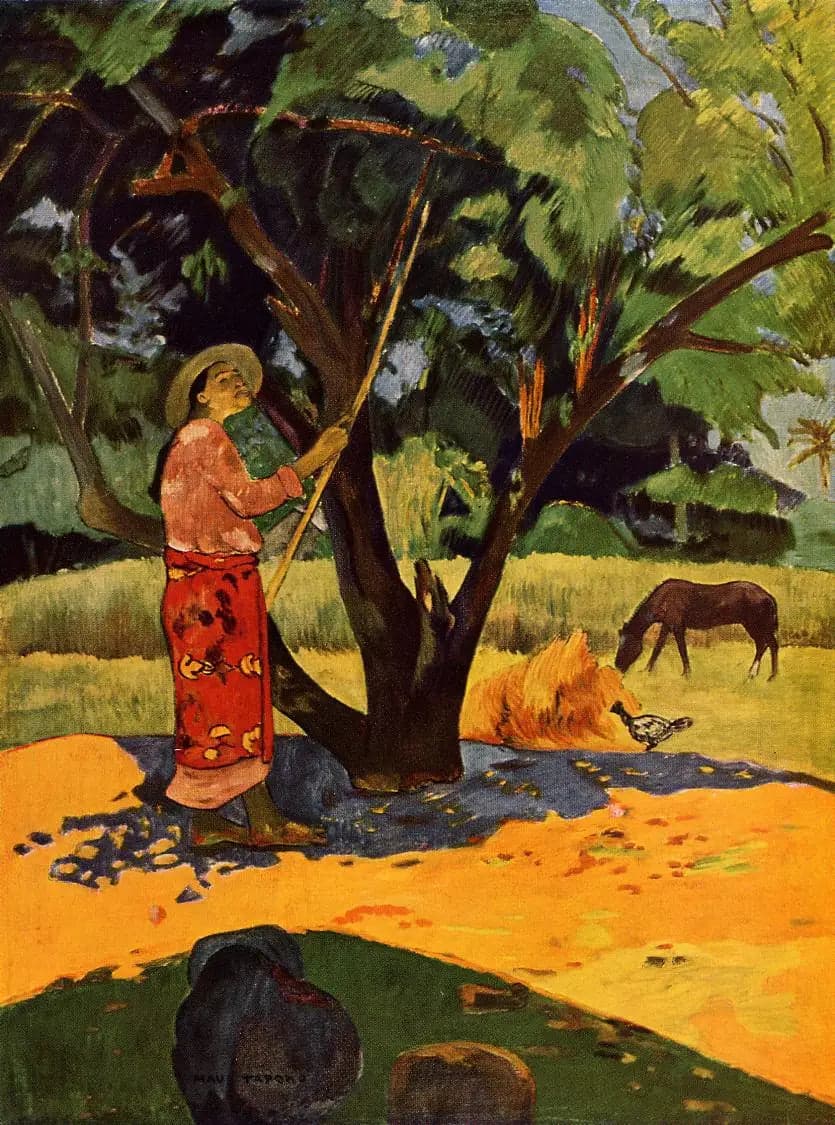
The Lemon Harvest
- Original dimensions
- 66 x 89 cm
- Museum
- Not specified
- Year
- 1892
Scene depicted
In this masterpiece, Gauguin captures the exquisite moment of a harvest, where women, delicately dressed in colorful dresses, are busy picking lemons from exuberant trees. The work, vibrant with life, does not merely depict a simple rural scene; it invites the viewer to feel the warm sunlight and the sweetness of the golden fruits, testifying to the richness of Creole nature.
Historical context
Created in 1892, this painting emblematic of Paul Gauguin is a perfect manifestation of post-impressionist art, which mainly developed in France, particularly in Pont-Aven in Brittany. The vibrant scene of The Lemon Harvest evokes the golden lights and saturated colors of this artistic period, reflecting a world in full transformation. Unfortunately, the current location of this painting is not specified, but its timeless beauty makes it unforgettable.
Place in the artist's career
The Lemon Harvest fits into a pivotal period for Paul Gauguin , marking his exploration of colors and forms. Alongside paintings such as Vision after the Sermon and The Sorcerer of Hiva Oa, this painting reveals the stylistic upheaval of the artist, moving from a classic post-impressionism to a more symbolic and emotional artistic language.
Anecdote
“I paint what I feel, what I see, and the magic of nature guides me.” In this passage, Gauguin describes the intensity of a sunny morning, marked by the intoxicating scent of citrus. It is in this abundant atmosphere that he conceptualized his canvas , an ode to the beauty of nature.