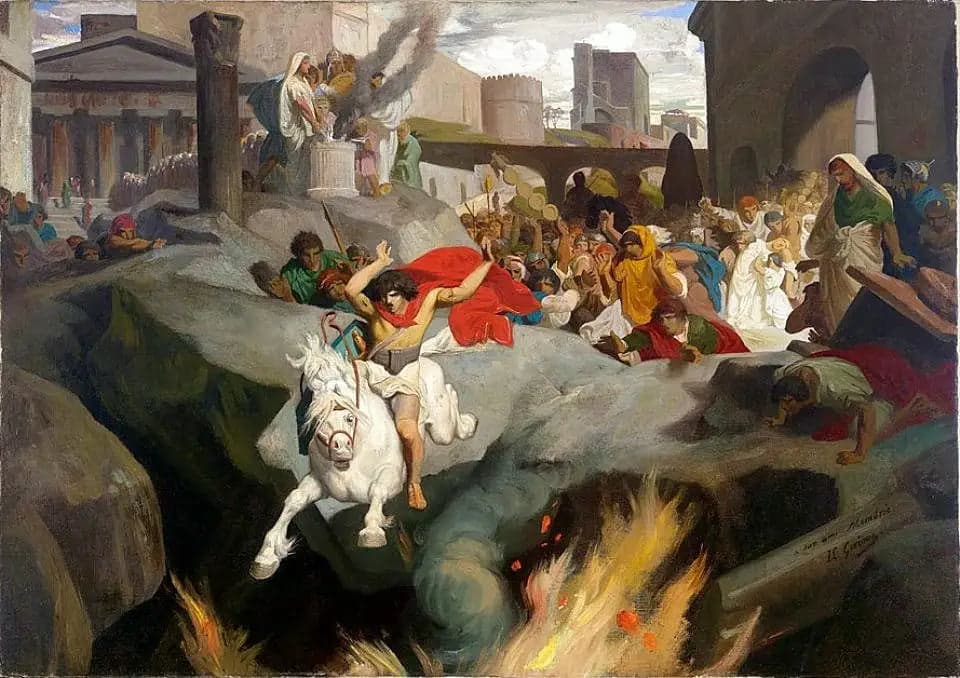
The Leap of Mettius Curtius - Jean
- Original dimensions
- 76.2 x 53.3 cm
- Museum
- Smith College Museum of Art
- Year
- 1850
Scene depicted
The canvas depicts the heroic moment when Mettius Curtius leaps into the abyss, a symbol of sacrifice and bravery. This scene, now legendary, reflects the Roman spirit, a call to act for the good of the homeland. Spectators feel the intensity of this gesture, captivated by the dynamics of action and the nobility of heroism in the face of challenges.
Historical context
This painting is emblematic and was created in 1850, at the height of the French academic movement . Jean-Léon Gérôme , a leading figure of this movement, managed to capture the essence of a historical moment with incredible precision. The canvas is currently on display at the Smith College Museum of Art , adding an educational dimension to its beauty. The context of this work lies in a rich artistic heritage, at a time when ancient Italy inspired intense fascination.
Place in the artist's career
The Leap of Mettius Curtius is situated at a pivotal moment in Gérôme's career, marking the maturity of his style. In parallel, his other works like Pollice verso and Pygmalion and Galatea also illustrate his technical mastery and penchant for historical narratives. Each of these canvases testifies to his evolution, between realism and idealism, paving the way for an entire generation of artists.
Anecdote
"Light and life are nothing without emotion," Gérôme might have said while contemplating the vibrant scene of the masterpiece . Imagine the moment he was struck by the idea of immortalizing this Roman legend, in the freshness of a spring morning. This work, a true emotional crescendo, evokes the heartbeat of a bygone era.