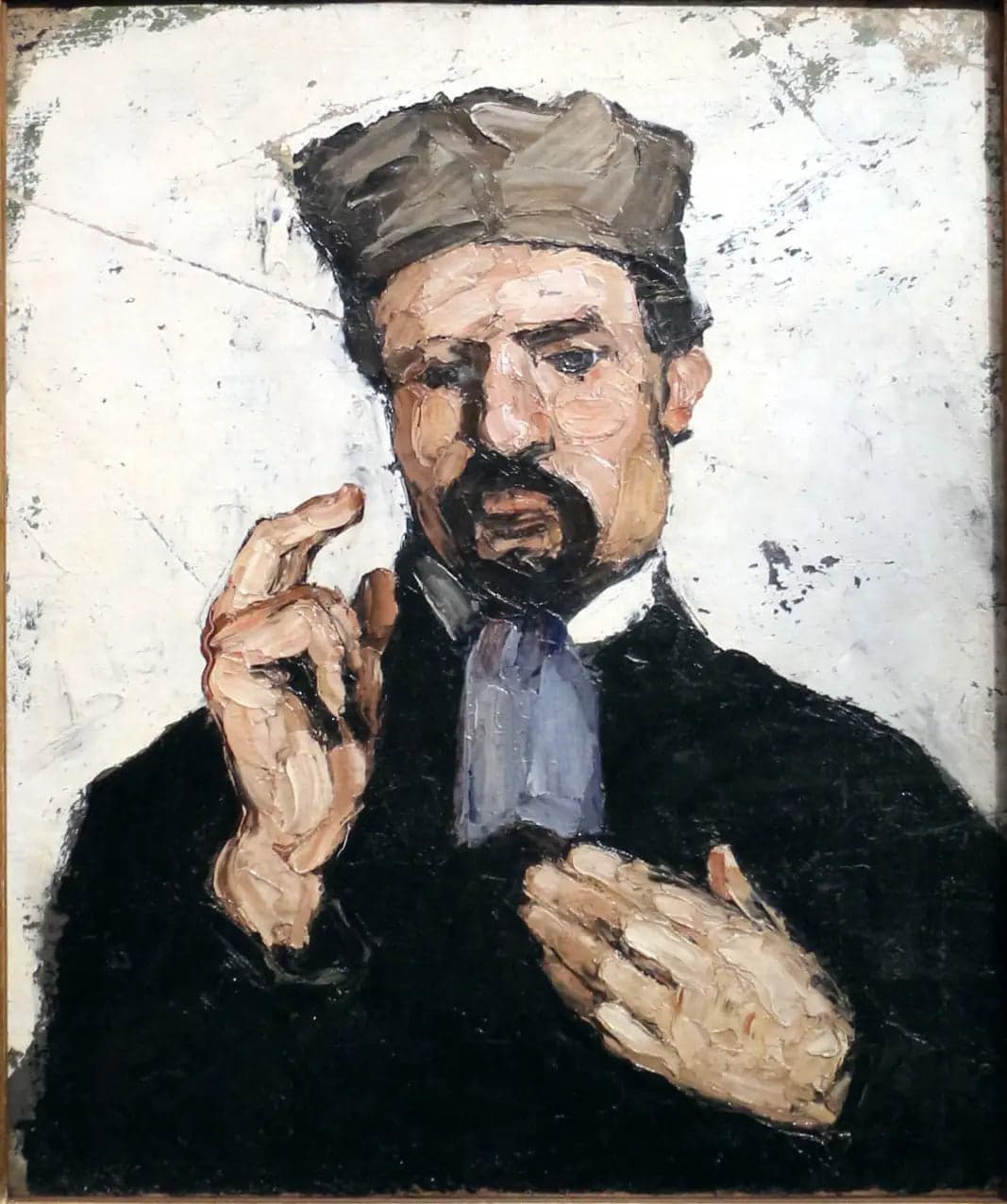
The Lawyer
- Original dimensions
- 54.5 x 65 cm
- Museum
- Orsay Museum
- Year
- 1866
Scene depicted
The pictorial work represents a lawyer, his coldness and penetrating gaze animating the canvas . This painting raises questions about identity, judgment, and contemplation, translating the tension between external appearance and hidden truth. Through subtle nuances of light and shadow, Cézanne evokes not only the character but also his deep essence, each brushstroke resonating like a silent confession.
Historical context
Created in 1866, in the artistic heart of Paris, The Lawyer is part of the Impressionist movement, although it already foreshadows what will become Cézanne's unique style. This canvas now resides at the Orsay Museum , where visitors' gazes are drawn to its boldness and depth. The Parisian backdrop of this era, imbued with intellectual fervor, shaped this pictorial work in service of an invaluable artistic heritage.
Place in the artist's career
The Lawyer marks a pivotal moment in Cézanne's career. Although he is still at the beginning of his journey, this painting testifies to a stylistic maturation. Alongside it, masterpieces such as The Card Players and The Large Bathers illustrate his quest for truth and his innovative approach to representation. All these paintings are milestones in the redefinition of modern art.
Anecdote
“Art is a reflection of nature, a mirror of our existence,” said Cézanne. This masterpiece was born on a cool spring morning, as the light scent of flowers mingled with the warmth of the Paris sun inspired the artist. The painting invites intimate contemplation, promising an inner quest that the painting brilliantly illustrates.