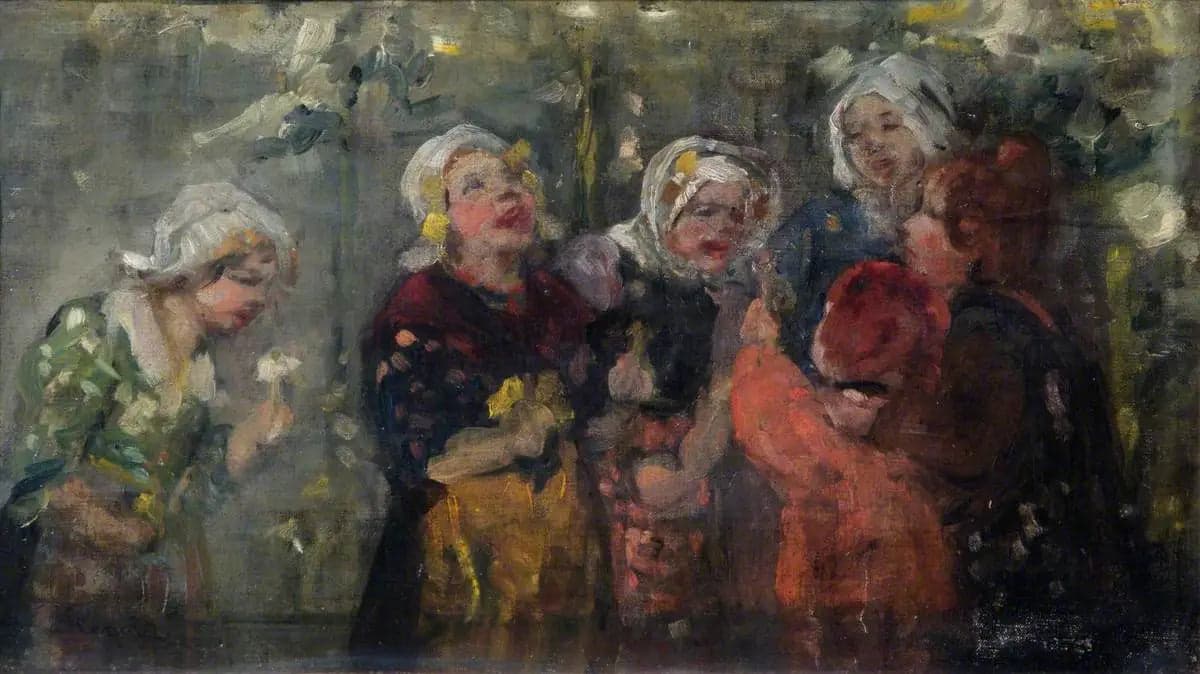
The Laughing Peasants - Pierre
- Original dimensions
- 42.2 x 23.5 cm
- Museum
- William Morris Gallery
Scene depicted
In the painting “The Laughing Peasants,” we discover a scene vibrant with life, where two peasants are captured in a burst of shared laughter. The delicate features and animated expressions echo a moment of complicity, drawing the viewer into a realm of human warmth, far from the troubles of everyday life. This pastoral scene evokes the simple and authentic joy of rural work.
Historical context
Created in 1881, this canvas is an iconic piece of the Impressionist movement set in the serene backdrop of France, at a time when art began to free itself from academic constraints. Renoir, master of light and movement, transports us into a world where each brushstroke evokes the joy of living. Currently housed at the William Morris Gallery, this painting is a true testament to the artistic effervescence of its time.
Place in the artist's career
This painting marks a turning point in Renoir's career as he explores human relationships and emotions with renewed intensity. Alongside his masterpiece “The Luncheon of the Boating Party” and “Dance in the City,” one perceives a fascinating evolution of his style, where light and movement serve as both a means of expression and an exploration of inner feelings.
Anecdote
Renoir once declared: “Painting must be a reflection of life, cheerful and bright.” It is precisely this philosophy that drove him to capture these laughing peasants in a field bathed in soft light, one spring morning. This fleeting moment, shared between laughter and blooming fields, is forever recorded in the palpable emotion of this pictorial work .