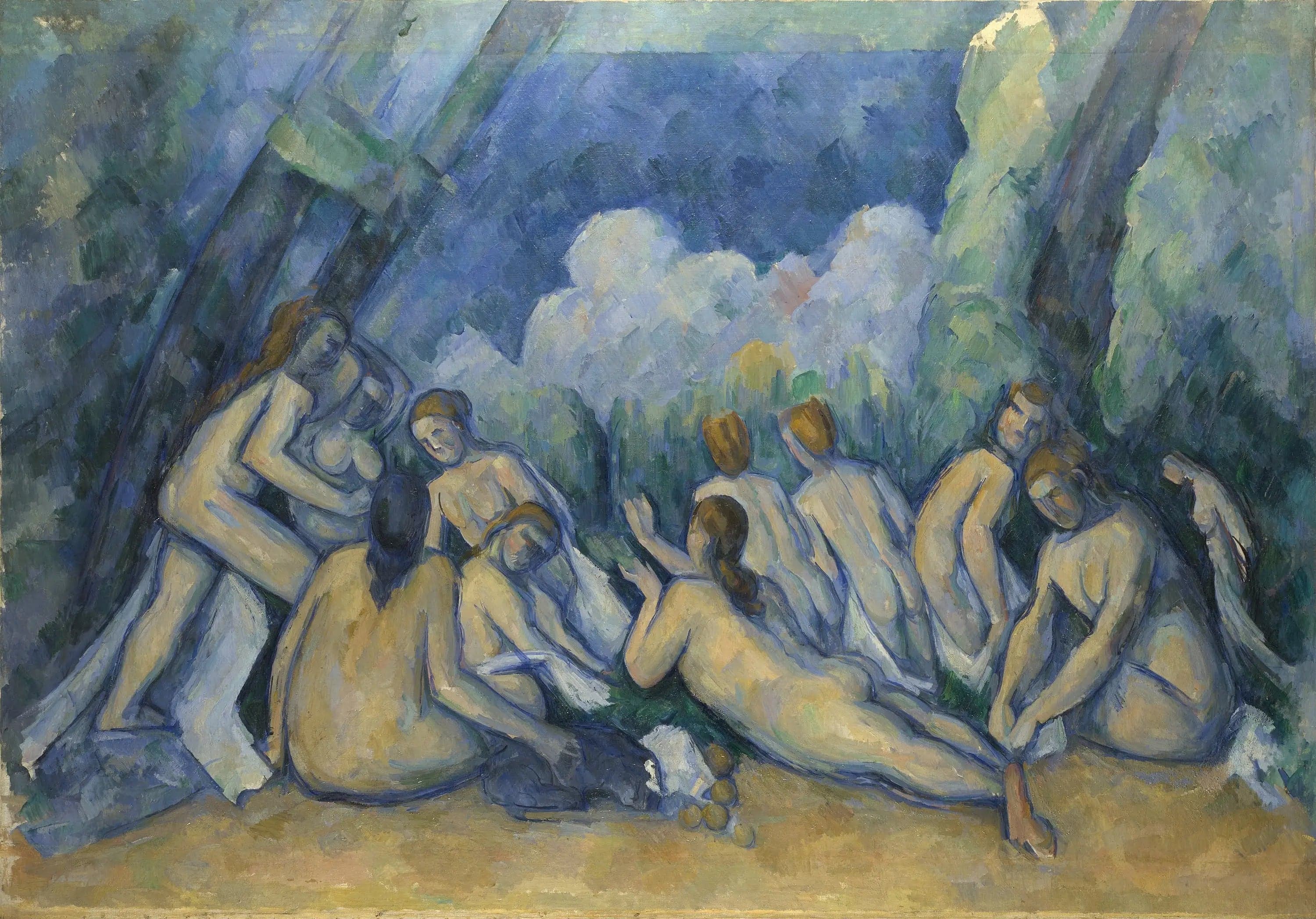
The Large Bathers
- Original dimensions
- 191 x 136 cm
- Movement
- post impressionism
- Museum
- National Gallery
- Year
- 1894
Scene depicted
This canvas represents an idyllic scene, where nature and conviviality meet. Women bathed in light flourish in a lush landscape, embodying the beauty of everyday life. Cézanne, through his unique style, captures the essence of a fleeting moment, thus revealing a harmonious and warm composition.
Historical context
Created in 1894, in Aix-en-Provence, this painting is revealed as an authentic representation of the post impressionist movement. Evoking an endless summer, the work is inscribed in the history of art at a time when artists sought a new approach to color and light. The canvas is now displayed at the National Gallery, offering visitors a glimpse of a masterpiece that marked its time, with dimensions that highlight the grandeur of this pictorial work.
Place in the artist's career
The Large Bathers positions itself as a fundamental work in Cézanne's career, representing both a climax and a transition towards his artistic maturity. In parallel with other paintings such as The Montagne Sainte-Victoire and The Card Players , this painting illustrates the painter's technical evolution, oscillating between the figurative and the abstract, each using forms and colors to convey emotions.
Anecdote
“True painting is that which is not seen, but felt.” This quote from Cézanne evokes a sunny morning, where he observed bathers near the river, their laughter mingling with the songs of birds. This ephemeral moment, where light plays on bodies and water, inspired the evocative power of The Large Bathers , a witness to a sweet and vibrant summer atmosphere.