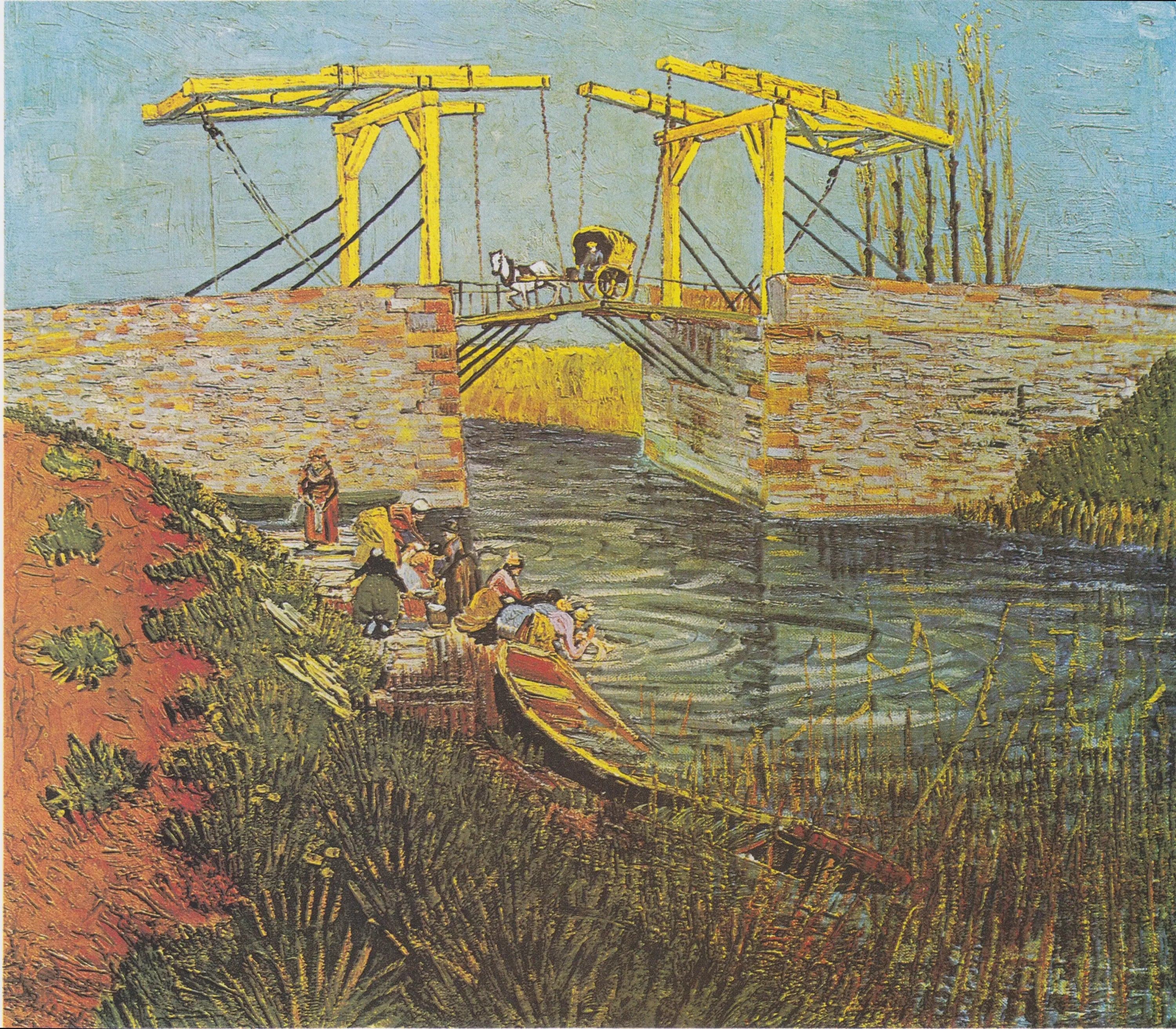
The Langlois Bridge at Arles
Scene depicted
The painting captures the iconic scene of a bridge, where nature and human creation intertwine harmoniously. The bright sky overlooks the landscape, where shadow and light dance with the reflections on the water. Van Gogh transports us to a suspended moment, filled with the magic of light, a frozen instant that breathes peace and contemplation.
Historical context
This iconic work, The Langlois Bridge in Arles , was created in 1888 in the charming city of Arles , a true epicenter of the post-impressionist movement. In a vibrant artistic atmosphere, Vincent van Gogh captured the beauty of the Provençal landscapes, which come to life under his brush. The painting, currently housed at the Central Collecting Point Museum in Munich, elevates its viewer to a unique sensory experience. With dimensions of 60 x 64 cm, this painting is a masterpiece in its own right.
Place in the artist's career
The Langlois Bridge in Arles holds a privileged place in Van Gogh's career, illustrating his bold exploration of colors and light. This painting transcends his previous style, offering a transition to later works such as The Starry Night and The Irises , marking the flourishing of his artistic genius while testifying to a sought-after maturity.
Anecdote
Vincent van Gogh once said: "Nature does not reproduce itself, but it is always beautiful." On that very first spring morning when he settled on the banks of the Rhône, he felt a thrill of wonder at the sight of this bridge. This intensely vibrant emotion is imbued in every brushstroke of The Langlois Bridge in Arles , resonating powerfully throughout his pictorial work.