The Lady of Shalott
Scene depicted
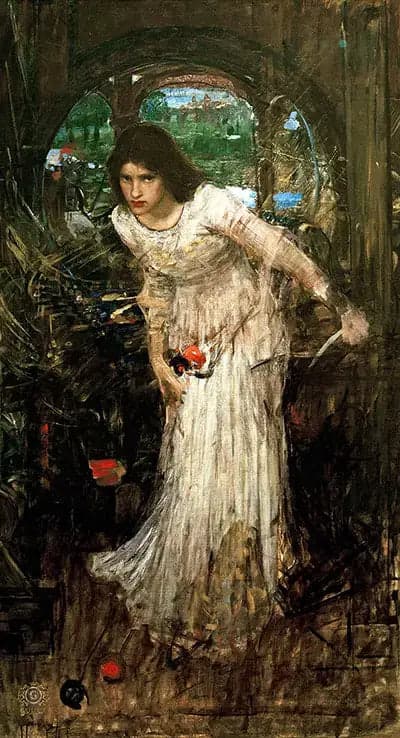
The painting depicts the legend of the Lady of Shalott, an enchanted woman condemned to observe the world through her mirror without ever participating in it. In the image, she touches the vibrant colors of reality as she escapes the imprisonment of her fate. This painting embodies the quest for freedom and the poignant sacrifice of art for love, resonating deeply within us.
Historical context
Created in 1888, this painting is set in the Victorian romantic framework, in London, England. Its author, John William Waterhouse , creates his masterpiece during a time when the Pre-Raphaelite movement experiences an unprecedented creative surge, blending mythology and modern sensibility. This canvas , currently exhibited at the Tate Britain , measures 162.5 cm by 94 cm, a size that gives it an imposing presence while making it accessible to the admiring gaze of visitors.
Place in the artist's career
The Lady of Shalott represents a turning point in Waterhouse's career, piquing public interest with his mastery of the artistic trends of his time. Completed alongside other works like Ophelia and The Death of Arthur , this canvas embodies a moment of stylistic peak, where light and movement invite the viewer to introspection on the themes of life, love, and sacrifice.
Anecdote
“Beauty is the essence of the soul,” Waterhouse said while observing the calm landscapes of the British shores, awakening his inspiration for this composition . The story of the Lady of Shalott, isolated in her tower, finds its purest expression, echoing an intoxicating spring where flowers bloom under the gaze of passersby, weaving an unbreakable bond between art and life.