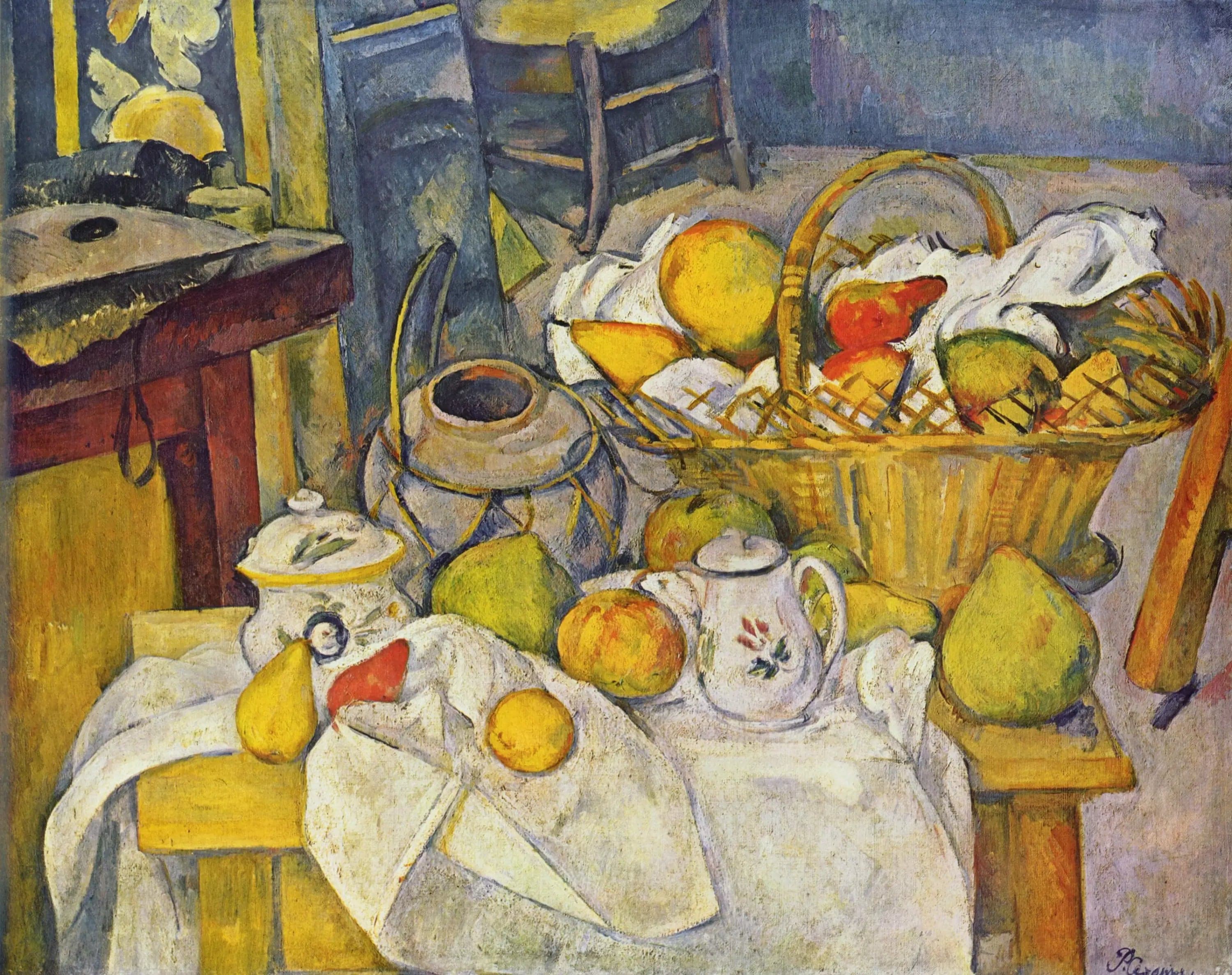
The Kitchen Table
- Original dimensions
- 81.5 x 65 cm
- Movement
- post impressionism
- Museum
- Orsay Museum
- Year
- 1888
Scene depicted
This painting illustrates an intimate domestic scene where reality and perception meet. The geometric shapes of the objects, carefully arranged on the table, invite us to admire everyday life in a new light. The object, light, and shadow dance together on the canvas, testifying not only to a scene but to a profound reflection on the representation of reality.
Historical context
Created in 1888, this painting is emblematic of the post impressionist movement that emerged in Paris. The painting is currently displayed at the Orsay Museum , a Parisian showcase for the wonders of art. This pictorial work, measuring 81.5 x 65 cm, is set in a time when art transcends realism to explore pure emotion and perception.
Place in the artist's career
“The Kitchen Table” represents a turning point in Cézanne's career, marking a period of stylistic maturity. Alongside other works like “Still Life with Apples” and “The Card Players”, we observe the evolution of his techniques and the emotional intensity that permeates his work, making him a precursor of cubism .
Anecdote
“My goal is not to paint nature but to understand it” Cézanne might have said while creating this masterpiece . Imagine him, one April morning, in his studio bathed in soft light, trying to capture the simplicity of a wooden table adorned with colorful fruits and familiar dishes. The brilliance of this scene, a resonance of his own existence, is embodied in “The Kitchen Table”.
Major exhibitions
The Cubism