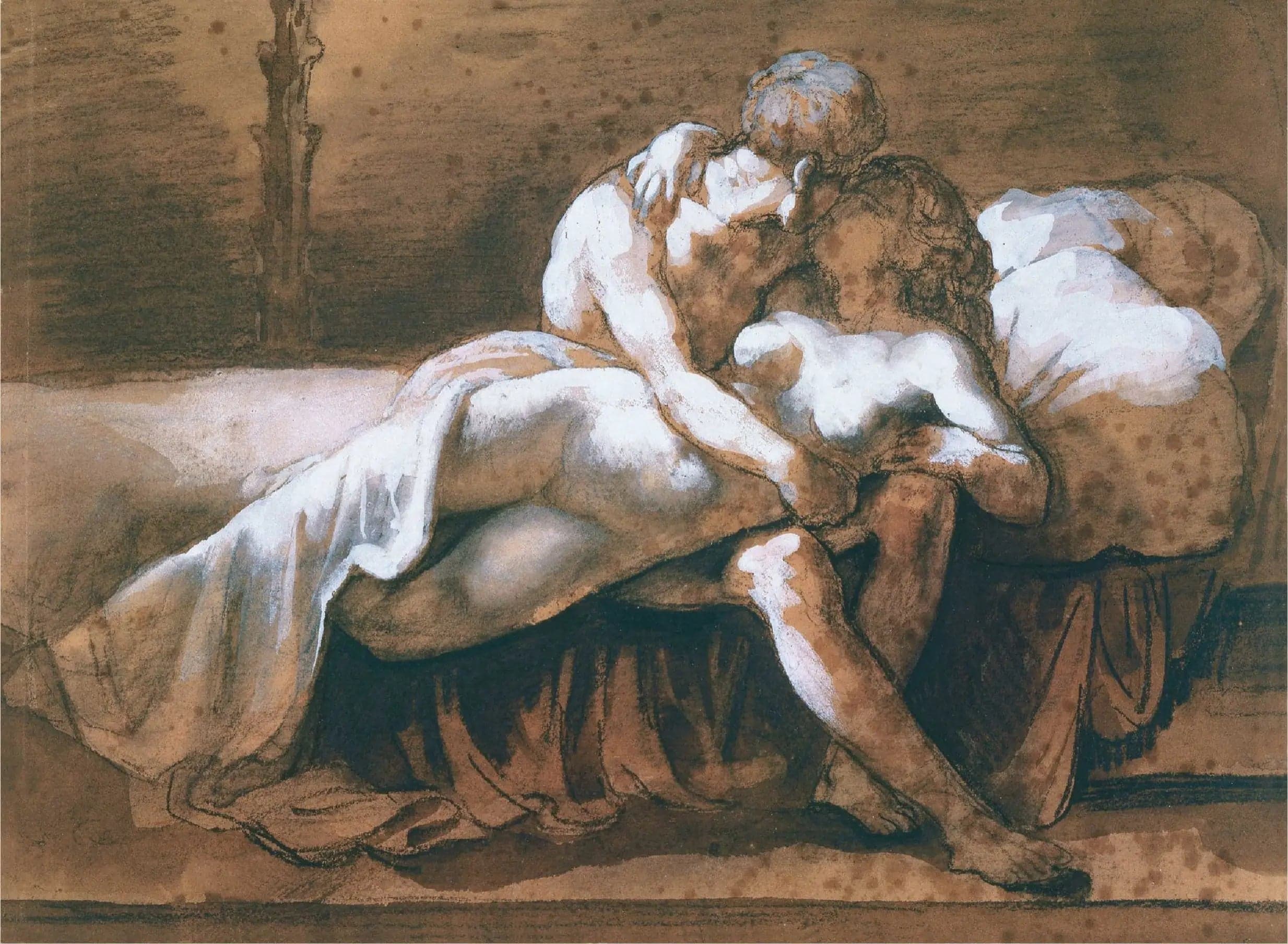
The Kiss
- Original dimensions
- 368 x 203 cm
- Museum
- Thyssen-Bornemisza Museum
- Year
- 1816
Scene depicted
The composition of The Kiss reveals a scene of deep sensuality, where two bodies intertwine tenderly, symbolizing the embrace of love. Géricault, through his meticulous art, manages to make the emotions of the characters palpable, adding a captivating dimension to this pictorial work. Viewers are left suspended in this moment of intimacy, a true ode to human passion.
Historical context
Artwork: The Kiss |BRK| Artist: Théodore Géricault |BRK| Year: 1816 |BRK| Museum: Thyssen-Bornemisza Museum |BRK| Dimensions: 368 x 203 cm |BRK|
Place in the artist's career
At the heart of Géricault's career, this painting stands as an essential milestone. It follows works such as The Raft of the Medusa and precedes compositions where shadow and light dance with even greater mastery. The Kiss denotes his technical and emotional maturity, exploring themes of love and loss, while testifying to the growing mastery of the romantic pioneer.
Anecdote
“The beauty of the moment remains frozen in passion, and the echo of this love transcends time,” Géricault might have said one spring morning as he observed the light playing on the faces of his models. The context of the creation of The Kiss evokes ardent inspirations, capturing the fleeting moment of a loving embrace, forever marking the soul of this canvas .