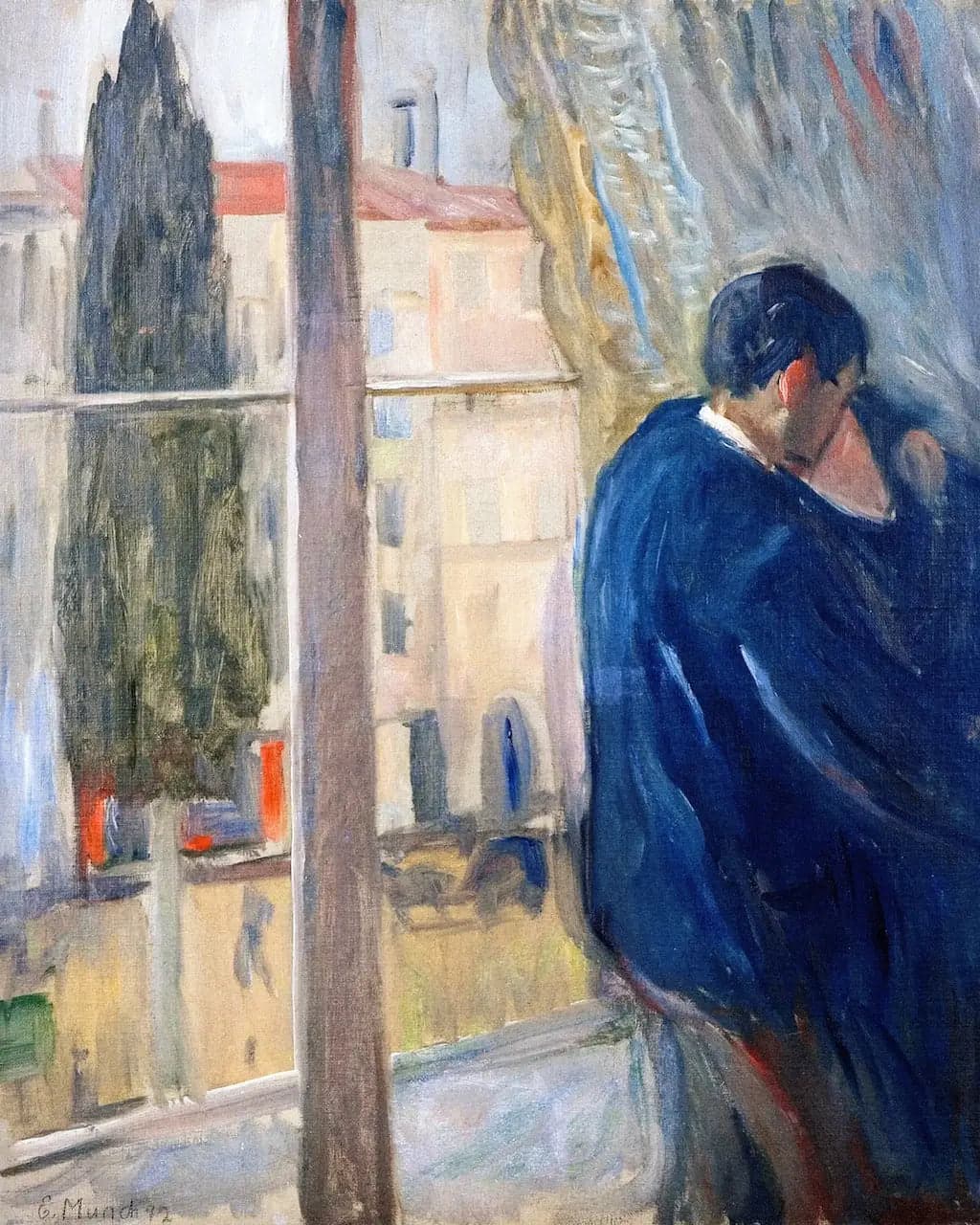
The Kiss
- Original dimensions
- 59 x 72 cm
- Museum
- Not specified
- Year
- 1892
Scene depicted
Within the canvas , "The Kiss" reveals itself to be much more than a simple act of love. In a passionate embrace, two figures merge, symbolizing an intense love that transcends physical barriers. The scene illustrates the struggle between romantic impulse and inner turmoil, each detail capturing the very essence of human emotions.
Historical context
Created in 1892, the painting "The Kiss" was born in Oslo, the capital of Norway, at the heart of a Europe influenced by Symbolism. The work, emblematic of the artistic movement, is set in a time of turmoil and emotional explorations. Today, this canvas is found in private collections, where it continues to evoke admiration and reflections on love and passion, essential dimensions of the human condition.
Place in the artist's career
"The Kiss" represents a centerpiece in Munch's artistic journey, marking a turning point in his reflection on human affections. Let us imagine alongside "The Madonna" and "The Scream," which, although distinct, embrace a similar theme of anxious and troubling love. This canvas demonstrates an evolution towards a deeper exploration of the human psyche, propelling Munch towards an unexplored form of maturity.
Anecdote
"Love is a true embrace of the soul," Munch might have said, thoughtful in an alley on a spring morning in Norway. It was at this moment that the idea for this masterpiece came to him, inspired by the breath of the breeze and the scent of cherry blossoms. This moment of life, imbued with emotional intensity, gave birth to a painting that still resonates today.