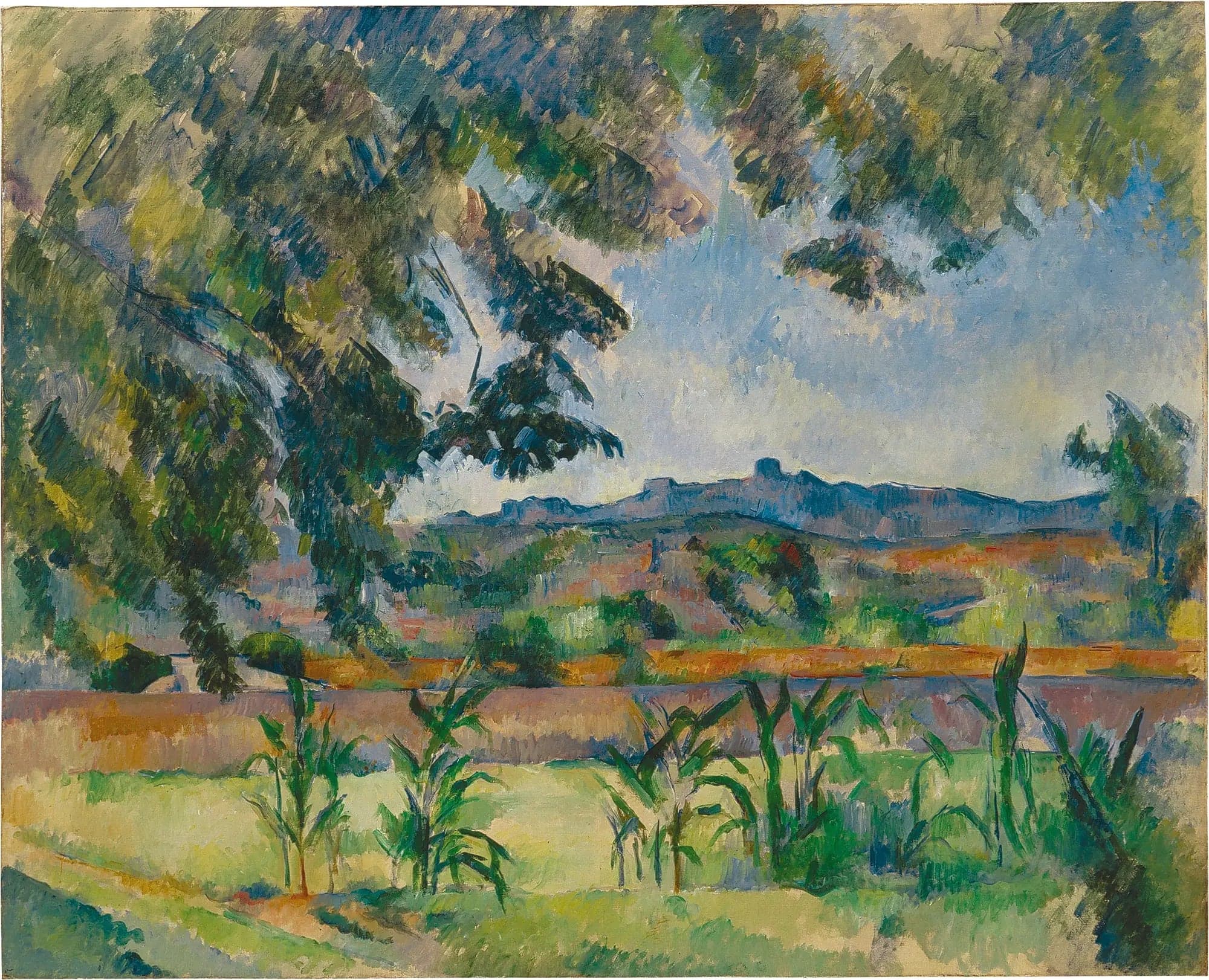
The King's Pestle
- Original dimensions
- 98 x 82 cm
- Museum
- Oskar Reinhart Museum "Am Römerholz"
- Year
- 1887
Scene depicted
In The King's Pestle , Cézanne immortalizes a rural aspect of Provence, highlighting a typical farm. With a play of subtle light and an earthy color palette, he invites the viewer to feel the authenticity of this landscape. The pictorial work immerses us in a peaceful atmosphere, where peasant work blends with the beauty of everyday life.
Historical context
Created in the heart of the Impressionist era, during the year 1887, this painting emanates from the creative passion of Paul Cézanne , a pioneer of modernity. The canvas, depicting a timeless Provençal scene, reflects a rich artistic heritage. The painting is now carefully preserved at the Oskar Reinhart Museum "Am Römerholz" in Switzerland. A composition that, with its generous dimensions of 98 x 82 cm, engages and captures the gaze.
Place in the artist's career
The King's Pestle stands as a significant milestone in Cézanne's career, marking the turn towards his mature style. The richness of textures in this work recalls other creations, such as The Sainte-Victoire Mountain and The Card Players , where one can observe the evolution of his technique and the intensity of his artistic vision.
Anecdote
“Nature is a canvas waiting to be painted.” This heartfelt cry may have been expressed as the artist, in search of light, awoke one spring morning near Aix-en-Provence. He found his inspiration in the surrounding landscape, alive and vibrant, which urged him to relentlessly capture the simple yet striking beauty of his environment, the one found in The King's Pestle .