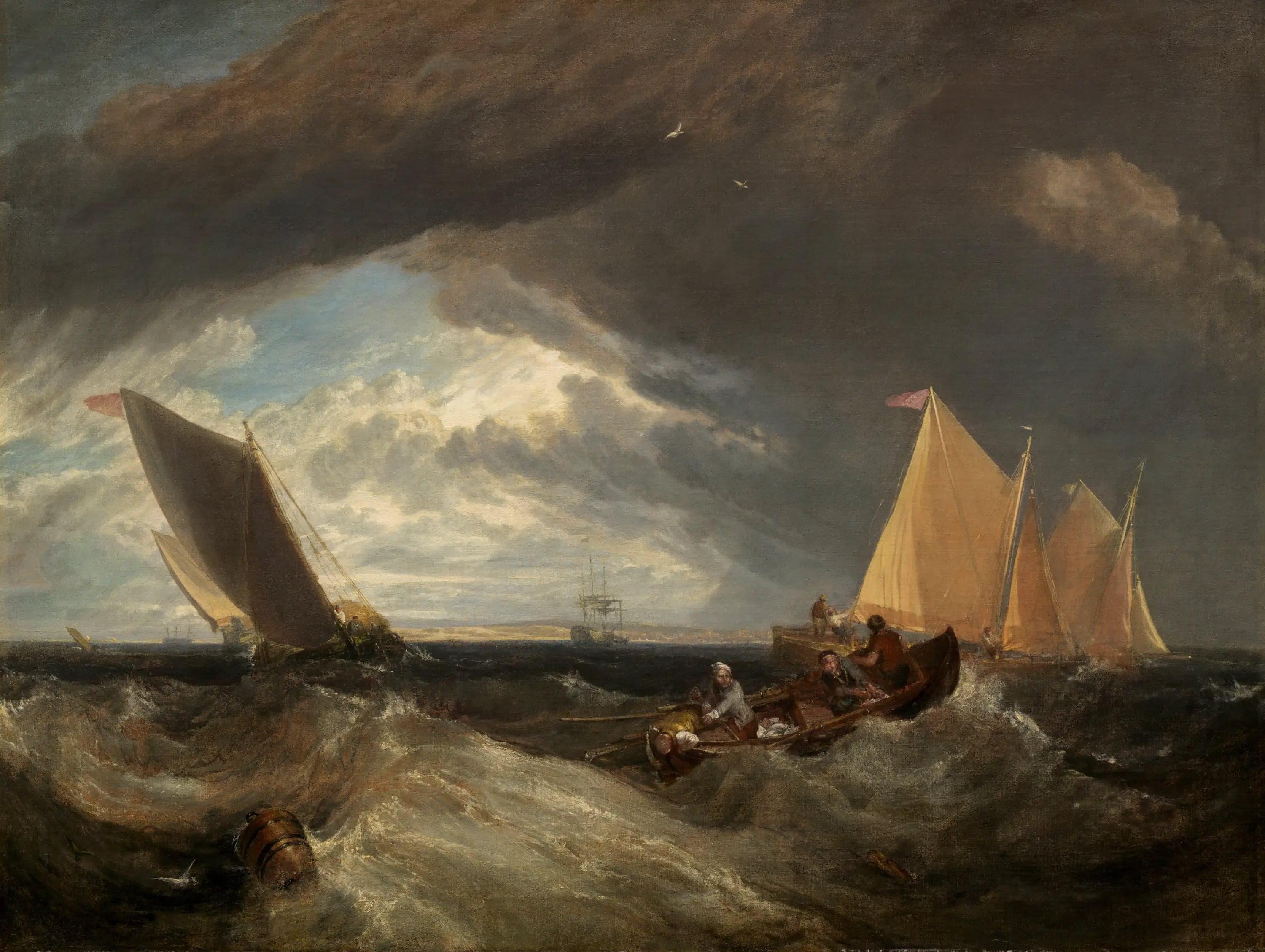
The Junction of the Thames and the Medway
- Original dimensions
- 143.7 x 108.8 cm
- Museum
- National Gallery of Art
- Year
- 1807
Scene depicted
The painting “The Junction of the Thames and the Medway” offers us a spectacular view of the confluence of two majestic rivers, embodying the vitality of the industrial era. The sailboats, elegant silhouettes under a changing sky, seem to play with the shimmering reflections of the water, evoking a silent ballet of nature in harmony with the unfolding human life. This painting, a true visual poem, transports us to a space where time seems suspended.
Historical context
Created in 1807, this painting is emblematic of the fascinating romantic period, marked by an intuitive exploration of landscapes. Turner, based in London, captured the very essence of England's iconic rivers, symbols of life and commerce. The painting is currently on display at the National Gallery of Art , inviting the viewer to a visual immersion in a unique historical moment.
Place in the artist's career
This painting is at the heart of Turner's career, representing a stylistic and emotional peak. During his early years, works like “The Fighting Temeraire” already explore light and movement, while he evolves towards bolder paintings such as “Rain, Steam, and Speed.” In this trajectory, “The Junction of the Thames and the Medway” serves as a bridge between realism and abstraction, illustrating his artistic progression.
Anecdote
“Inspiration often comes from the light dancing on the water, revealing hidden worlds.” Turner, in the early light of an April morning, often lost in thought near the shores, thus gave birth to his masterpiece. This moment of wonder at the beauty of nature marked the genesis of the canvas , anchoring powerful emotions in every brushstroke.