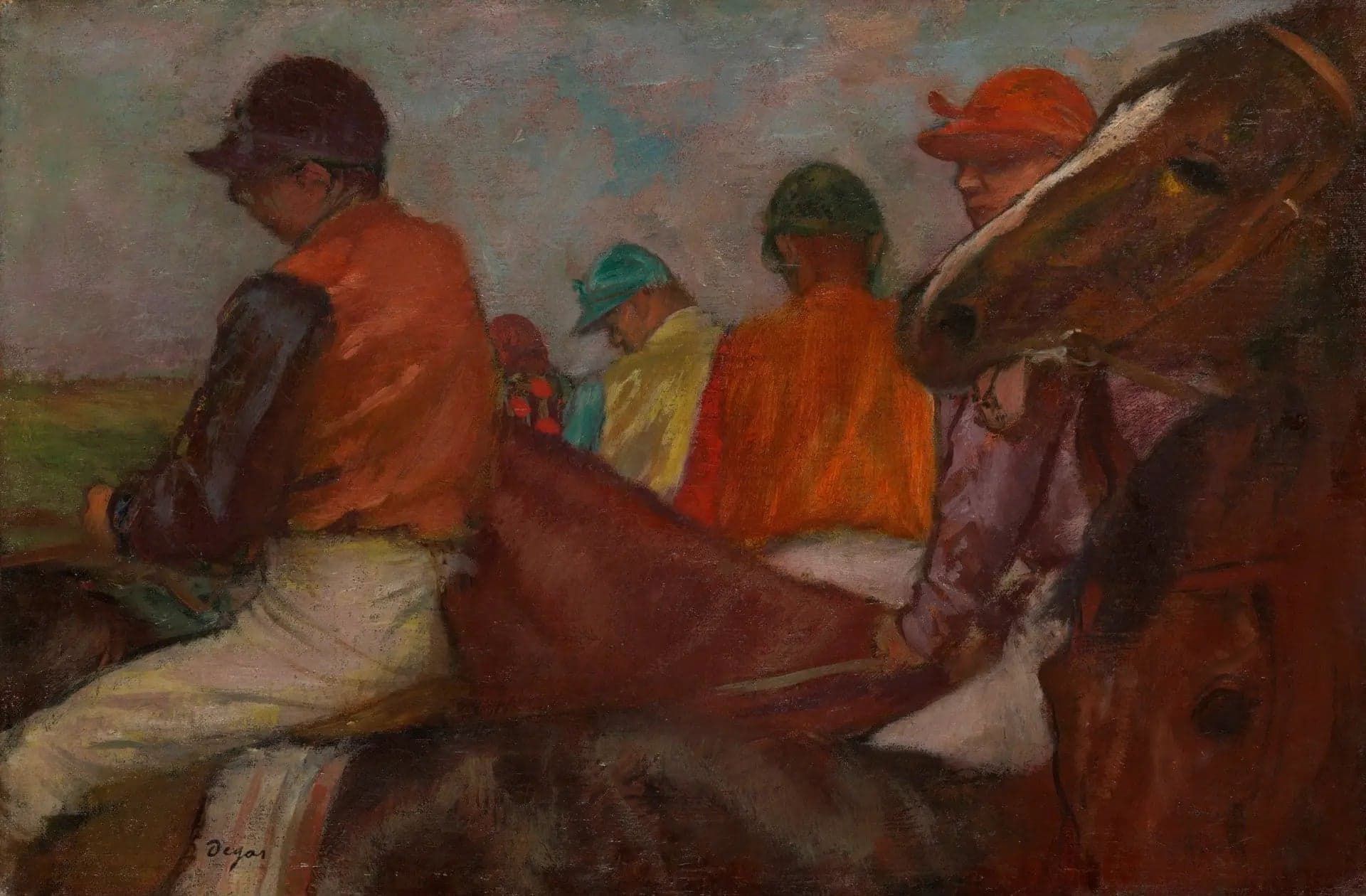
The Jockey
- Original dimensions
- 39.8 x 26.4 cm
- Museum
- Yale University Art Gallery
- Year
- 1882
Scene depicted
This canvas reveals intense concentration and natural grace, illustrating the jockey in all his equestrian splendor. At the heart of the action, the rider prepares to defy time and space, his posture evoked with such mastery that one can almost hear the sound of hooves resonating on the track. The invisible spectators feel the excitement and adrenaline, as if we were there, witnesses to this precious moment.
Historical context
Created in 1882, during a time when the Impressionist movement challenged the academic traditions of art, The Jockey evokes the equestrian passion that permeated Paris, the city of light. This canvas , currently displayed at the Yale University Art Gallery , immortalizes an atmosphere of horse racing where the science of movement and urban life intertwine. The modest dimensions of this painting hide a world rich in emotion, where every detail is a nod to the art of living of the time.
Place in the artist's career
The Jockey marks a significant milestone in the career of Edgar Degas , illustrating his interest in movement that is also found in other paintings such as The Exit from the Opera and The Dancers . This period reveals his stylistic evolution, where the liveliness and rhythm of Parisian life blend, addressing the theme of grace in movement with a crescendo of emotions.
Anecdote
“Beauty hides in movement.” On a peaceful morning, Edgar Degas saw a jockey cross his field of vision. This fleeting moment became the spark of inspiration for his masterpiece , The Jockey . An immersion in daily life, a quest for ephemeral beauty that only paintings can capture.