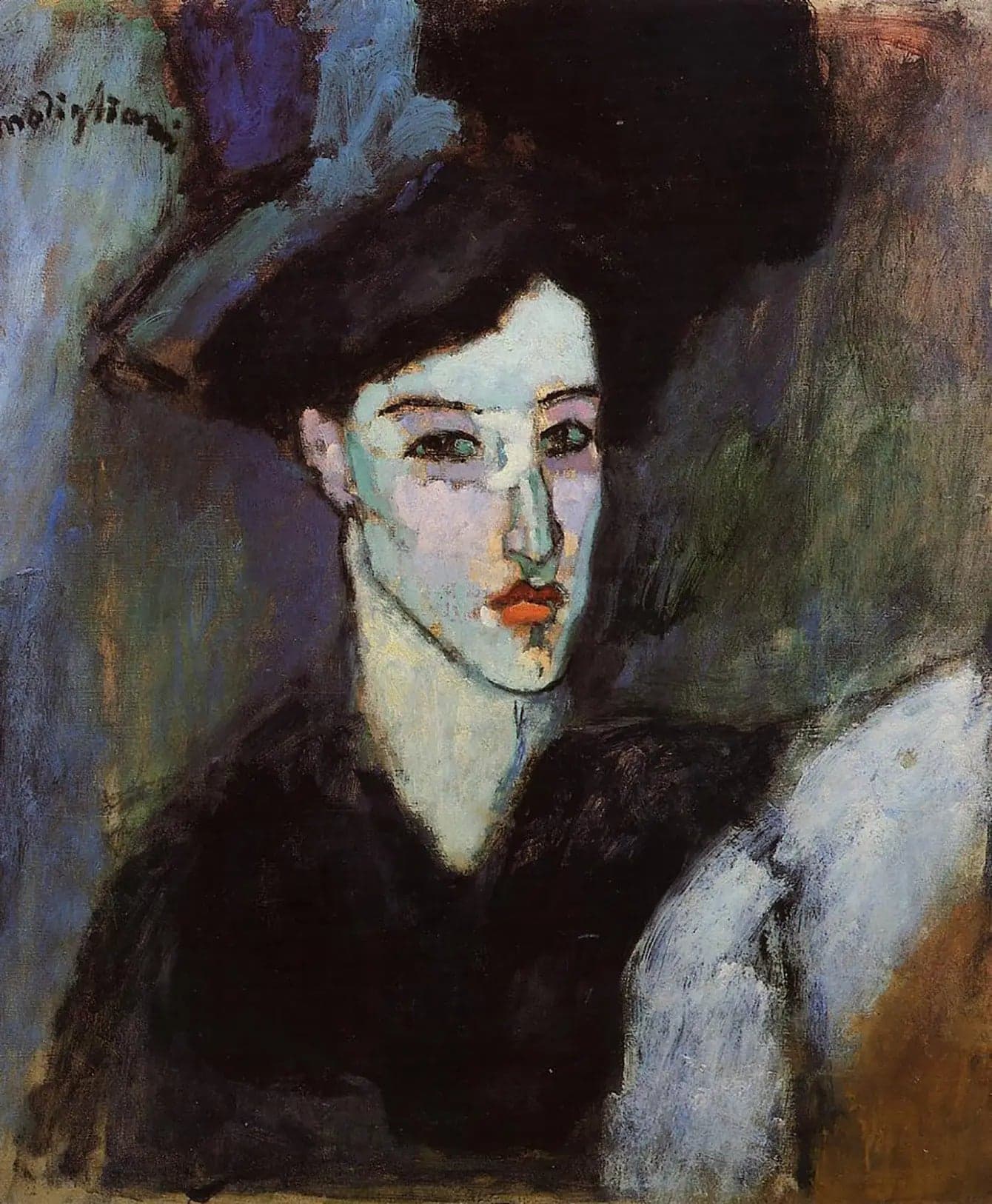
The Jewess
- Original dimensions
- 46 x 55 cm
- Museum
- Not specified
- Year
- 1900
Scene depicted
Modigliani's The Jewess depicts a woman with a long, emaciated face, typical of the artist's style, highlighting tragic beauty. The painting, with its fluid contours and feminine atmosphere, evokes a gentle melancholy, echoing the complexity and spiritual nobility of its subject.
Historical context
Created at the turn of the 20th century, The Jewess is an iconic painting that fits within the modern artistic movement. At that time, Modigliani, based in Paris, was surrounded by a cultural effervescence. The canvas, currently held in private collections, measures 46 x 55 cm and reflects the unique legacy of the artist and the era.
Place in the artist's career
The Jewess is situated in a pivotal period of Modigliani's career, marking a shift towards his unique portrait style, deeply emotional. Alongside works such as “Portrait of Jean Cocteau” and “Reclining Nude,” this painting reveals an evolution towards a more assertive abstraction, rooted in the representation of the human soul.
Anecdote
Modigliani once declared: “Art is not about doing what you want, it is about reducing to its pure form the very essence of life.” This masterpiece, inspired by a face encountered in an alley in Montmartre, captures that very essence, revealing a subtle and evocative emotional depth.
Major exhibitions
Modigliani. Modern Gazes