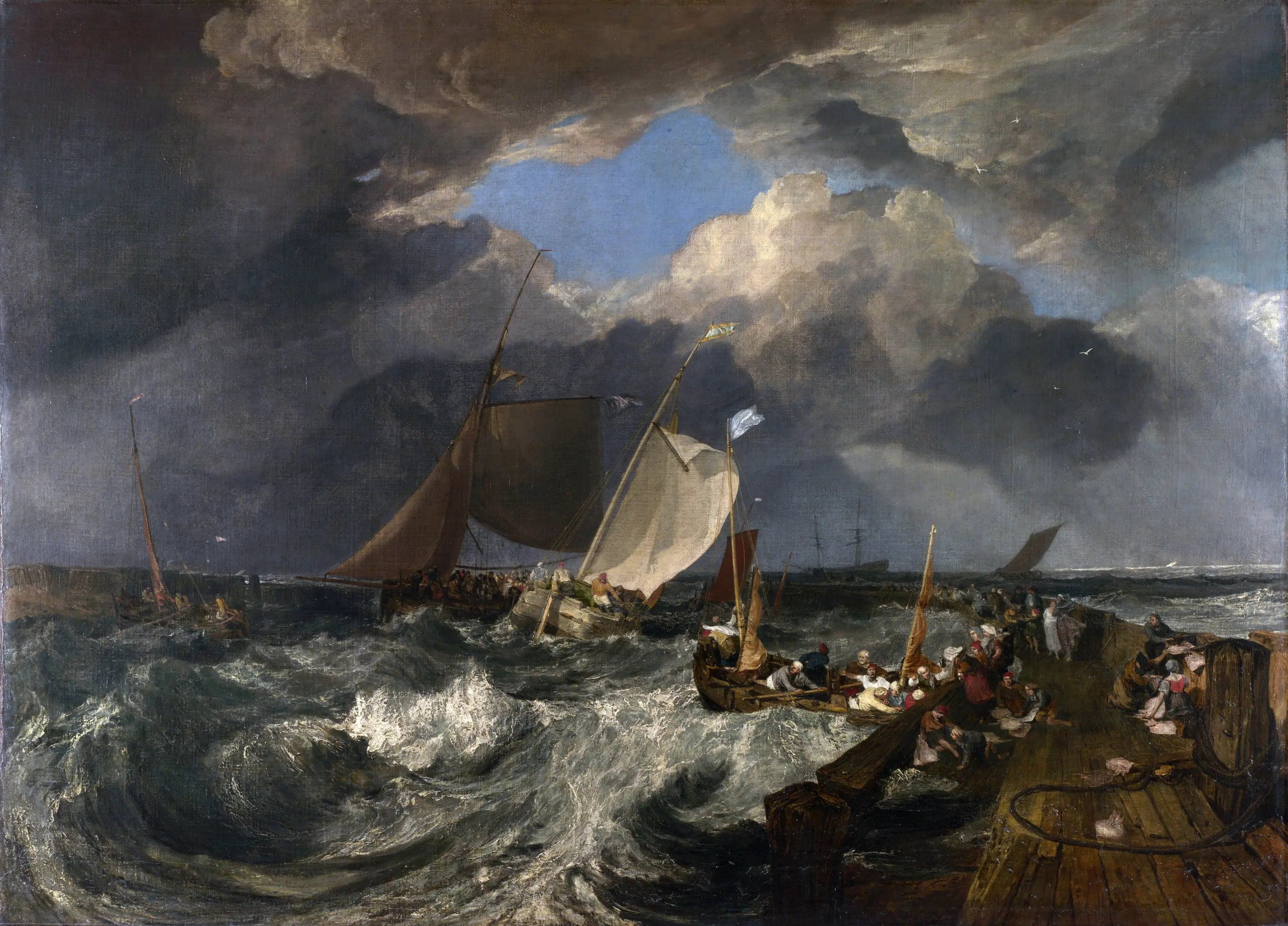
The Jetty of Calais
- Original dimensions
- 240 x 172 cm
- Movement
- romanticism
- Museum
- National Gallery
- Year
- 1803
Scene depicted
The composition of The Pier of Calais depicts an atmosphere imbued with melancholy and grandeur. The sails of boats sailing in the distance, in harmony with the choppy sea, establish a navigation that is both serene and tumultuous. Turner captures the unpredictability of the marine climate, evoking a journey through a world where man and nature coexist, often in tension.
Historical context
Created in 1803, The Pier of Calais is an iconic canvas that belongs to the romantic movement. Painted in the port of Calais, this pictorial work draws inspiration from maritime landscapes, while revealing the emotional power of light and nature. Now housed in the National Gallery, this painting measures 240 x 172 cm, capturing a time when art transcended mere representations.
Place in the artist's career
This painting stands as a crucial milestone in Turner's career, blending his emerging style with the significant influences of romanticism . Alongside the famous painting “The Last Voyage of the Temeraire” and “The Ponte di Madonna,” The Pier of Calais reveals a masterful evolution towards a bold use of light and a sensory exploration of landscapes.
Anecdote
Turner once declared: “The sea is my master, my inspiration.” This masterpiece was conceived during a walk at sunrise, where the horizon blended with the waves, bathing the pier in shades of blue and gray. This fleeting moment infused the painting with evocative power, reflecting the artist's passionate relationship with nature.