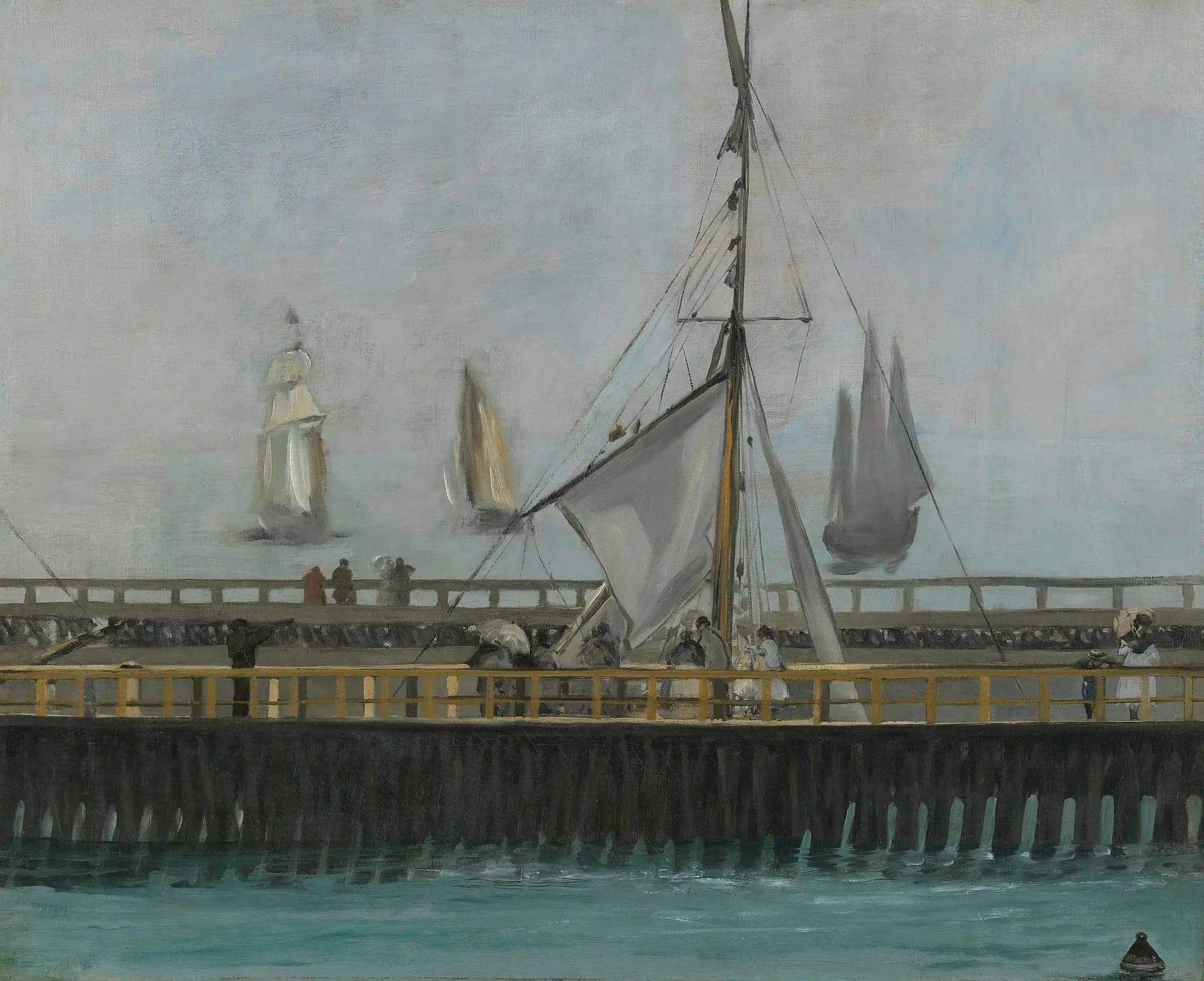
The Jetty of Boulogne-sur-Mer
- Original dimensions
- 73.3 x 59.5 cm
- Museum
- Van Gogh museum
- Year
- 1868
Scene depicted
The Jetty of Boulogne-sur-Mer presents an introspective scene where the silhouettes of walkers are outlined on the shore. The shades of the sea intertwine with the sky, creating an almost palpable atmosphere. This canvas is more than just a representation; it captures the soul of a moment, a communion between man and nature, resonating with those who linger there.
Historical context
Created in 1868, this painting is emblematic of the Parisian context of the 19th century, reflecting a pivotal moment in the Impressionist movement. Located on the coast of Boulogne-sur-Mer, this pictorial work evokes the meeting between natural light and artistic expression that characterizes this era. Today, the canvas resides in the Van Gogh museum , thus preserving its legacy for future generations.
Place in the artist's career
This painting represents a turning point in Manet's career, marking the transition to undeniable artistic maturity. In parallel with his other canvases , such as “Luncheon on the Grass” and “Olympia,” The Jetty of Boulogne-sur-Mer illustrates a profound stylistic evolution, where light and color take a predominant place.
Anecdote
“Beauty lies in the ephemeral moment captured.” – Édouard Manet . One spring morning, as the first rays of sun brushed the sea, Manet drew his inspiration from the enchantment of the waves. This fleeting moment gave life to a masterpiece that reminds us of the sweetness of a delicate and vibrant memory, enshrined in the painting .