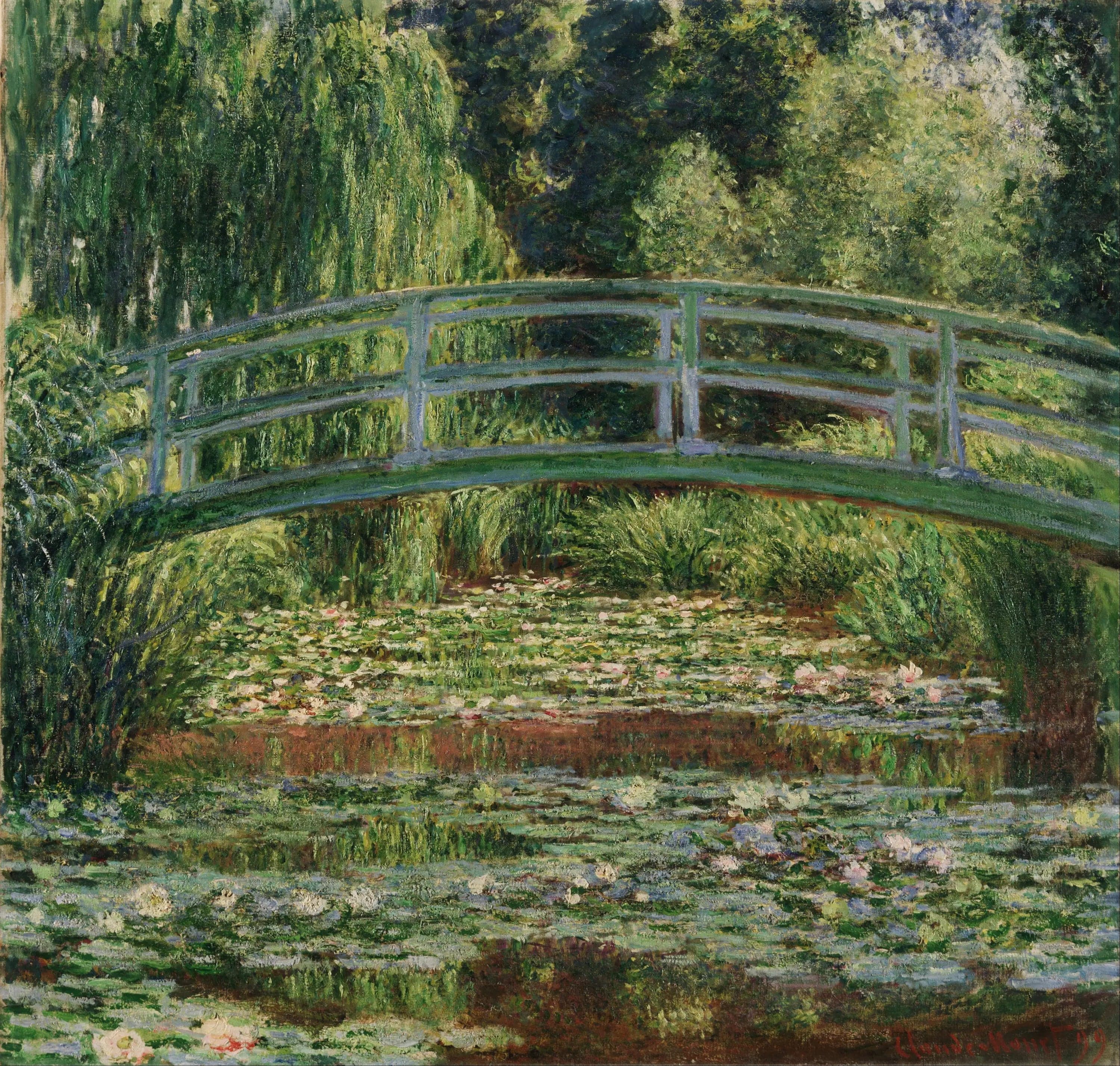
The Japanese footbridge and the water lily pond, Giverny
- Original dimensions
- 934.21 x 892.56 cm
- Museum
- Philadelphia Museum of Art
- Year
- 1899
Scene depicted
The painting “The Japanese Footbridge and the Water Lily Pond, Giverny ” unfolds like a visual symphony. It features a delicately arched Japanese bridge overlooking a peaceful pond, dotted with water lilies. The vibrant colors and suggestive brushstrokes evoke in the viewer's mind the incredible beauty of nature, a beauty that Monet captured in all its fragility and splendor.
Historical context
Year: 1899 |BRK| Museum: Philadelphia Museum of Art |BRK| Dimensions: 934.21 x 892.56 cm
Place in the artist's career
This painting represents a stylistic peak in Monet's career. At this time, he had mastered Impressionist techniques, producing works such as “ Impression, Sunrise ” and “ The Haystacks ” that marked his beginnings. “The Japanese Footbridge” fits into a period where Monet explored light and color with unprecedented emotional depth, marking his entry into vibrant artistic maturity.
Anecdote
“Nature is the best teacher.” This quote from Monet resonates particularly in the genesis of this masterpiece . One enchanting morning in Giverny , as the sun slowly rose, Monet stood on his bridge, breathing in the fresh air filled with floral scents. This fleeting moment nourished his artistic spirit and was immortalized in this painting .