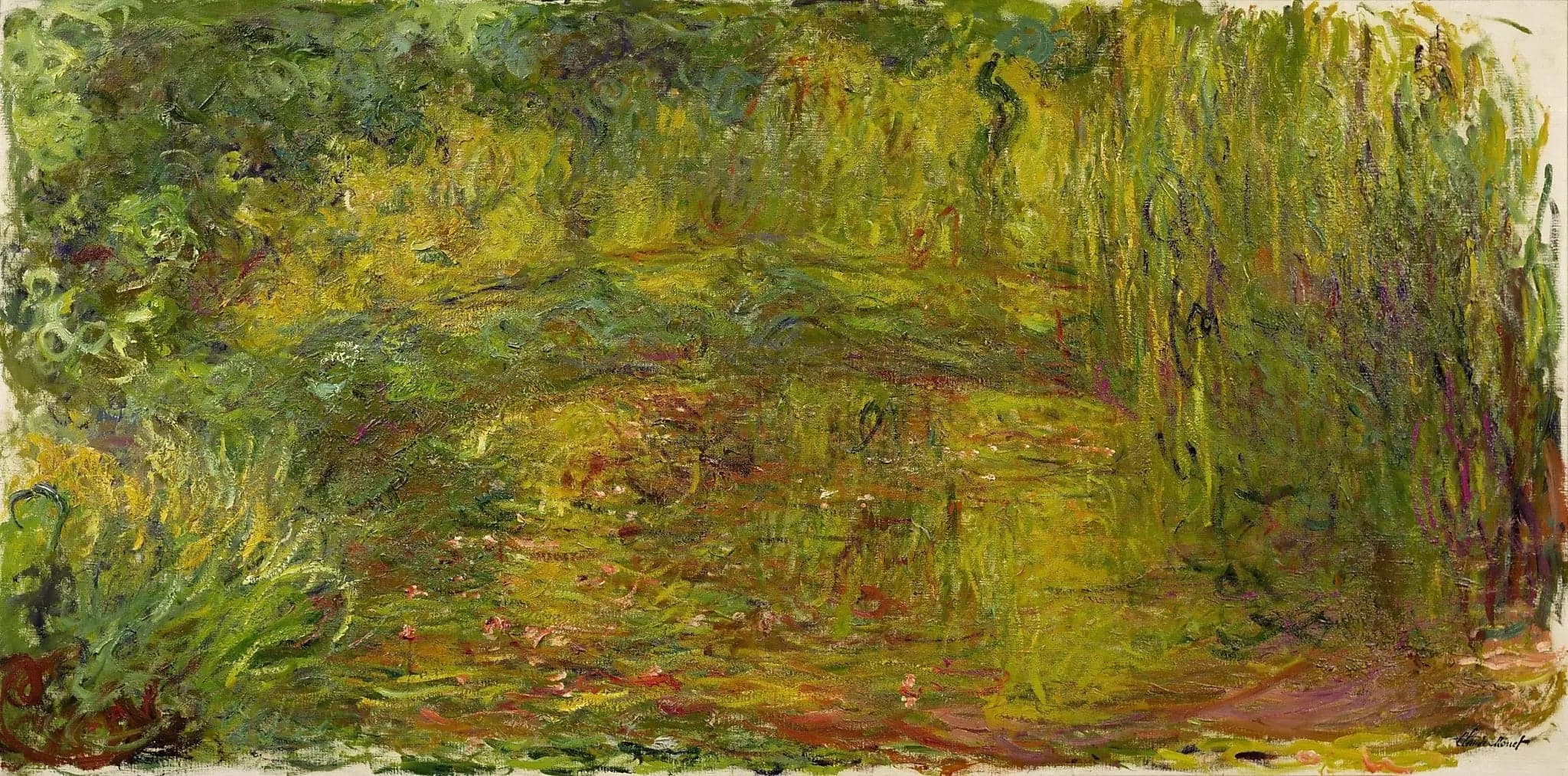
The Japanese Bridge
- Original dimensions
- 100 x 89 cm
- Museum
- Marmottan Monet Museum
- Year
- 1921
Scene depicted
“ The Japanese Bridge ” depicts with tranquil majesty the serene nature of Giverny . The painting reveals a small wooden bridge, emblematic of Monet's work, surrounded by water lilies, weeping willows, and vibrant colors, in a symphony of greens and blues. This scene, harmonious and poetic, invites each viewer to feel a perfect union with nature, a celebration of the ephemeral beauty that surrounds us.
Historical context
Year: 1921 |BRK| Museum: Marmottan Monet Museum |BRK| Dimensions: 100 x 89 cm
Place in the artist's career
“ The Japanese Bridge ” marks a turning point in Monet's career, symbolizing his maturity period where he merges forms and colors with unmatched mastery. Alongside works like “ Impression, Sunrise ” and “ Water Lilies ”, this painting shows the evolution of an artist in constant pursuit of harmony between light and ambiance, always pushing the boundaries of painting .
Anecdote
“Nature is not copied, it is lived.” It is in this quest for authenticity and sensation that Monet dipped his brush one spring morning, facing his famous garden. The glow of soft light reflected on the Japanese bridge, awakening in him the desire to capture this fleeting scene, a moment of fullness and harmony that he would immortalize in this masterpiece .