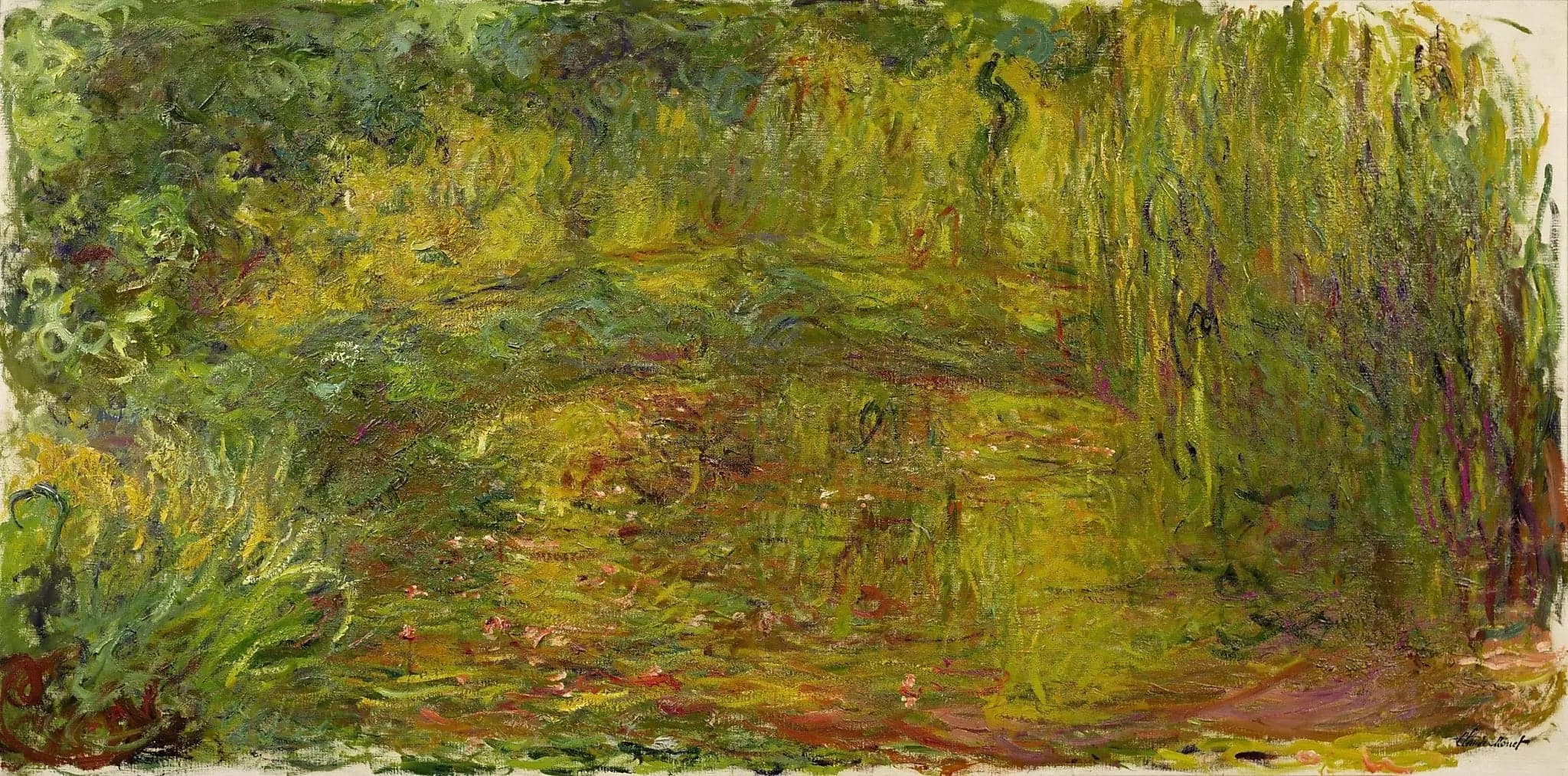
The Japanese Bridge
- Original dimensions
- 116 x 89 cm
- Museum
- Marmottan Monet Museum
- Year
- 1921
Scene depicted
The painting “The Japanese Bridge” is a representation of a famous garden of Monet, where a wooden bridge covered in greenery majestically stands over a pond. This bucolic scene evokes the tranquility of a natural space, where irises bloom and light plays on the water. Monet, through his mastery of colors and lights, immerses us in a peaceful and contemplative atmosphere, like a visual poem on ephemeral beauty.
Historical context
Year: 1921 |BRK| Museum: Marmottan Monet Museum |BRK| Dimensions: 116 x 89 cm
Place in the artist's career
The Japanese Bridge is part of a period of maturity for Monet, where he explores themes of nature and light with extreme sensitivity. Compared to other notable works such as Impression, Sunrise and The Water Lilies , this painting reveals a technical and emotional evolution, transforming every nuance of color into a poetic introspection.
Anecdote
“In every brushstroke, I seek to capture the soul of nature. That morning, at dawn, the colors danced around me like a gentle whisper.” These are the words of a Monet inspired by the fleeting beauty of spring, which allowed him to bring to life his masterpiece , The Japanese Bridge , a work that evokes serenity and wonder in the face of nature.