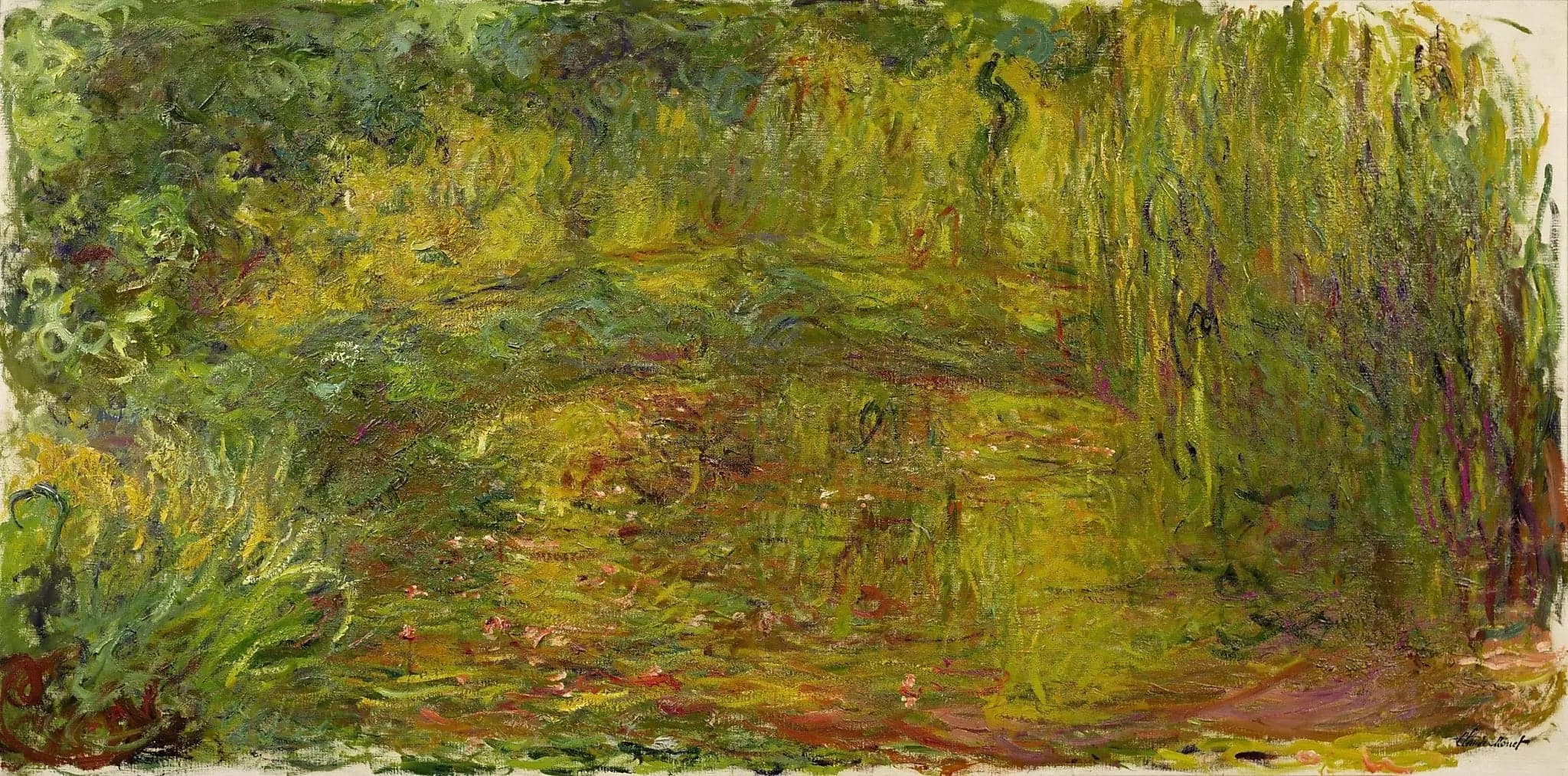
The Japanese Bridge
- Original dimensions
- 115.3 x 89.5 cm
- Museum
- Museum of Modern Art
- Year
- 1920
Scene depicted
In this delicate composition , Monet immortalizes his famous bridge, draped in lush vegetation, reflecting in the tranquil water of the water lilies. The painting transports us to a serene universe, where the rustling of leaves and the murmuring of water intertwine in a gentle visual melody. The painting seems to invite us to enter this idyllic world, promising tranquility and contemplation.
Historical context
Year: 1920 |BRK| Museum: Museum of Modern Art |BRK| Dimensions: 115.3 x 89.5 cm
Place in the artist's career
The Japanese Bridge represents one of the culminations of Monet's career, showcasing an extraordinary mastery of light and color. When compared to other masterpieces like Impression, Sunrise and The Water Lilies , one perceives the evolution of the artist's style, shifting from a focus on scenes of life to an intimate celebration of the garden, a true echo of his artistic journey.
Anecdote
“Nature is the greatest painting one could ever paint,” Monet said as he contemplated his garden. One spring morning, the dew sparkled on the petals of the flowers all around, inspiration surged upon seeing this beloved suspended bridge. It is this pure emotion that gives strength to this pictorial work , a vibrant tribute to the ephemeral beauty of nature.