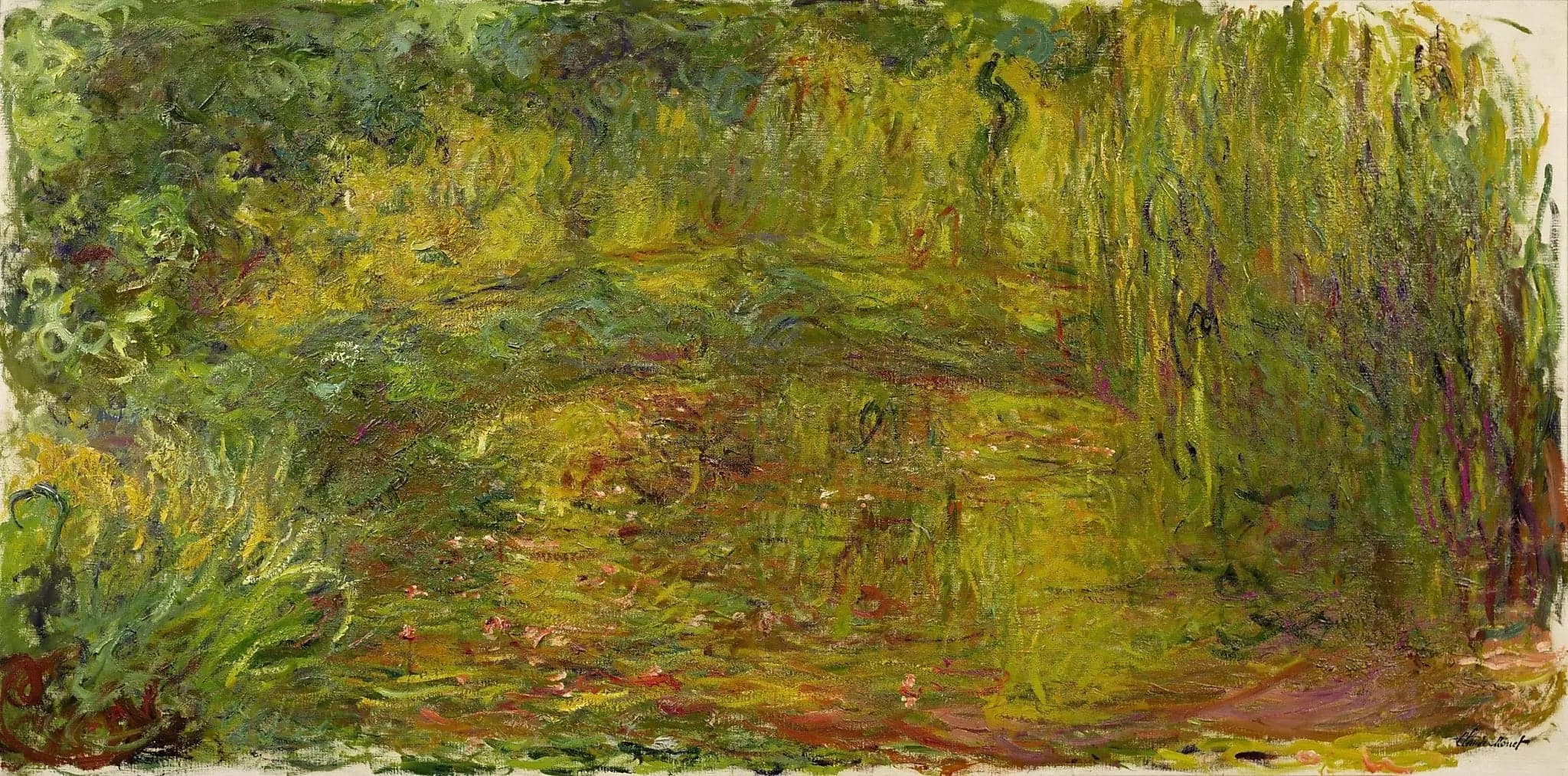
The Japanese Bridge
- Original dimensions
- 116.2 x 88.9 cm
- Museum
- Minneapolis Institute of Art
- Year
- 1923
Scene depicted
“ The Japanese Bridge ” transports us to a world of serenity, where the reflection of the famous wooden bridge comes alive on the peaceful waters of a pond, surrounded by water lilies. The composition, both simple and complex, invites the viewer to dive into an atmosphere of absolute calm, illuminated by the changing nuances of light. Every detail, every color, every vibration tells a story of contemplation and ephemeral beauty.
Historical context
Year: 1923 |BRK| Museum: Minneapolis Institute of Art |BRK| Dimensions: 116.2 x 88.9 cm
Place in the artist's career
“ The Japanese Bridge ” fits into a period of creative maturity for Monet, where his Impressionist style reaches new heights. This can be compared to works such as “ Impression, Sunrise ” and “ The Water Lilies ”, which together trace a delicate evolution of his technique. Each painting reveals not only his technical skill but also a deep emotional connection to his environment.
Anecdote
“Nature is my greatest muse, and every brushstroke is a tribute to its beauty.” Imagine Monet, one spring morning, strolling through his garden, observing the reflection of the sky on the water, carried away by the softness of the breeze. It is in this gentle intimacy that the inspiration for this masterpiece germinates, blending technical practices and emotional depth.