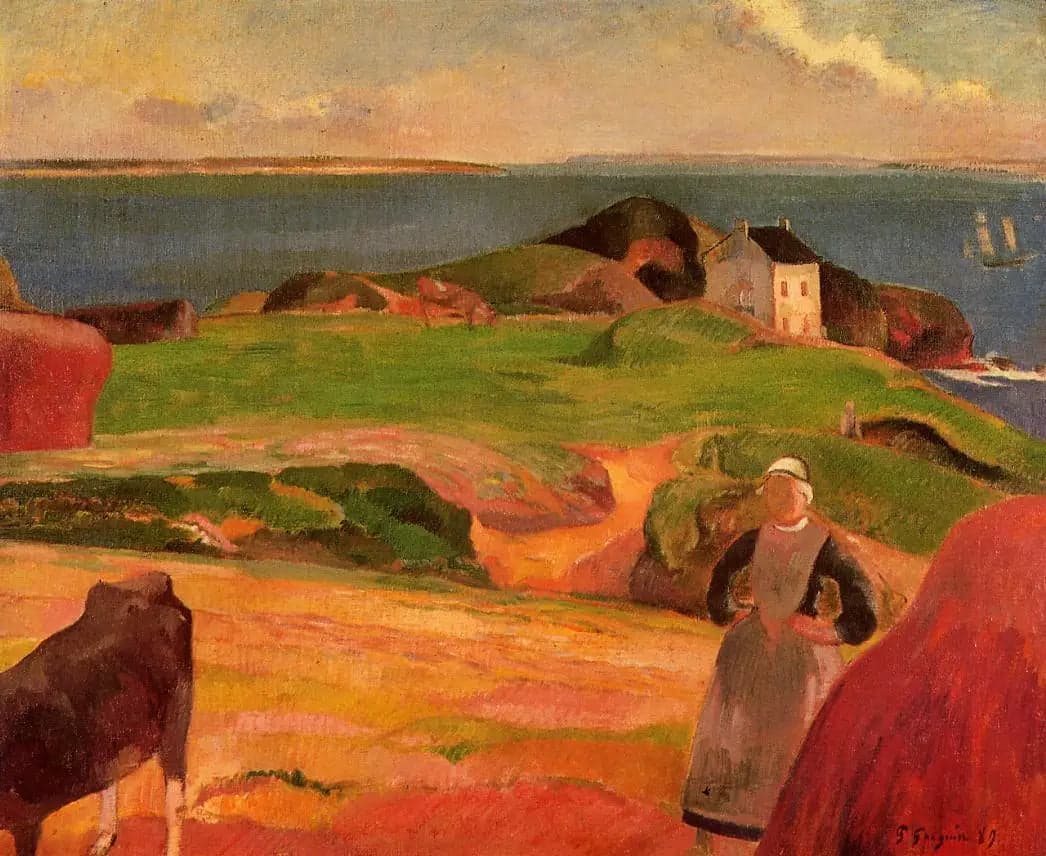
The Isolated House
- Original dimensions
- 73 x 60 cm
- Museum
- Not specified
- Year
- 1889
Scene depicted
This painting captivating evokes an isolated house, immersed in a lush landscape. The shapes of the building delicately blend with shadows and lights, creating a dreamlike atmosphere. The vibrant colors of the canvas harmoniously merge, illustrating the call to solitude and inner reflection, which captivate and draw the viewer into a pictorial immersion. The minutiae of this painting evoke a sacred space, inviting endless contemplation.
Historical context
Created in 1889, The Lonely House finds its roots in Pont-Aven, a small Breton commune that was a hub of the post-impressionist movement. At that time, the artist explores a bold and innovative approach to landscape, distancing himself from the conventions of his time. The work, a testament to a crucial moment in the history of art, illustrates the quest for a new pictorial language that will mark souls. Today, this painting emblematic lives outside museums, where the memory of Gauguin's brushes continues to resonate.
Place in the artist's career
The Lonely House represents a significant milestone in the career of Paul Gauguin . It marks his transition to a freer and expressionist style. At the same time, his works like The Vision of the Sermon and Where Are You Going? testify to his search for a new artistic reality, using bold colors and daring compositions. This masterpiece reveals itself as a connection between landscape and emotion, crystallizing the artist's maturity.
Anecdote
“Art must not be a mere reproduction of nature, but an interpretation of the soul.” This reflection of Gauguin resonates strongly in the spirit of The Lonely House. Imagine the artist, one spring morning, intensely observing the light caressing the solitary house, inspired by the harmony and mystery revealed by this tiny building in the heart of verdant Brittany.