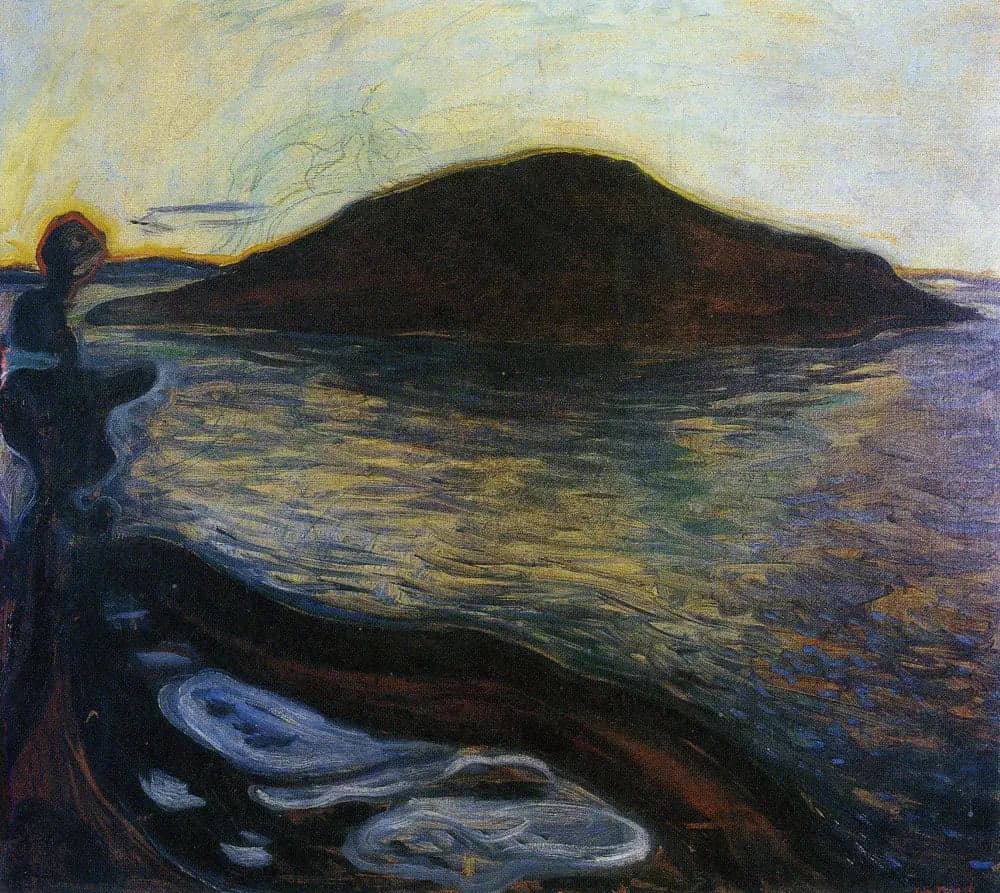
The Island
- Original dimensions
- 108 x 99 cm
- Museum
- Not specified
- Year
- 1900
Scene depicted
This painting illustrates a solitary island emerging from a turbulent sea, surrounded by a sky vibrant with emotions. The composition, both serene and unsettling, provokes deep introspection in the observer. The aquatic element, a symbol of escape and melancholy, invites us to explore reflections highlighting the ephemeral nature of existence.
Historical context
Created at the turn of the 20th century, in a vibrant context of modernization, the painting The Island is a precious testimony of the expressionist movement. Edvard Munch , by depicting this mystical scene, captures the essence of an era where art becomes a vector of deep emotions. Although the current location of this painting is unknown, its visual and emotional impact endures.
Place in the artist's career
This painting stands as a centerpiece in Munch's career, marking a transition towards stylistic maturity. In parallel with works like The Scream and The Madonna , The Island shows the evolution of his style, based on intense emotions and bold technique.
Anecdote
In a shared reverie, Munch reportedly stated: "I have always felt in communion with nature, a place where the soul finds refuge." It is this philosophy that inspired him to create the painting of The Island, one morning when the mist was still floating, imbuing the scene with an unreal softness.