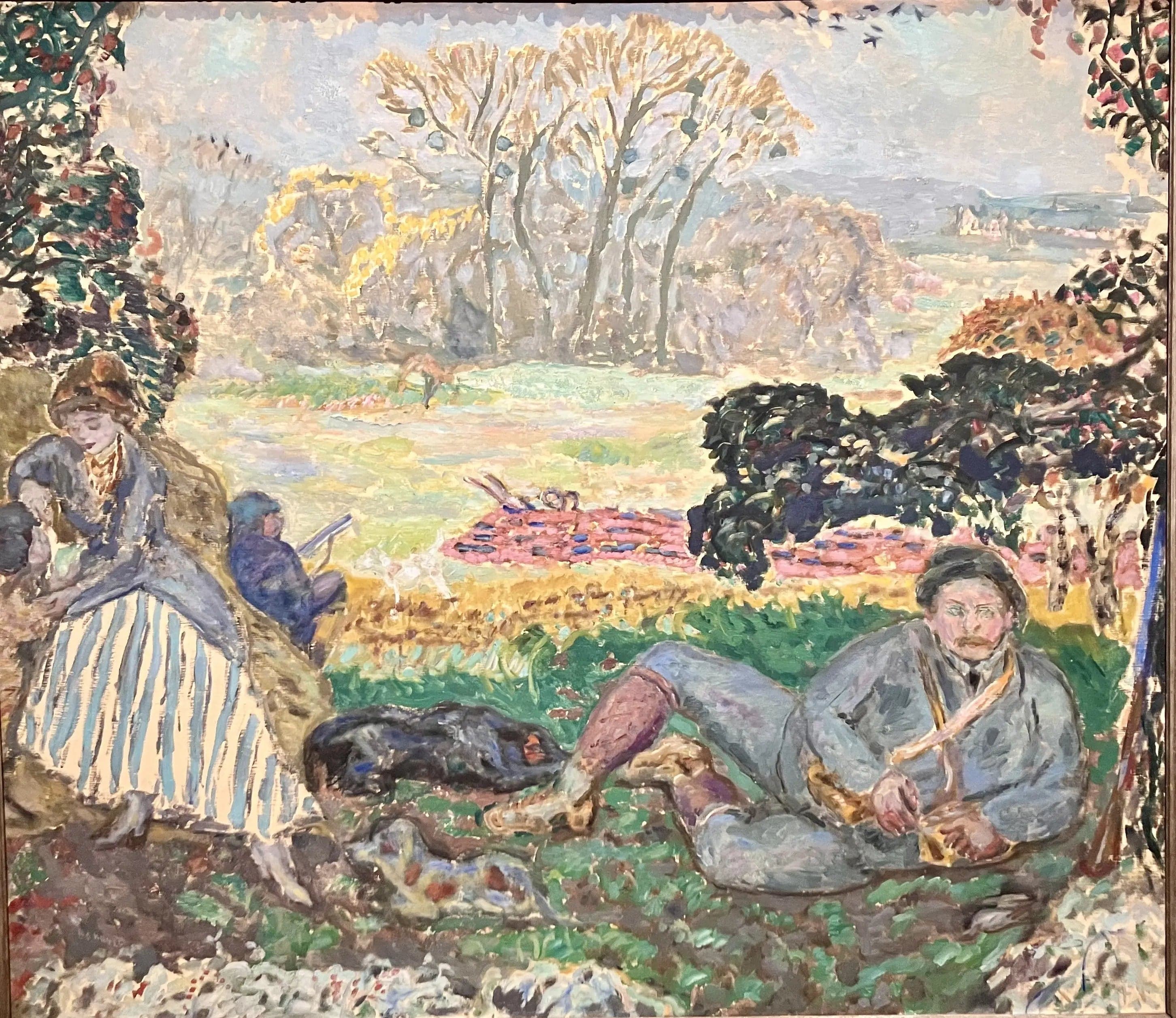
The Hunt
- Original dimensions
- 127 x 110 cm
- Museum
- Gothenburg Museum of Fine Arts
- Year
- 1908
Scene depicted
In The Hunt , Bonnard reveals a picturesque scene where the tranquility of nature meets the optimism of existence. The protagonists, enveloped by lush greenery, are in full preparation for a mysterious event. Every detail of this canvas invites the observer to dive into a vibrant reality, capturing the essence of a day filled with promises and adventures. The dynamic between the characters and the abundant setting evokes the unbreakable bond between man and nature.
Historical context
Created in 1908, this painting emblematic of Pierre Bonnard is part of the Nabi movement, which emerged in Paris at the end of the 19th century. In the midst of the artistic effervescence of this era, Bonnard, influenced by symbolist movements, seeks to capture pure emotion. Today, this canvas is carefully preserved at the Gothenburg Museum of Fine Arts , celebrated for its enchanting atmosphere and impressive dimensions that add to its presence.
Place in the artist's career
The Hunt represents a pivotal moment in the career of Pierre Bonnard . Gradually moving away from purely impressionist influences, he begins to develop a more personal and expressive approach. At this time, he creates other notable canvases such as “The Great Nude” and “The Terrace at Vernon,” each displaying mastery of color and heightened sensitivity. The Hunt is truly a milestone that heralds the maturity and originality of his art.
Anecdote
“I have always wanted to paint light, this breath of life that animates every scene.” These words, often attributed to Bonnard, resonate deeply when observing The Hunt . The artist drew inspiration from everyday moments, capturing a spring morning fragrant with blooming flowers, where every sound and every color become an integral part of his creation.