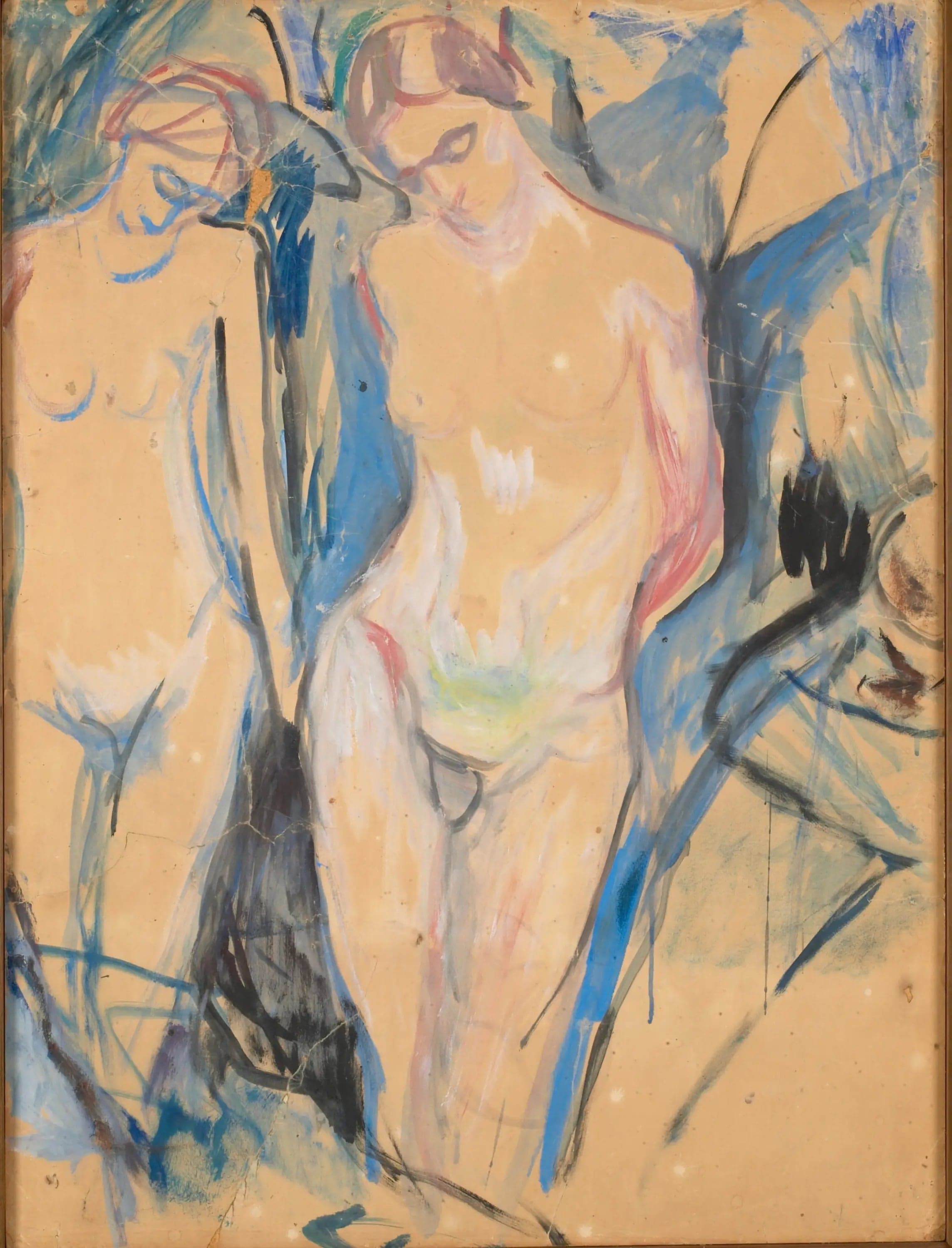
The Human Mountain: Two Graces
- Original dimensions
- 75 x 100 cm
- Museum
- Munch Museum
- Year
- 1927
Scene depicted
This masterpiece illustrates a poetic scene where two female figures seem to merge into the mountainous landscape, capturing the very essence of communion between man and nature. Munch materializes deep emotions, from delicate tenderness to striking melancholy, evoking an eternally captivating dialogue between humanity and the elements.
Historical context
Created in 1927, this canvas embodies its roots in Oslo, a city that, at the heart of Norway, witnessed a period of profound emotional upheaval. The work of Edvard Munch , a key figure of symbolism , expresses the torments of the human soul through bold brushstrokes. Currently exhibited at the Munch Museum, this painting measures 75 x 100 cm, revealing the very essence of its time in every detail.
Place in the artist's career
“The Human Mountain: Two Graces” is part of a phase of artistic maturity for Munch, where his style reaches a fascinating singularity. At this time, he stands out with notable works like “The Scream” and “The Madonna,” creating a narrative thread where emotion and technique meet with unparalleled intensity.
Anecdote
“Nature is the expression of our soul.” Munch said, surely reminiscing about that spring morning when inspiration struck him in an isolated valley, surrounded by majestic mountains and soft light. This intimate connection with nature is palpable in every brushstroke of the painting , where the narrative of the Graces unfolds like an embrace of life.
Major exhibitions
Edvard Munch and his models: 1912-1943