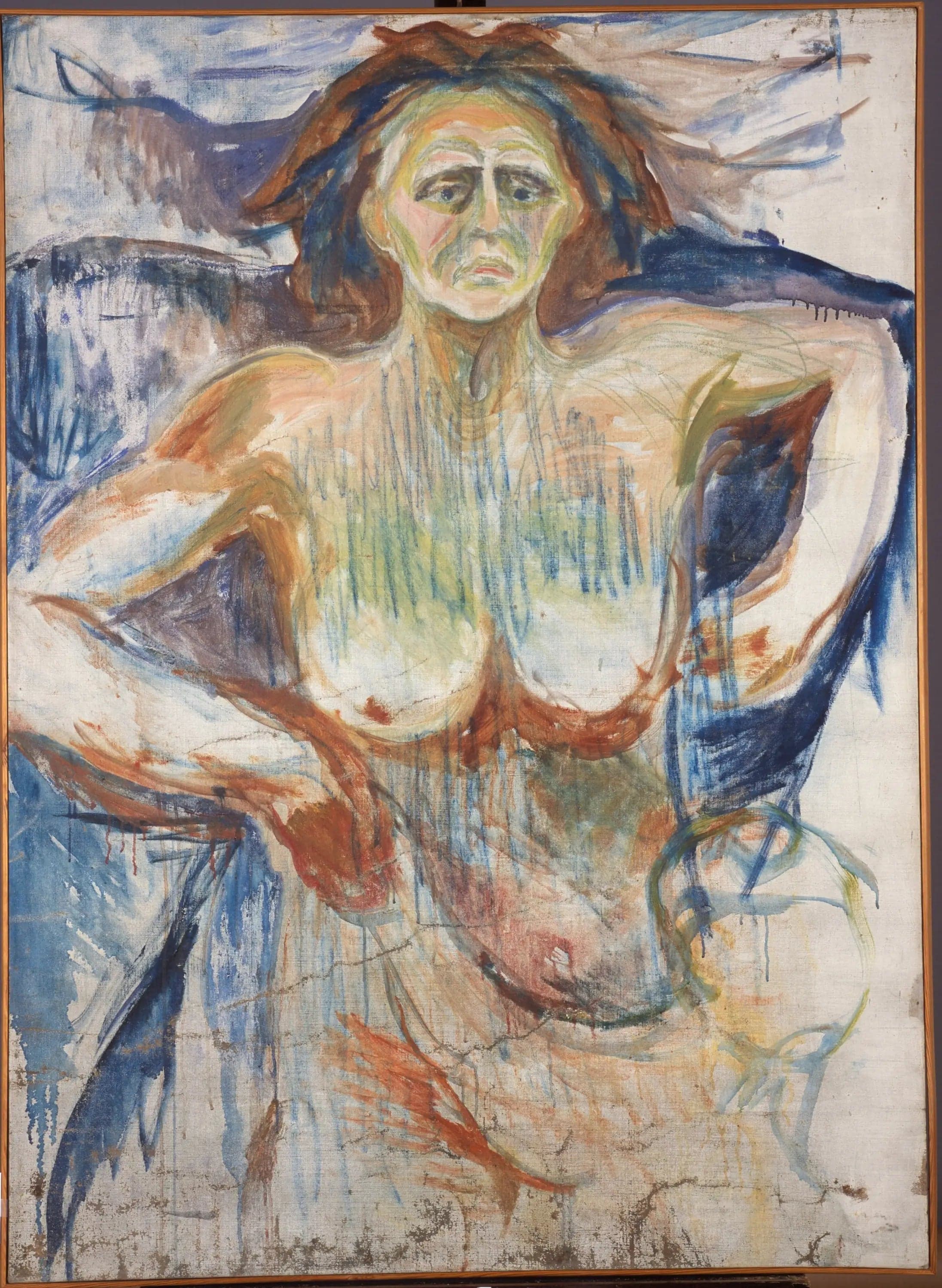
The Human Mountain: Sphinx
- Original dimensions
- 103 x 142 cm
- Museum
- Munch Museum
- Year
- 1927
Scene depicted
The painting depicts a human silhouette almost sphinx-like, emerging from a canvas of wild nature and majestic peaks. The posture of this figure evokes both contemplation and melancholy. By looking at this painting , the viewer is invited to question their own relationship with nature, their identity, and the vastness of the world around them.
Historical context
Created in 1927, The Human Mountain: Sphinx is an iconic canvas by the famous Norwegian artist Edvard Munch , a pillar of the expressionist movement. Made in Oslo, this work is currently housed at the Munch Museum , a place rich in artistic history. Munch, known for his exploration of human emotions, uses this singular composition to evoke deep feelings in a setting that resonates with the social upheavals of his time.
Place in the artist's career
The Human Mountain: Sphinx fits into a period of maturity for Munch, following significant works like The Scream and The Madonna . This canvas reflects an evolution towards more introspective and less dramatic representations, while maintaining the emotional intensity characteristic of his style. The artist explores here the duality between man and nature, capturing in this composition a masterpiece of his artistic journey.
Anecdote
“In every mountain, I see a mysterious call.” Edvard Munch often found his inspiration in nature, and it was on a spring morning, while walking in the heights of Oslo, that he envisioned the strong presence of this human mountain. It is this image that infused the evocative power of The Human Mountain: Sphinx , where nature and the human spirit merge in a celebration of existence.