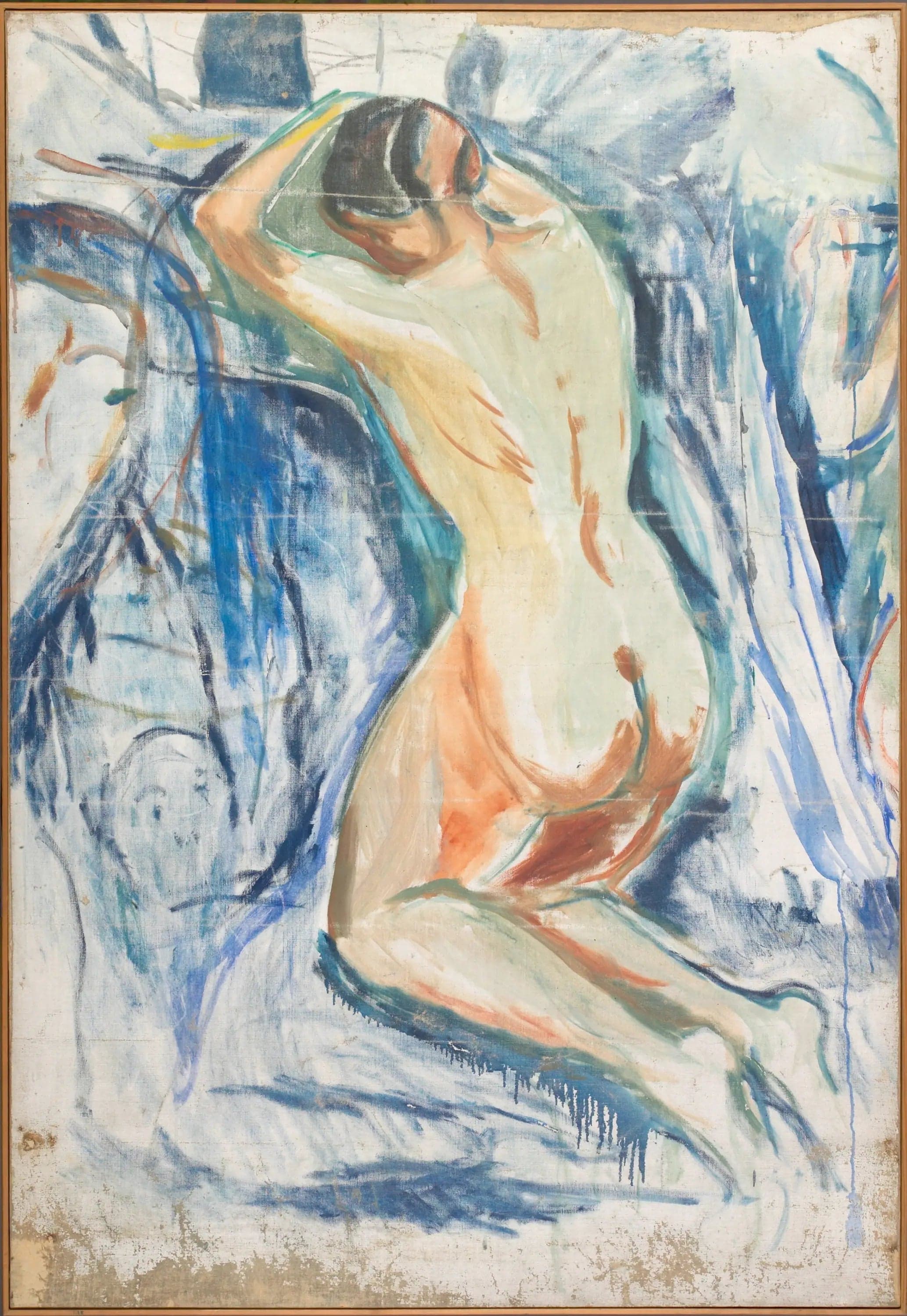
The Human Mountain: Kneeling Nude
- Original dimensions
- 103 x 150 cm
- Museum
- Munch Museum
- Year
- 1927
Scene depicted
The painting illustrates the figure of a kneeling nude, standing out against a majestic mountainous landscape. This gesture of surrender, almost sacred, reveals a palpable vulnerability. The composition offers a powerful interaction between humanity and nature, confessing a personal spiritual quest, while evoking the raw and untamed beauty of the mountains, worthy witnesses to this deep introspection.
Historical context
Created in the 1920s, in Oslo, Norway, The Human Mountain: Kneeling Nude is part of the symbolism movement. This painting, a true reflection of human introspection, emerges from a period marked by reflections on life, death, and existence. Currently exhibited at the Munch Museum in Oslo, this impressive painting evokes the complexity of human emotions through its imposing dimensions of 103 x 150 cm.
Place in the artist's career
The Human Mountain: Kneeling Nude represents a pivotal period for Munch, marked by a return to more timeless and universal themes. Compared to The Starry Night by Vincent van Gogh and The Scream by the author himself, one can observe a significant evolution in his technique, revealing a shift from anxious representation to a more contemplative abstraction.
Anecdote
Edvard Munch once stated: "Painting is a living thing... it lives, it breathes, it screams!" It was in the calm of a spring morning, facing a wild Norwegian landscape, that he found inspiration for this masterpiece . The blend of solitude and beauty of this moment elevated this painting to an unparalleled level of emotional authenticity.