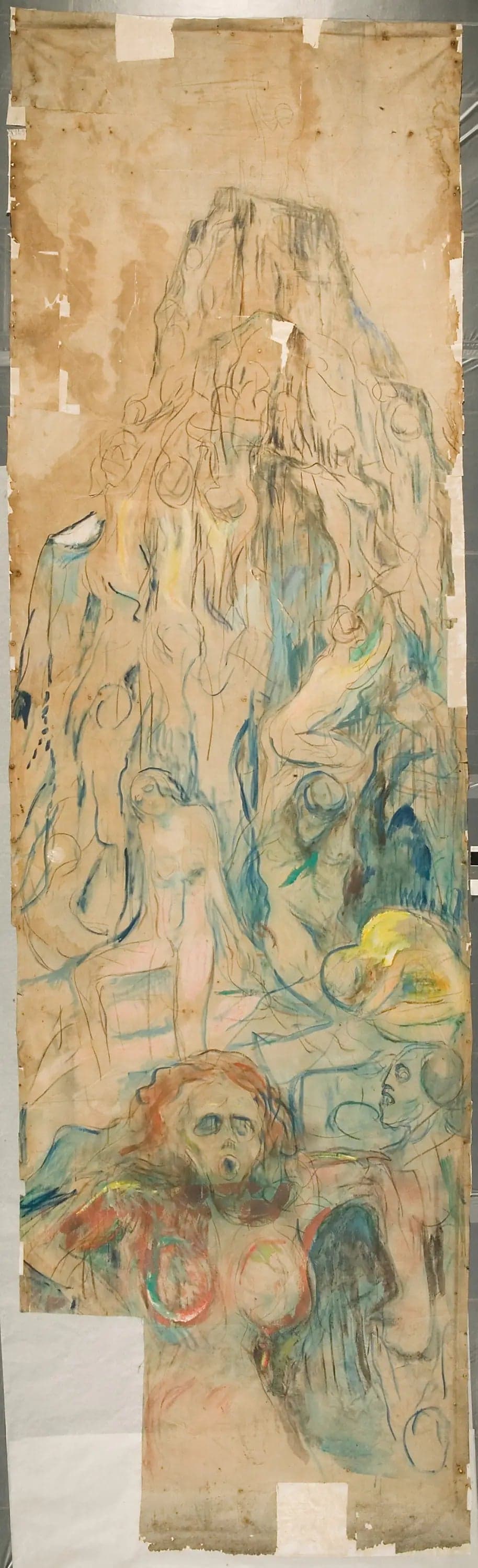
The Human Mountain: Central Part
- Original dimensions
- 134 x 454 cm
- Museum
- Munch Museum
- Year
- 1926
Scene depicted
At the heart of this painting , a human figure stands majestically facing an imposing mountain. The composition evokes both the grandeur of nature and the fragility of the human being. The shapes are amplified, and each brushstroke seems to capture the movement of the wind in the trees, creating a dynamic and contemplative atmosphere.
Historical context
Created in 1926, this painting is emblematic of the expressionist movement, an artistic movement that explores human emotions with a rare intensity. Located in Oslo, Norway, at the Munch Museum, this powerful work reflects an era marked by psychological upheavals and reflections on human existence.
Place in the artist's career
The Human Mountain: central part represents a turning point in the career of Edvard Munch . While his earlier works, such as The Anxiety and The Scream, manifest palpable despair, this painting suggests a quest for understanding and elevation. It sits between the beginning of his promising career and the peak of his personal style, parallel to works such as The Madonna.
Anecdote
“Life is a constant struggle in search of meaning,” said Munch, inspired during a walk in nature on a cool spring morning, where he crossed paths with a hiker. This canvas depicts a hierarchy of emotions, a drive towards self-understanding, like an ode to that fleeting moment of beauty.