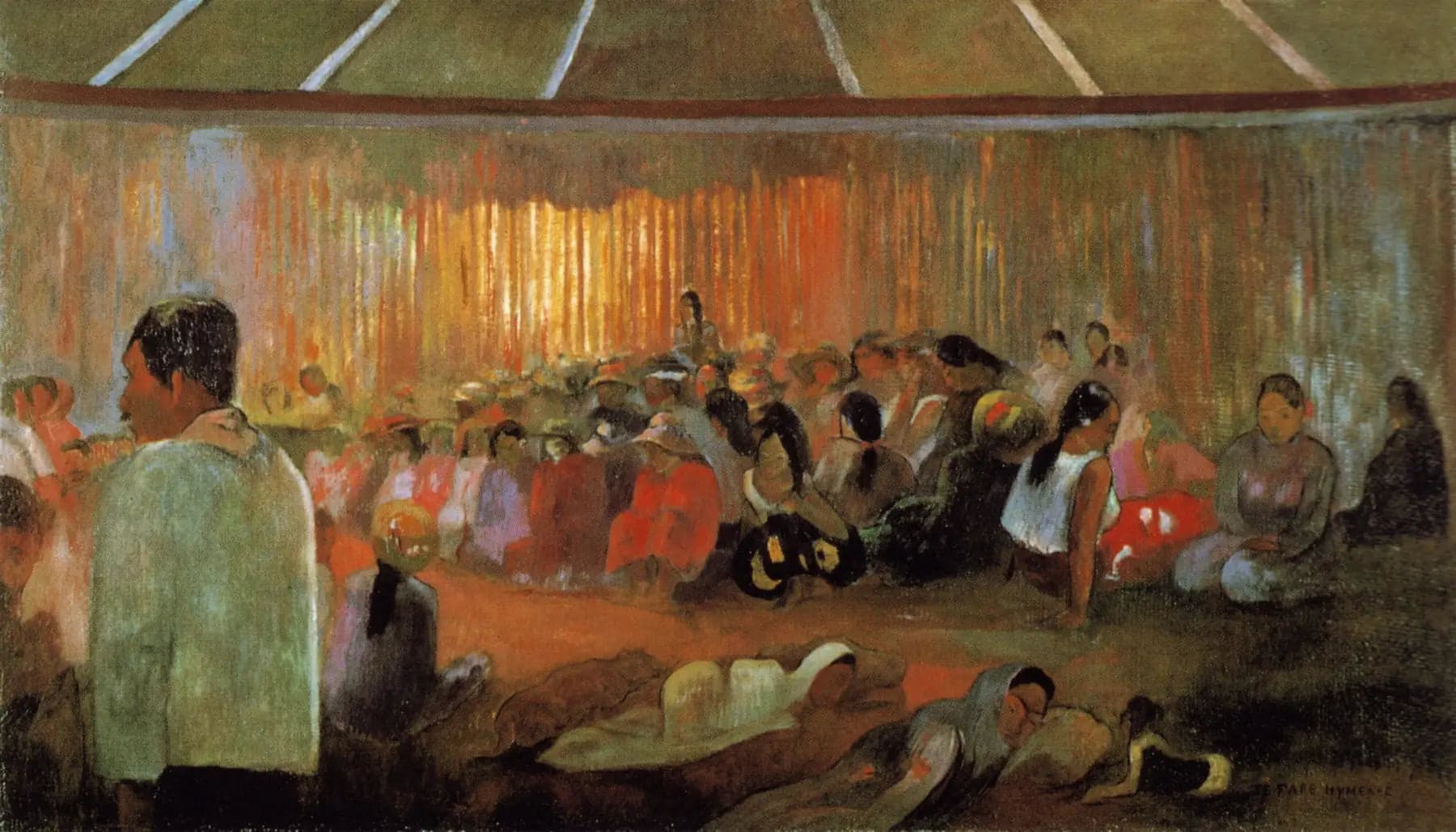
The House of Songs
- Original dimensions
- 90.4 x 51 cm
- Museum
- Not specified
- Year
- 1892
Scene depicted
In The House of Songs , the scene depicts a serene rural dwelling surrounded by the lushness of nature, evoking both simplicity and harmony. The warm colors and stylized forms evoke a sense of tranquility. Each element of the composition seems to blend into a silent dialogue between man and his environment, like an ode to simple life and the beauty of the everyday.
Historical context
Created in 1892, The House of Songs is rooted in the fertile ground of idealism and symbolism that characterize the post-impressionist movement. This canvas emblematic of Paul Gauguin represents a poetic vision of a house in nature, nourished by the artist's passion for the beauty of Breton landscapes, where he sought refuge from the Parisian tumult. This painting , still imbued with mystery today, invites deep contemplation and is absent from any specific museum institution.
Place in the artist's career
This painting is situated at a crucial turning point in Gauguin's career, marking his transition to bolder and more expressive compositions. Near The House of Songs , his painting titled The Vision After the Sermon and that of Portrait of Vincent van Gogh illustrate the transition from a classic impressionist style to a more personal and subjective pictorial language.
Anecdote
“Nature is my soul” could have been said by the artist, inspired one spring morning in a quiet alley of Finistère. It was at the bend of a forest path, with the enchanting songs of birds and the scent of maritime pines, that the sketch of The House of Songs was born. This fleeting moment, captured by its vibrant colors, combines the raw emotion of painting with vivid memories of rural life.