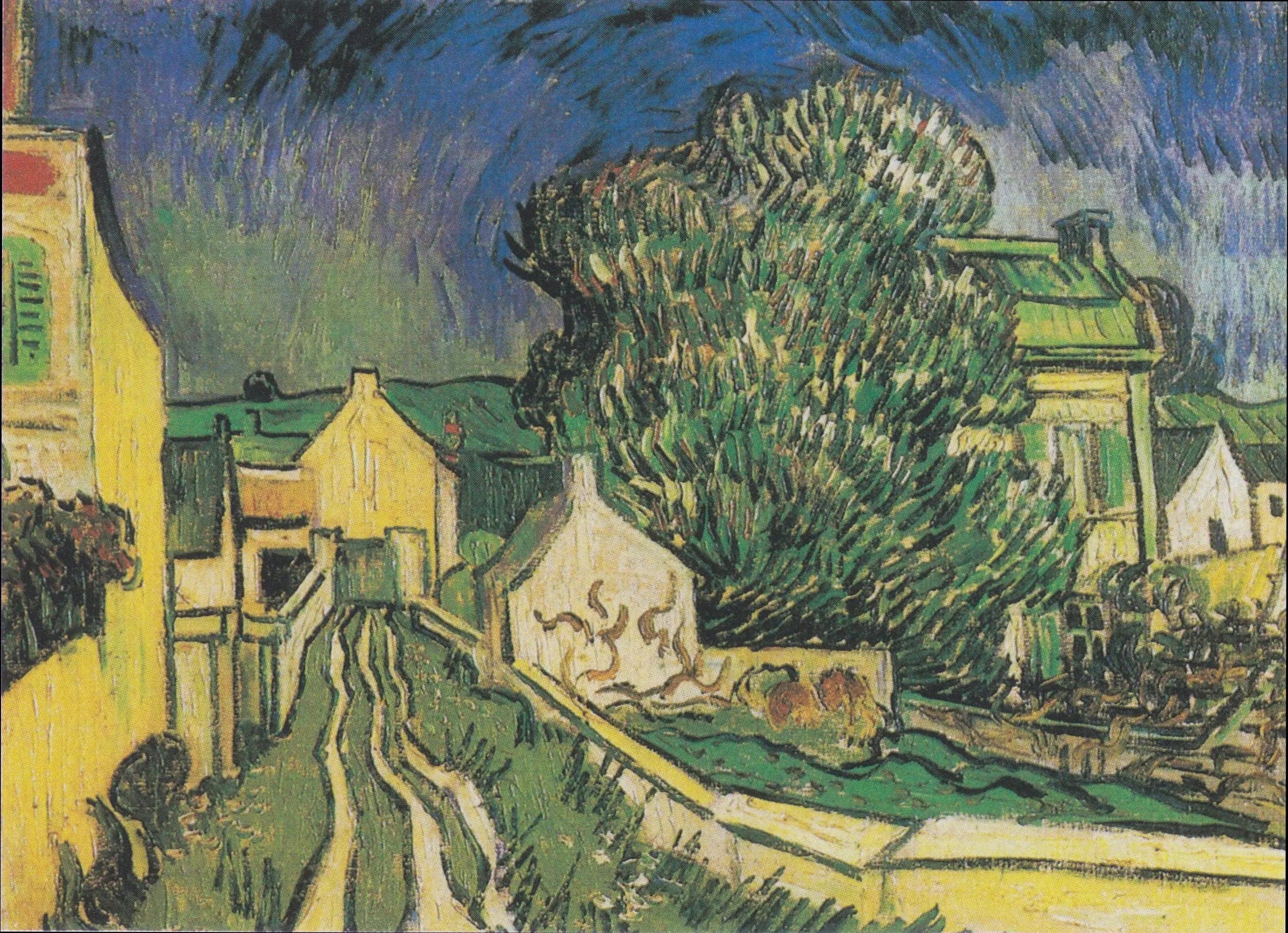
The House of Father Pilon
Scene depicted
The scene depicted in La Maison du Père Pilon portrays an atmosphere of vibrant tranquility, at the heart of a lively countryside. This canvas evokes the intimacy of a warm home, where earthy colors intertwine to form a place vibrant with life and history. The painting captures the essence of a frozen moment, a juxtaposition between the ordinary and the extraordinary, through shimmering nuances of light.
Historical context
Created in 1890 in Auvers-sur-Oise , this painting is emblematic of the post-impressionist movement, which Vincent van Gogh passionately popularized. The work is currently preserved in the Stávros Niárchos Collection , where it continues to inspire with its vibrant and timeless message. Its dimensions, measuring 70 x 49 cm , testify to a time when every spoonful of color translated a particular emotion.
Place in the artist's career
La Maison du Père Pilon fits into a period of artistic maturity for Van Gogh. Between the iconic painting The Starry Night and his famous Self-Portrait with Bandaged Ear , this painting represents a notable evolution in his way of exploring the interaction of light and shadow. Each painting testifies to his quest for authenticity and emotional depth.
Anecdote
“The light of rural life has always been my muse,” said Van Gogh. Inspired one spring morning, perhaps while listening to the melodious song of the birds, he captured the simple beauty of this house. This moment of creative awakening gave birth to this masterpiece , La Maison du Père Pilon, a painting where every brushstroke is imbued with this serene joy.