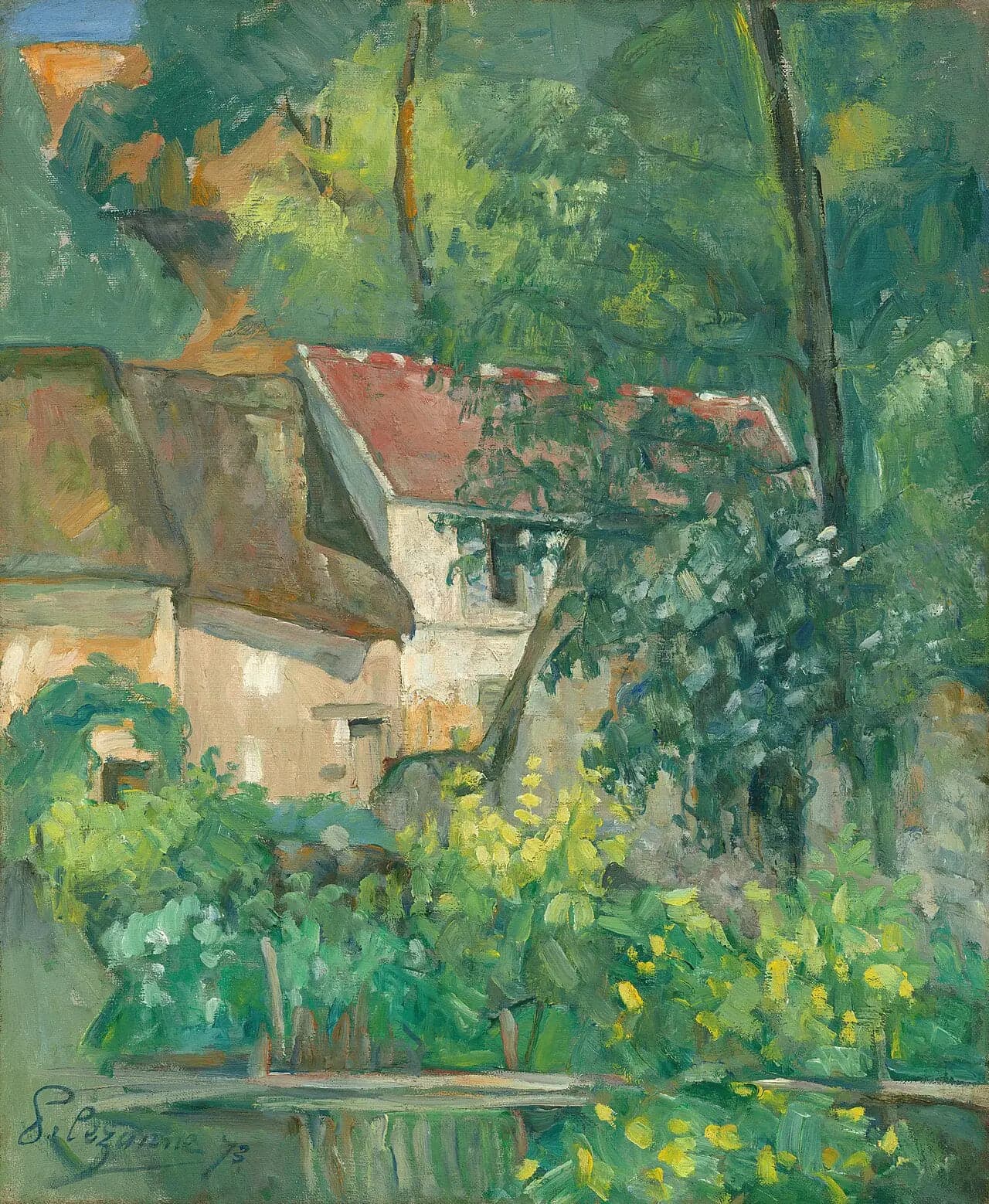
The House of Father Lacroix, Auvers-sur-Oise
- Original dimensions
- 50.6 x 61.3 cm
- Museum
- National Gallery of Art
- Year
- 1873
Scene depicted
This canvas reveals the rustic facade of the house of Father Lacroix, a place steeped in history where the life stories of the village intertwine. The vibrant colors and bold shapes transport us into a tranquil and warm atmosphere, immersed in the subtleties of rural French life, reflecting the simple beauty of everyday scenes.
Historical context
This painting is emblematic, created in 1873, set in the peaceful small town of Auvers-sur-Oise, in the heart of France. This flagship painting is rooted in the impressionist movement, where shades of light and color blend to pay tribute to the fleeting beauty of the natural world. Today, this canvas is carefully preserved at the National Gallery of Art , where its dimensions of 50.6 x 61.3 cm captivate visitors.
Place in the artist's career
“The House of Father Lacroix, Auvers-sur-Oise” represents a turning point in Cézanne's career, marking the beginning of his quest for a more personal and abstract style. In parallel with works like “The Montagne Sainte-Victoire” and “The Card Players,” this canvas reflects a unique evolution in his technique, marked by an increasing emotional intensity.
Anecdote
“I am like this tree, I never stop growing. Every canvas needs its time.” The genesis of this masterpiece was born on a sunny morning by the banks of Auvers. Through his brushstrokes, Cézanne was able to immortalize the very essence of the moment: the softness of the wind, the warmth of the sun, returning to the roots of this painting .
Major exhibitions
First impressionist exhibition