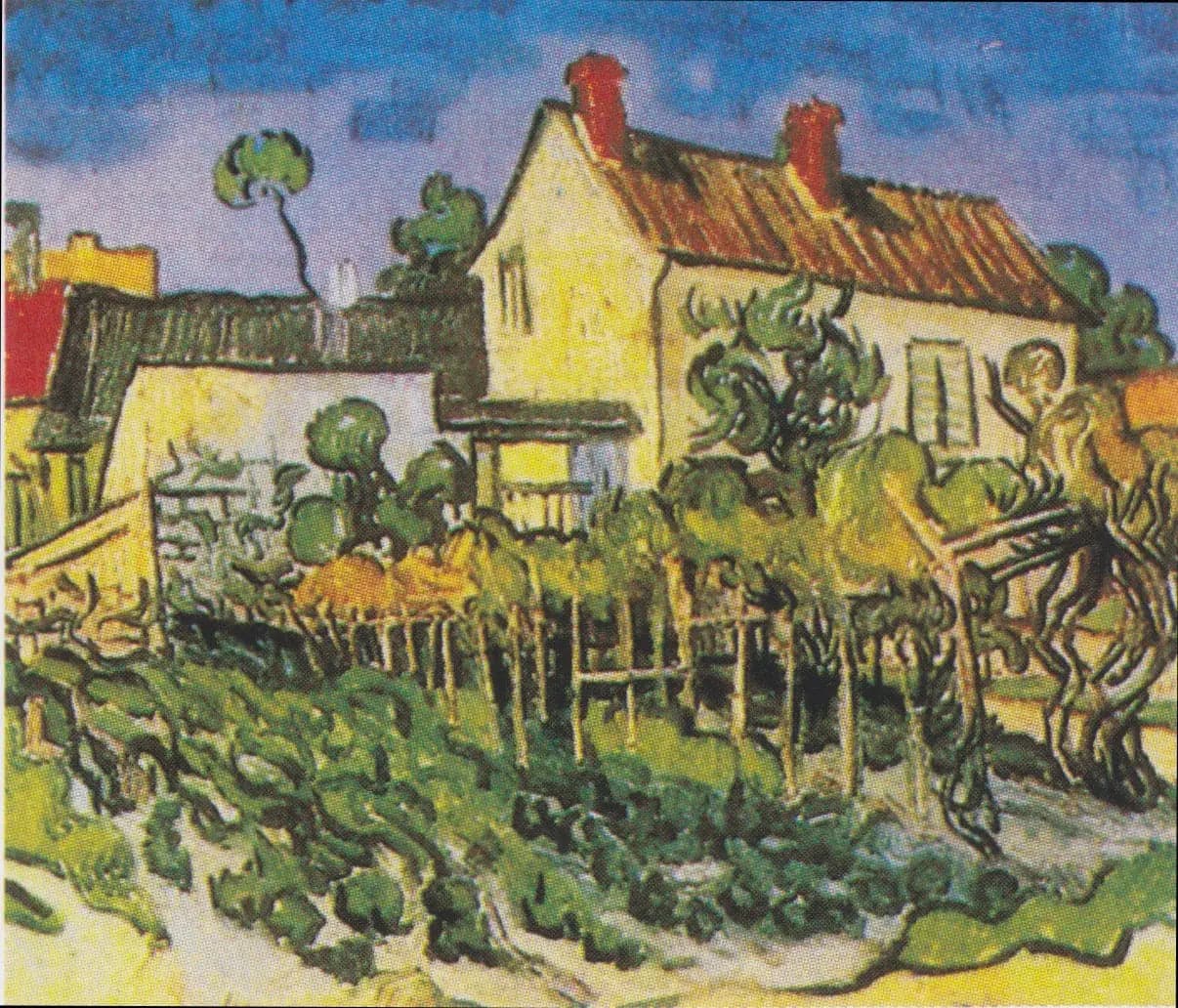
The House of Father Eloi
Scene depicted
This painting represents the house of an innkeeper in a natural setting where tranquility prevails. The wooden walls and the smoking chimney evoke the simplicity of village life, surrounded by lush fields and infinitely blue skies. The composition illustrates the soft daylight, reflecting Van Gogh's calm thoughts, offering a snapshot of peace and beauty.
Historical context
Created in 1890, in the peaceful commune of Auvers-sur-Oise , this painting is emblematic of the post-impressionist movement. Immortalized at a time when Vincent van Gogh sought tranquility and beauty in simplicity, this canvas embodies his love for nature and rural life. Although its current location within a museum is not specified, the dimensions of this canvas extend to 58 x 51 cm, revealing the intimacy of its subject.
Place in the artist's career
The House of Father Eloi is part of Van Gogh's maturity period, marking a significant turning point in his approach to painting . Alongside his famous canvases such as The Starry Night and The Sunflowers , this canvas demonstrates an evolution towards simpler forms and a vibrant use of color, reflecting his relentless quest for emotional expression.
Anecdote
Vincent van Gogh once stated: “I dream of painting and I paint my dreams.” On a sunny morning in Auvers, a small wooden house caught his eye, inspiring him to capture its essence on the canvas. This fleeting moment transformed into a pictorial work filled with memories and emotions, making this painting deeply evocative.