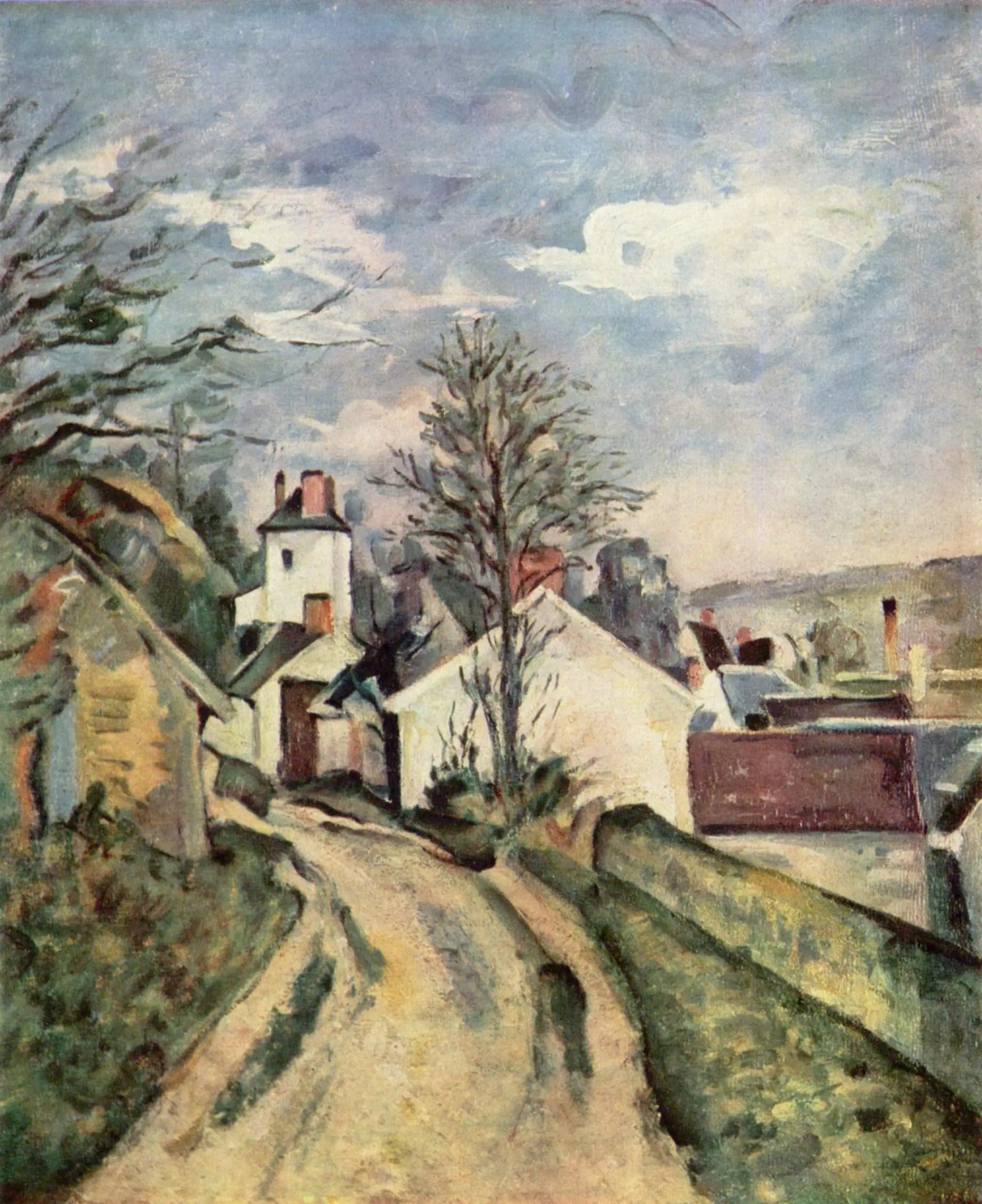
The House of Doctor Gachet
- Original dimensions
- 38 x 46 cm
- Museum
- musée d'Orsay
- Year
- 1872
Scene depicted
This painting features the house of Dr. Gachet, a doctor and friend of the main artists of the time, including Vincent van Gogh. The painting reveals a peaceful atmosphere where the house, surrounded by the soothing greenery of Auvers-sur-Oise, seems to converse with nature. The walls of this dark abode, tinged with earthy colors, evoke stories and memories, while the lights and shadows dance on the facade, offering an enchanting vision of daily life.
Historical context
Created in 1872, this painting embodies inspiration from the beautiful landscape of Auvers-sur-Oise, a place rich in history and creativity. The impressionist movement, of which Cézanne is a key figure, is revealed here in a painting that captures the beauty of nature and human uniqueness. Today, this work is preserved at the musée d'Orsay , a sanctuary of art where it continues to enchant viewers.
Place in the artist's career
La Maison du docteur Gachet is situated at an important turning point in Cézanne's career. At the crossroads between his classical style and his cubist explorations, this painting marks a moment of maturity where he explores new techniques. In parallel, his other masterpieces such as “The Card Players” and “The Montagne Sainte-Victoire” testify to the evolution of his use of color and perspective, placing this painting in a rich and innovative context.
Anecdote
Paul Cézanne once confessed: “I want my canvases to have the strength of nature itself.” La Maison du docteur Gachet was born one spring morning, when the first rays of the sun caressed the blooming fields. At that moment, the artist was able to capture the very essence of life, inspired by the tranquility of the place and the melody of birds softly singing among the branches.