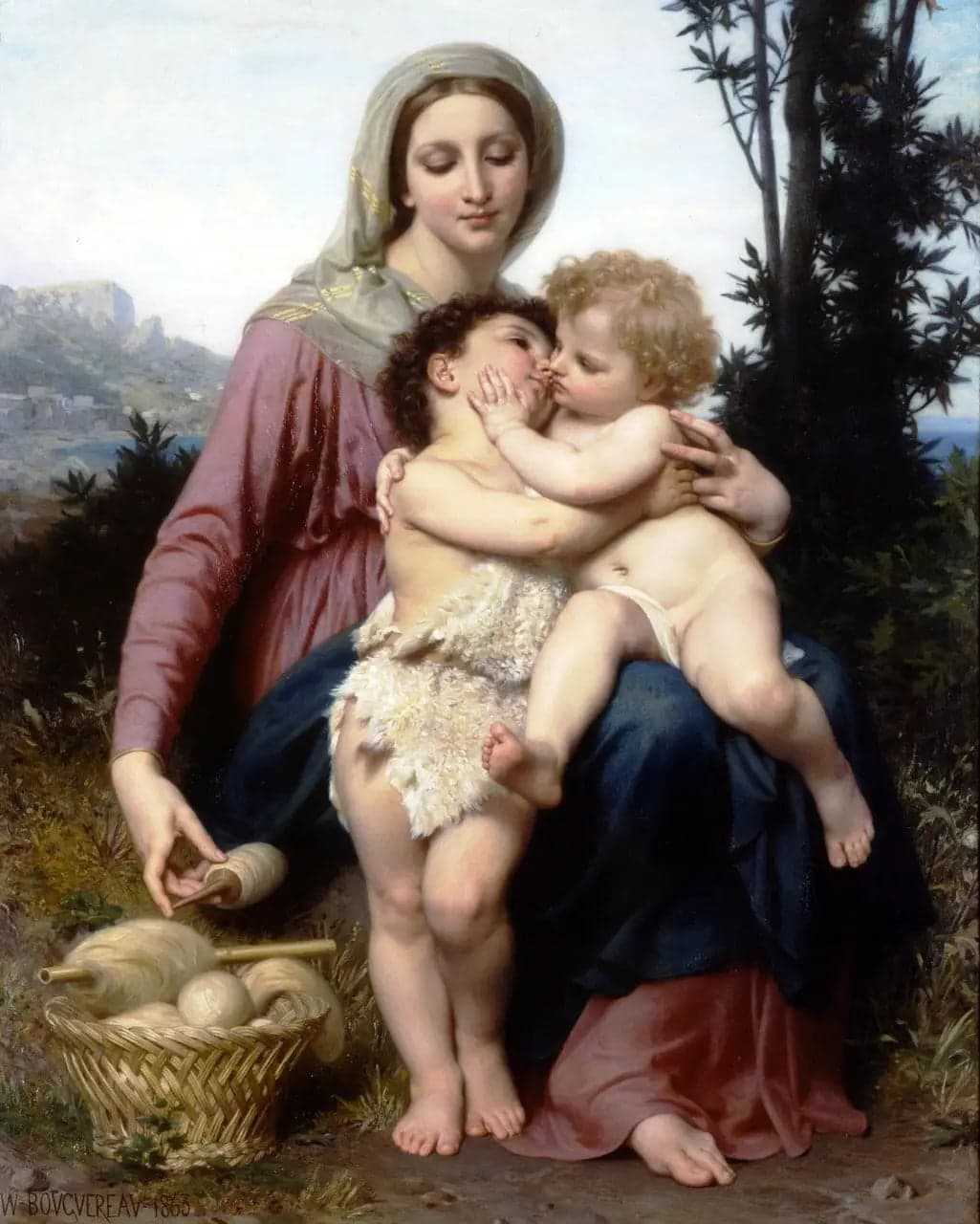
The Holy Family
- Original dimensions
- 109 x 138.5 cm
- Museum
- Chimei Museum
- Year
- 1863
Scene depicted
In this composition, Bouguereau depicts the Holy Family in an atmosphere imbued with serenity and harmony. The characters are represented in a scene of kindness, their faces illuminated by a soft and warm light, creating a place of peace that resonates like an echo of everyday life. The meticulous details of the clothing and expressions convey a palpable emotion that draws the gaze and the soul.
Historical context
Created in 1863 in the charming city of Liège, Belgium, this iconic painting is the result of the academic movement that prevailed at that time. Bouguereau, the undisputed master of realism and neoclassicism, captured the essence of family life in a painting that resonates even today. Currently on display at the Chimei Museum, this work is a true testament to a time when artistic expression rhymed with finesse and virtuosity.
Place in the artist's career
The painting The Holy Family holds a prominent place in Bouguereau's career. It is both a reflection of his promising start on the artistic scene and a culmination of his particularly sober style, yet rich in emotions. In parallel, his other works like The Farmer's Daughter and The Nativity position this painting within a significant technical and spiritual evolution.
Anecdote
“I paint what I see and what I feel,” said Bouguereau, referring to his intimately personal connection with each masterpiece he created. Imagine him, one spring morning, gazing at a serene couple and the child injured in play, a fleeting moment captured on his canvas. This painting , born from that surge of emotion, perfectly illustrates that moment of tenderness.