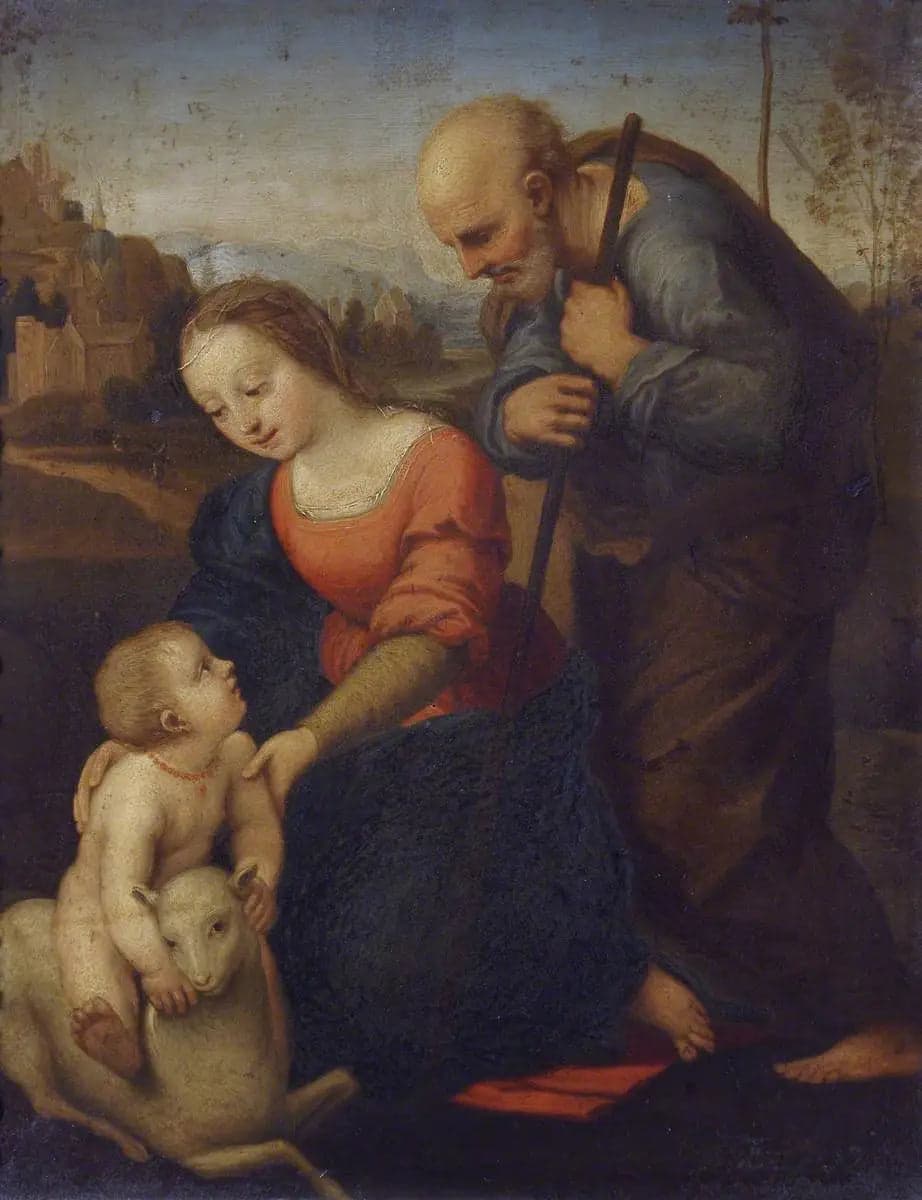
The Holy Family
- Original dimensions
- 116 x 147.4 cm
- Movement
- High Renaissance
- Museum
- Museo del Prado
- Year
- 1518
Scene depicted
The composition of “La Sainte Famille” shows Mary holding the Child Jesus, while Saint Joseph watches them with palpable tenderness. This intimate and divine scene unfolds in a soothing landscape, where every element, from gestures to glances, testifies to familial and spiritual harmony. It is a pictorial work that elevates the soul and resonates deeply in the hearts of those who contemplate it.
Historical context
Created in 1518 in Rome, this painting is emblematic of the High Renaissance , an artistic movement where harmony and beauty reach their peak. It is under the golden lights of the eternal city that this canvas was born, a celebrated masterpiece that now resides in the Museo del Prado in Madrid. Its generous dimensions of 116 x 147.4 cm bring to life a vibrant composition that has transcended the centuries.
Place in the artist's career
“La Sainte Famille” represents a major turning point in Raphael's career, illustrating his mastery of light and color. This painting is often considered the pinnacle of his matured style, comparable to other canvases such as “The Sistine Madonna” and “The Virgin of the Pillar,” thus marking the evolution of his technique towards greater emotional depth.
Anecdote
Raphael once declared: “Painting is silent poetry.” It was on a morning in April, at dawn touched by soft light, that the artist, in a quiet alley of Rome, found inspiration for this masterpiece . The faces of the Holy Family, imbued with a touching purity, capture this original emotion, making the painting a timeless declaration of love and motherhood.