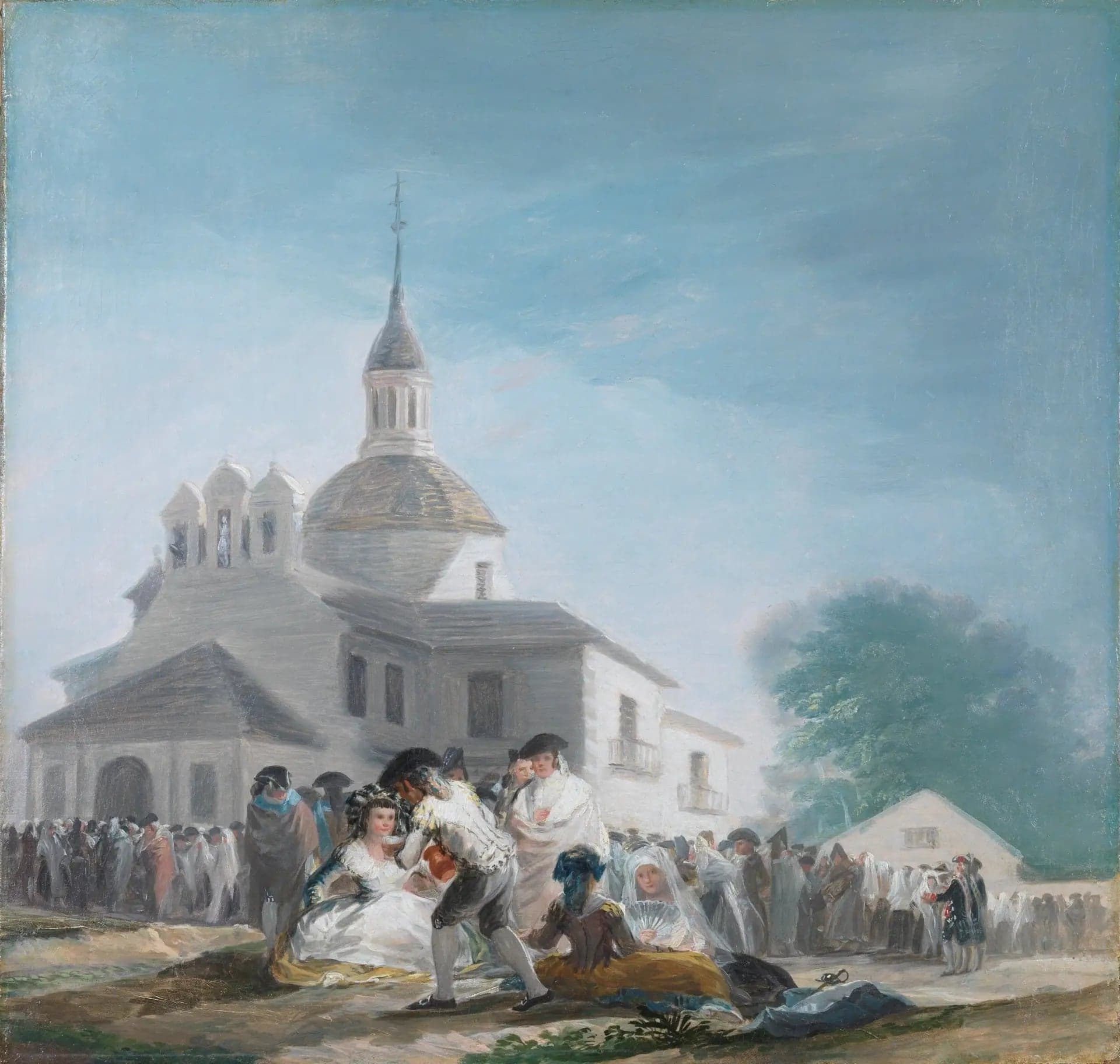
The Hermitage of Saint Isidore
- Original dimensions
- 43.8 x 41.8 cm
- Museum
- Museo del Prado, Madrid
- Year
- 1798
Scene depicted
This canvas represents an austere hermitage, a place of refuge and meditation, far from the tumult of the world. The nuances of light and shadow play on the stone walls, while a feeling of peace and reflection emanates from this composition. The scene invites deep introspection, evoking the dialogue between man and nature.
Historical context
Created in 1798, this painting emblematic of Francisco de Goya is set in the context of Enlightenment Spain, a time of debate and intellectual renewal. The canvas , currently displayed at the Museo del Prado in Madrid, reflects the influences of the emerging romantic movement, while foreshadowing the themes of solitude and contemplation that will mark his later work.
Place in the artist's career
L'Ermitage de Saint Isidore is part of a period of artistic maturation for Goya, marking a turning point towards more personal and emotional themes. Alongside canvases such as "La Maja Desnuda" and "The Executions of May 3rd", this painting illustrates the evolution of his style, moving from a classical representation to a more expressive and intimate approach.
Anecdote
“I seek the truth hidden in the shadow” could have said Goya as he created this pictorial work . Inspired by a misty morning, he captured the essence of a moment of pure serenity, where the natural environment envelops the viewer in a scent of damp earth, revealing the hidden beauty of a forgotten hermitage.