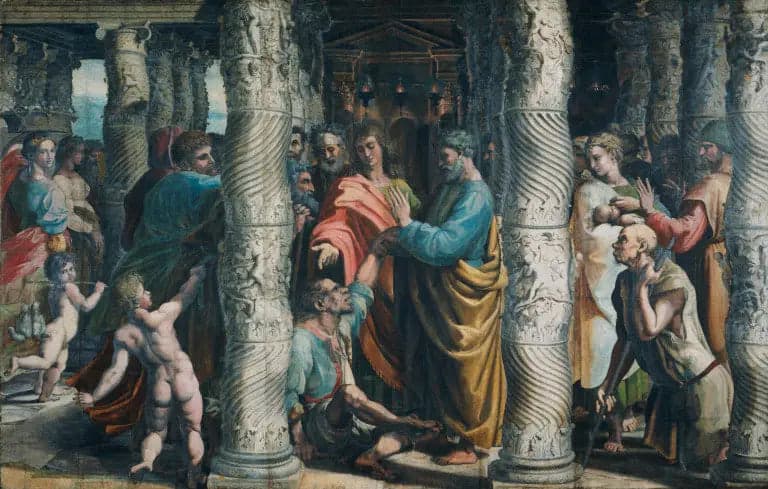
The Healing of the Lame Man
- Original dimensions
- 540 x 340 cm
- Museum
- The Raphael Cartoons
- Year
- 1515
Scene depicted
The Healing of the Lame Man reveals an act of compassion, where a suffering man stands under the benevolent gaze of venerable figures. This scene unfolds in a vibrant landscape, where divine light seems to descend upon human suffering, illustrating the timeless theme of healing and redemption. This painting transcends the simple frame of painting , offering a universal narrative that touches the heart of the soul.
Historical context
Painted in 1515 in Italy, The Healing of the Lame Man is an emblematic work of the Renaissance movement. This painting is set in an artistic context where the search for perspective and harmony of forms flourishes. Currently, this painting is found within the Raphael Cartoons, where it is revered as a symbol of pictorial excellence. Its imposing composition of 540 x 340 cm unfolds a captivating narrative, dazzling the viewer for centuries.
Place in the artist's career
This masterpiece is at the heart of Raphael's career, marking a period of maturity and technical virtuosity. Alongside other notable works such as The Sistine Madonna and The Transfiguration, The Healing of the Lame Man illustrates an evolution in his approach, combining emotional depth and masterful composition.
Anecdote
Raphael once declared: “Beauty is born from the harmony of forms.” It was on a gentle spring morning, at the turn of a street in Urbino, that he was inspired by the soft light and the ebb and flow of silhouettes, a tangible reflection of the human soul found in The Healing of the Lame Man. This canvas thus becomes a unit of beauty and a celebration of life.