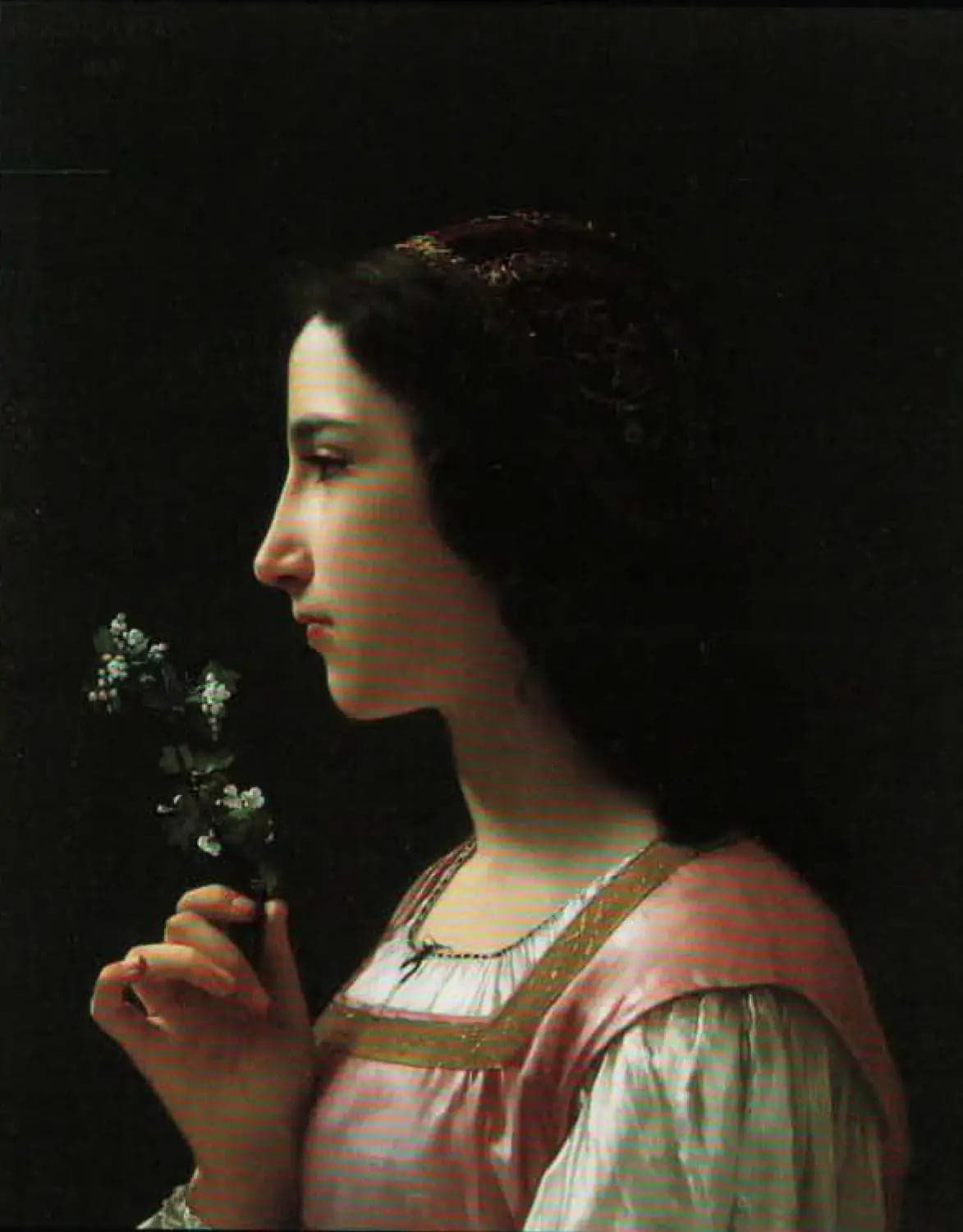
The Hawthorn Flower
- Original dimensions
- 46 x 55 cm
- Museum
- villa Vauban
- Year
- 1868
Scene depicted
This painting presents itself as a hymn to the beauty of nature and the purity of innocence. Bouguereau captures a young woman surrounded by hawthorn flowers, symbols of chastity and delicacy. The composition is a true visual poem, celebrating the spring bloom and offering a total immersion in an idyllic universe where sweetness rhymes with revelation.
Historical context
Created in 1868 at the villa Vauban, this sublime painting is part of the academic movement and reflects a time when art reached unparalleled levels of technical perfection. The painting is now displayed in a museum in Luxembourg, a place steeped in history and culture, where it attracts the attention of art lovers from around the world.
Place in the artist's career
The Hawthorn Flower represents a significant milestone in Bouguereau's career. At a time when he enjoyed considerable recognition, this painting fits into a period where the artist explores themes related to nature and femininity, similar to his works like The First Step and The Young Girl with Flowers, revealing his constant evolution towards pictorial sensitivity.
Anecdote
“Each flower tells a story, and The Hawthorn Flower is the story of regained innocence.” These words may resonate like an echo of spring mornings when Bouguereau, gazing through the gardens, discovered the emotional impact of this canvas . Inspiration is a soft light filtering through the branches, caressing the face of Parisian nature.