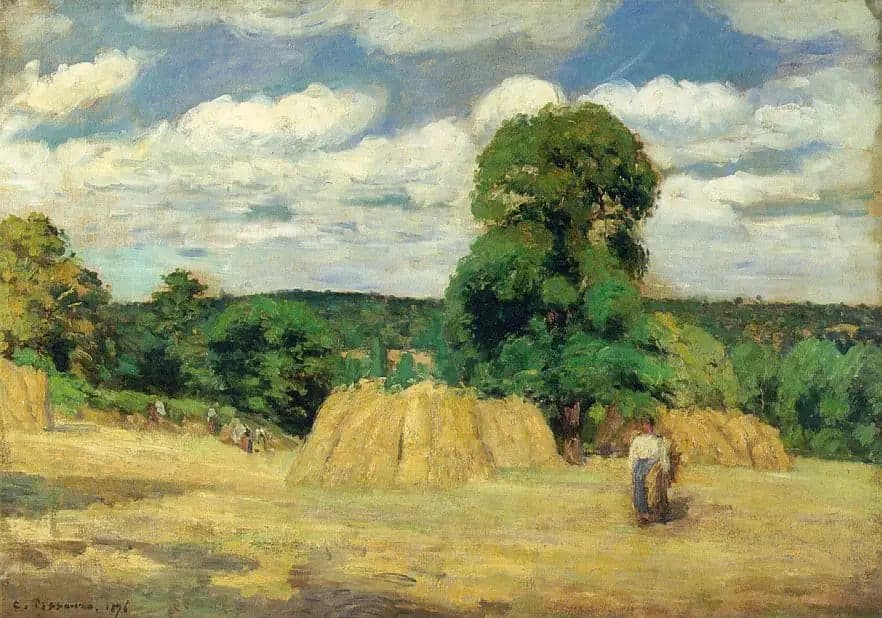
The Harvest
- Original dimensions
- 126 x 70.3 cm
- Museum
- National Museum of Western Art
- Year
- 1882
Scene depicted
In this masterpiece, the scene highlights peasants gathering ears from a golden field, bathed in warm light. The vibrancy of life in the countryside, the serene rhythm of gestures, all of this is celebrated in this composition that illustrates the harmony between man and the earth. Every detail of the canvas evokes not only a rural activity but also a peaceful and joyful moment.
Historical context
Created in 1882, in Éragny-sur-Epte, this painting is part of Impressionism , a revolutionary movement that transformed the way light and nature are perceived. The painting is now housed in the National Museum of Western Art , where it continues to enchant visitors with its vibrant representation of the rural world.
Place in the artist's career
“The Harvest” represents a significant milestone in Pissarro's career, who had already begun to explore the nuances of light and color in previous works such as “The Place of the French Theater” and “The Spaders.” This painting reveals a stylistic peak where technique reaches exceptional maturity.
Anecdote
“In every blade of grass lies the beauty of the world,” Pissarro might have said as he painted this canvas in the soft light of a spring morning. It is through this painting that the artist captures the essence of the youth of nature and human effort, giving a voice to the peasants he admired so much.